
What is SEND?
SEND stands for Special Educational Needs and Disabilities.
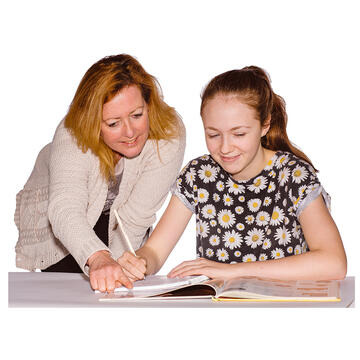
It describes children and young people who may need extra support education, which includes nursery, school and further education like college.
You may hear people say 'my child has SEND' or 'my child is SEN'. It is referred to in different ways, one of the reasons is that not everyone with a special educational need has a disability, and not everyone with a disability has a special educational need.
Every child is different and has their own needs, however all children with a learning disability A learning disability is to do with the way someone's brain works. It makes it harder for someone to learn, understand or do things. will have support needs at some point in their education and maybe throughout. Support needs are the help and assistance that a child needs to access education.
Support at school is there to help with things like reading, writing, communication, physical development, or building social skills.
How is SEND identified?
Some children’s SEND can be predicted in early age. For example, certain Certain means you are sure about something. conditions may mean it is more likely that they will require more support to learn and develop. Different people involved Involved is being included in something or taking part in something. in your child’s education and health may identify their needs which could a health visitor, paediatrician, schoolteacher or teaching assistant. It may be you as the parent or carer who has identified a difference in your child’s educational needs.
Identifying a child or young person’s educational needs where there has not been an early identified condition or difference may take longer; however, it may be clear they are not meeting developmental milestones or educational targets e.g. their reading age may be different from their peers. Sometimes a child or young person’s needs become clear when they move to a different stage of education known as a transition Transition means changing from one thing to another. Transition sometimes means things like when you change from having children's social care to adult social care. .
In all situations, the families of children under the age of 16 must be told about their child’s needs, and families of young people over the age of 16 should ordinarily be involved in this process as well.
What happens once my child’s needs have been identified?
Your child or young person will then be supported in nursery, school, college or other provision or setting based on what is helpful for them to access education like their peers. This is known as SEN Support.
If a child is receiving SEN Support, the setting e.g. school are responsible for making sure a child is on the ‘SEN Register’, this is a register that makes sure the people supporting your child or young person know they have SEND needs. A parent, carer or guardian must be told if their child is on the SEN register, if you are unsure, ask your child’s setting, usually the Special Educational Needs Coordinator (SENCO). Most settings have a SENCO who are usually the person to make sure a child or young person is getting the support they need.
Every child and young person will have different needs and will require different levels of support. Some children will get the level and type of support they need through SEN Support and some will need more support through something called an Education Health and Care Plan (EHCP).
SEND stands for Special Educational Needs and Disabilities.
SEN support offers extra help for a child with learning, communication, sensory, or behavioural need that is different from or extra to what most children receive.
There are three ways you can get SEND support:
- Through support in your local area.
- Through support in the educational setting (including nurseries, schools and colleges).
- Through planned support like an education, health and care plan (EHCP).
The creation of this page was funded by The National Lottery Community A community is the people and places in an area. Fund.