
This page will be updated regularly with information about the Special Educational Needs and Disabilities (SEND) reform.

What is the SEND Reform and the Schools White Paper?
The government The Government are the people who run the country. They decide how much tax people should pay for things and how things like the National Health Service should work. is proposing changes to how, and what, support is available for children and young people with Special Educational Needs and Disabilities (SEND).

A proposal is a plan or an idea put forward for other to consider, discuss and decide on.
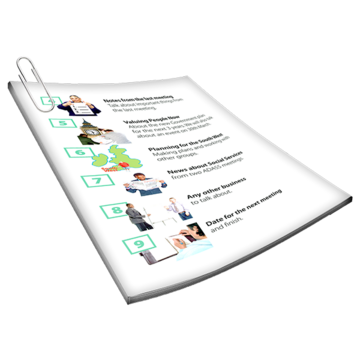
This plan is called the Schools
White Paper
 A White Paper is a report that is written by the government. It talks about new rules the government wants to make.
.
Schools White Paper
The Government's Schools White Paper sets out proposed changes to the education system in England. Some of these proposals could have an important impact on children and young people with a learning disability A learning disability is to do with the way someone's brain works. It makes it harder for someone to learn, understand or do things. , as well as their families and the professionals who support them.
Why are changes happening to SEND support?
In recent years, there have been growing concerns about how effectively the support system for children and young people with SEND is working. A series of reports have identified problems across the system and advocated major reform.
The current system, introduced in 2014, provides different levels of support within educational settings, with those who have the most complex needs receiving formal Education, Health and Care Plans (EHCPs).
Over the past decade, the number of EHCPs has increased significantly, alongside rising financial Financial means anything that is to do with money. It is used to describe how people, businesses, or governments get money and how they use it pressures on local authorities A local authority is another name for your local council. It is a group of people whose job is to look after the area where you live. Local authorities means more than one local authority. , including costs for education and transport.
At the same time, many parents and carers have found it difficult to secure appropriate support for their children, leading to a growing number of cases being taken to tribunal, often successfully.
When will changes happen to SEND support?
The proposed reforms to the SEND support system would require changes to legislation (the
law
 Laws are the rules that everyone in the country has to follow. If you don't follow the rules you can get in trouble with the police.
) and are not expected to be introduced until September 2029.
Until that point, the current system will remain in place. Any changes to support provided through Education, Health and Care Plans (EHCPs) are not expected before at least September 2030.
In the meantime, additional support and funding will be provided to schools to help them prepare for the new system.

The Government plans to invest in initiatives such as Experts at Hand, enhanced teacher training, and Mental Health Support Teams. This will include creating additional places in special schools and inclusion bases, alongside funding to help mainstream schools improve inclusive practice.
There will also be updated guidance Guidance means being given clear instructions to be able to do something well. on reasonable adjustments and a revised SEND Code of Practice. In addition, the Government will invest in strengthening the evidence base for effective support for children and young people with SEND.
The introduction of Individual Support Plans (ISPs) is also proposed as part of these changes.
The law is not expected to change before September 2029 at the earliest, and until that point, all current duties, rights Rights are the things everyone should be allowed to do like have a say, or go to school. , and funding arrangements will remain in place.
The Government will provide independent support and
advocacy
 Advocacy is when you get support to have your say.
for parents to help families understand the proposed changes and manage the
transition
Transition means changing from one thing to another. Transition sometimes means things like when you change from having children's social care to adult social care.
.
Children and young people with EHCPs are expected to begin
assessment
 An assessment is a way of finding out what help a person needs. When you have an assessment, you might have to go to a meeting or fill in a form.
for an Individual Support Plan (ISP) or a Specialist Provision Package at key transition points, such as the end of primary or secondary education.
Any child or young person attending a special school in September 2029 will be able to remain there until they complete their education, unless they choose to move to a mainstream setting.
From the earliest point of September 2030, children and young people with EHCPs are expected to begin assessment for Individual Support Plans (ISPs) at key transition stages, including the end of primary, the end of secondary, and post-16.
New funding arrangements are also expected to be introduced to strengthen and support early intervention.
What does the Schools White Paper propose?
The Schools White Paper proposes support for children and young people with SEND will be:
- Given earlier
- Easier to get
- A fairer approach
- Localised
- The same across the country.
This is in response to the support for children and young people with SEND often taking too long, with too many barriers, inconsistently supported by need and area of the country, and accessing education and support outside of their local area.
The plan states that changes to each area will be achieved through more resources and updated guidance.
Earlier Support
- New tools to identify needs
- Best Start Family Hubs to support families of children aged 0-19 (0-25 for SEND), each with a SEND practitioner
- The SEND Code of Practice to be updated with new areas of need: executive Function, Motor and Physical, Sensory, Speech, Language and Communication, Social and Emotional).
The Children and Families Act 2014 provided for a major reform of the system for identifying children and young people in England with special educational needs, assessing their needs and making provision for them. The statutory Special Educational Needs and Disability Code of practice sets out detailed information on the support available for children and young people aged 0 to 25 under the 2014 act.
The SEND Code of Practice sets out the definition of special educational needs used in England:
A child or young person has SEN if they have a learning difficulty or disability which calls for special educational provision to be made for him or her. A child of compulsory school age or a young person has a learning difficulty or disability if he or she:
- has a significantly greater difficulty in learning than the majority of others of the same age
Or - has a disability which prevents or hinders him or her from making use of facilities of a kind generally provided for others of the same age in mainstream schools or mainstream post-16 institutions.
The SEND Code of Practice currently identifies four broad areas of special educational needs: Communication and Interaction, Cognition and Learning, Social, Emotional and Mental Health (SEMH), and Sensory and/or Physical Needs. These areas help identify support needs, which are often interconnected.
It is not necessary for disabilities, medical conditions or specific needs to have been assessed or diagnosed for these criteria to be met, and for support to be provided.
The type of support that children and young people with SEN receive may vary widely, as the types of SEN that they may have are very different.
Types of current support include:
- Universal Support also known as Ordinarily Available Inclusive Practice/Provision, which is support that any child with any additional need can access in their provision
- SEN support which would include reasonable adjustments in response to individual need in their nursery, school or college
- Education Health and Care Plans (EHCP’s) aim to provide more substantial help for children and young people through a unified approach that reaches across education, health care and
social care
 Social care means the services that give care and support to people who need it.
need.
Under the current SEND framework, an Education, Health and Care Plan (EHCP) gives families strong, enforceable legal rights.
Parents can
appeal
 To appeal means saying you want someone to think about a decision again.
to the SEND Tribunal if they disagree with:
- A refusal to assess for an EHCP
- A refusal to issue an EHCP
- The description of needs in Section B
- The provision specified in Section F
- The school or placement named in Section I
- A decision to amend or cease (end) an EHCP.
Children on SEN Support (without an EHCP):
- Have no statutory plan
- Have no direct right of appeal
- Rely on:
- School discretion
- Local authority A local authority is also called a council. They are a group of people who make decisions about some of the things in the area where you live like schools, social care (support for people), parks and dustbin collection.
oversight
- Informal complaints processes.
This is why many parents feel forced to pursue EHCPs — not because needs are extreme, but because it is the only enforceable route.
Individual Support Plan (ISP)
An ISP is a simple digital document showing:
- The child’s needs
- The support they receive
- Their progress.
Key points:
- ISPs must be legally created for all children and young people with SEND
- Reviewed at least once a year with parents involved Involved is being included in something or taking part in something.
- Created with parents and young people
- Checked by Ofsted
- Replace the current informal SEN Support arrangements
- Helps with transitions between settings (e.g. primary to secondary).
The government describes this as an expansion of rights, because many more children will have a written plan than under the current system. However, the white paper does not yet fully define the legal enforceability of ISPs.
Specialist Provision Packages
Specialist Provision Packages (SPPs) are described as structured packages of support developed by a national panel of experts. The proposals suggest there will be around seven different types of packages, each designed to meet different needs, and that children may receive support from more than one package where necessary.
An EHCP would:
- Provide children and young people with a legal right to the support outlined in their Specialist Provision Package
- Be created by the local authority A local authority is another name for your local council. It is a group of people whose job is to look after the area where you live. in partnership with parents and education settings
- Be reviewed at each key stage.
EHCPs would be limited to children with the most complex needs. While the proposals do not give a precise definition of ‘complex needs’, they state that there will be
consultation
 Consultation is finding out what people think about something.
with parents and experts to ensure that all children with the highest level of need are appropriately covered by the specialist support packages.
The packages proposed are as follows (this wording is taken directly from government documentation):
This package will support children and young people with more than one disability, including a profound cognitive impairment, significant difficulty communicating, and additional conditions, such as
physical disability
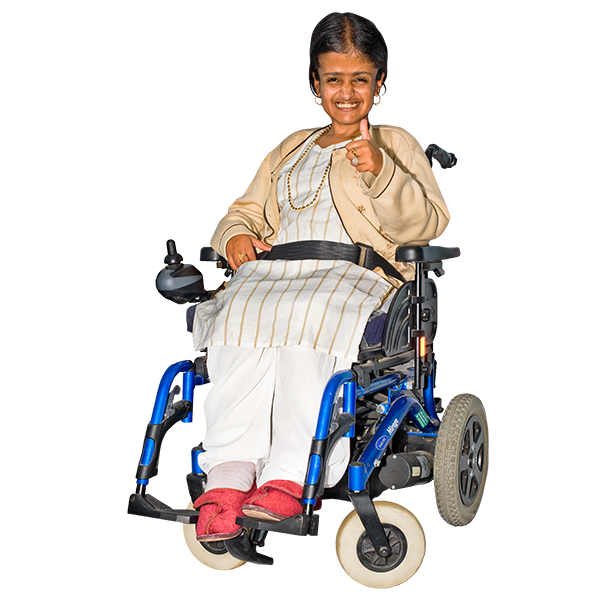 A physical disability is to do with your body. You might find it hard to do some things like walk or lift things.
, sensory impairment, sensory processing differences, and medical needs.
It will provide learning, care, therapy, and health support operating together as one coherent system.
Significant executive function (known as severe learning difficulties in the current terminology) will support children and young people with a severe and permanent global learning disability, or life-long speech or language disorder, affecting some, or all, areas of speech, language and communication, executive function, social and emotional, motor and sensory development.
This package will provide an educational offer which is structured, consistent, and highly individualised, alongside integrated therapies and any clinical support (as determined by health) as appropriate.
This is an emerging profile based on recent research Research is a way of finding out information which could come from books, or asking people what they think. evidence. This package will support children and young people with significant permanent learning disability affecting some, or all, areas of speech, language and communication, executive function, social and emotional, motor skills and sensory development. Children who need this package often manifest with behaviour that challenges.
It will provide expert support to develop their initiation, persistence and exploration with learning opportunities that are closely matched to their complex learning needs, as well as ongoing support with their personal care needs, nutritional requirements and physical development.
This package will support children and young people whose social and emotional needs manifest in behaviour which challenges.
They may be autistic, have ADHD or have a language disorder, and may have other learning needs or speech, language and communication needs.
Where a child or young person has wider mental health needs, these would be addressed by health services as deemed appropriate. The package will provide an educational experience Experience is when you have learned or tried something before. that is highly structured, consistent, and responsive, and which integrates therapeutic inputs, such as speech and language therapy, counselling, and evidence-based emotional literacy programmes.
This package will support children and young people whose social and emotional needs manifest as withdrawal, disengagement or ‘shut down’.
They may be autistic, have a language disorder or have wider mental health needs (which would be addressed by health services as appropriate). The package will provide an educational offer which is grounded in trauma-informed, relational pedagogy and which integrates therapeutic inputs such as speech and language therapy, counselling and evidence-based emotional literacy programmes.
This package will support deaf children and young people, those with a visual impairment, and those with multi-sensory impairment.
It is primarily focused on access to specialist services including qualified Teachers of the Deaf/Visual impairment /Multi-Sensory Impairment, audiology, habilitation, speech and language therapy, and resources/equipment/technology to allow access to the curriculum and communication and connection to the world around them.
The physical disability (without significant learning difficulties) package will support children and young people with physical disabilities, who are able to access the mainstream curriculum.
It is primarily focused on access to specialist services such as physiotherapy and occupational therapy (and speech and language therapy, where needed) and resources/equipment/technology to support physical wellbeing, motor development and access to the curriculum.
These outlines will be developed by the independent expert panel to set out the full breadth of education, health and care support children with complex needs may require. They are not final nor comprehensive, but are designed to provide an initial picture of the needs that Specialist Provision Packages and EHCPs will capture. Parents, families and other experts will have a range of opportunities to engage in the design of the Packages as they are developed.
Specialist Support in Mainstream Settings
Specialist support will be provided to mainstream settings, made up of professionals called ‘Experts at Hand’.
These professionals may include:
- Educational Psychologists
- Occupational Therapists
- Speech and Language Therapists
- Specialist Teachers
- Health Professionals.
Experts at Hand will be a new team in local areas to support educational provisions by giving specialist advice, guidance and support.
National Inclusion Standards
This proposal is to help educational provisions understand:
- How to identify a child and young persons needs
- What evidence says is best for different needs
- What good SEND support looks like called ‘best practice’.
The National Inclusion Standards have been described as a digital library. These standards would be updated every two years and developed with children, families and professionals.
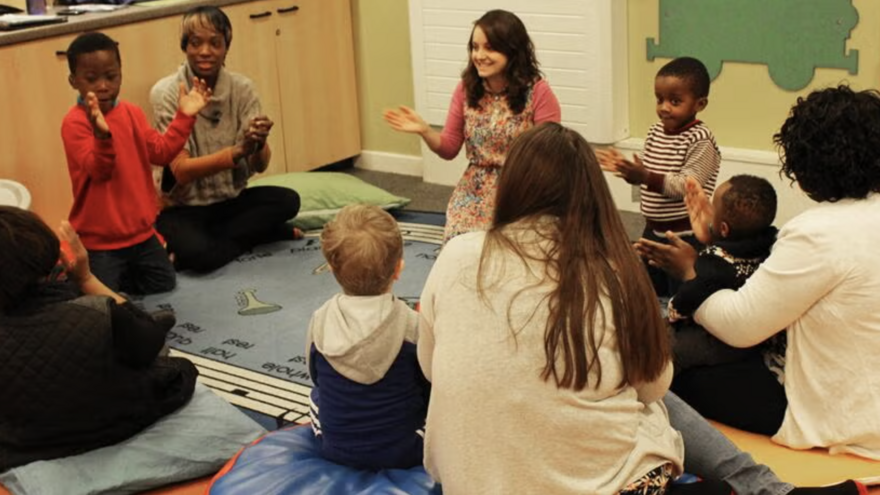
Early Years 0-5 and Post 16 (16+)
Proposed changes also place more focus on children aged 0-5 and young people 16+. This is because evidence shows that support can be lacking at these important stages of a child and young person’s life.
Proposed changes in the early years (0-5) include:
- New training for all early years staff
- SEND-focused services and a dedicated SEND specialist in every local area through Best Start Family Hubs
- Fast-track access to EHCPs for those identified with complex needs at a young age.
Proposed changes for post 16 (16+) include:
- Earlier planning (starting at least 12 months before leaving school)
- Supported Internships A work placement for young people with additional needs, where they get support from a job coach. , apprenticeships and pathways into work or higher education
- Access to Experts at Hand in post-16 settings
- Support to continue up to the age of 25 through Best Start Family Hubs.
Accountability
The Government has proposed the following changes to accountability systems:
- Schools to legally produce and review ISPs
- Ofsted to check how schools use ISPs
- Every school to publish an Inclusion
Strategy
 A strategy is a plan to show what an organisation, or a person, wants to do and how they are going to do it.
- Strengthened data monitoring to track how well schools and local areas are supporting children.
Further information about Special Educational Needs and Disabilities (SEND)
SEN means Special Educational Needs.
SEND means Special Educational Needs and Disability.
Currently, education settings must make sure they meet the 'reasonable' special educational needs of children.
This means that all education settings, including: early years settings, schools and colleges – should be able to meet the needs of most children with a learning disability.
Currently, if a child or young person has SEN, or an educational setting thinks that they might have SEN, the staff must follow this process:
- Assess: they must talk to a child’s parents or the young person themselves to work out what support might be needed.
- Plan: once a child or young person’s needs have been identified, staff must work together with them and their family to decide what outcomes they want the child or young person to achieve and what support should be put in place to help them achieve those outcomes.
- Do: the staff, supported by the special educational needs coordinator (SENCO) where relevant, should put this support into practice.
- Review: the support received by the child or young person should be reviewed by everyone involved to see if it is working. If it is, it might continue. If it is not working, or if the outcomes have been achieved, some of the arrangements might be changed.
Schools must set out their arrangements for supporting pupils with SEN in an online policy. You will be able to view this policy through your
council
 A council is also called a local authority. They are a group of people who make decisions about some of the things in the area where you live. These include: schools, social care (support for people), parks and dustbin collection.
's Local Offer.

The creation of this page was funded by The National Lottery Community A community is the people and places in an area. Fund.