
We're Mencap
People with a learning disability A learning disability is to do with the way someone's brain works. It makes it harder for someone to learn, understand or do things. are at the heart of everything we do — shaping our work and helping deliver it.

We campaign A campaign is when people work together to try to change something. for a fairer society.
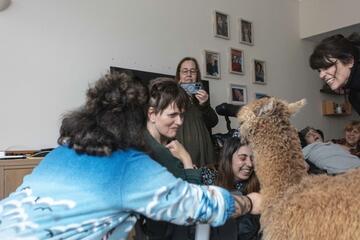
We work with families and partners to create inclusive communities.
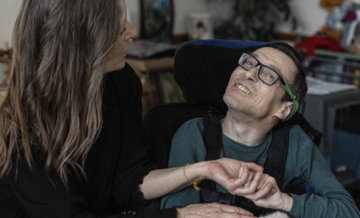
We provide the support and services people with a learning disability need to live their lives to the full.

A community to call home
At Mencap, we provide support that is built around each person’s needs and choices.
We can provide support you how you choose. This might mean living with family, living independently, or sharing a home with other people. For some people, this may be a
supported living
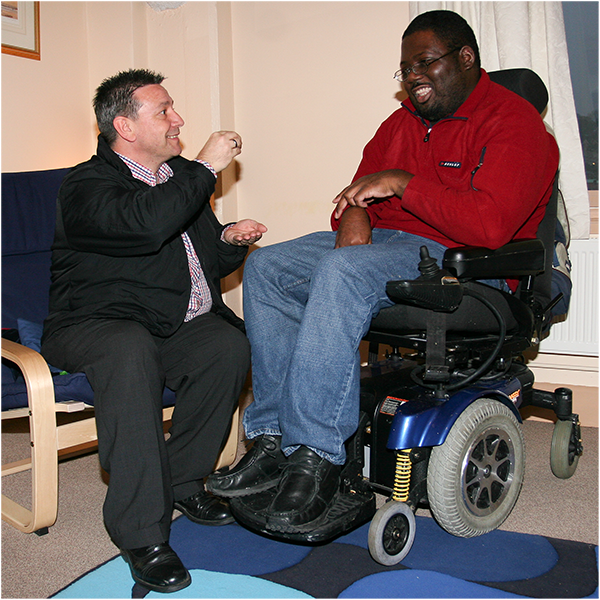 Supported living is when you live in your own home with support from staff. People who live in supported living have a tenancy agreement.
home or residential care service.
Campaigning for change
Mencap has a long history of campaigning and has been involved Involved is being included in something or taking part in something. in creating important change for people with a learning disability. We believe that people with a learning disability, their families and their carers have the most powerful voice and want to make sure that these voices are heard.

Funding the future
At Mencap, everything we do is about supporting people with a learning disability live their lives to the full. Fundraising is vital to help us do this. Whether through regular givers, event participants, corporate partners, legacy donations or trusts and foundations, the money we raise allows us to create sustainable change.

Mencap’s 2030 Strategy
Supporting people with a learning disability to live their lives to the full.
Mencap’s 2030
strategy
 A strategy is a plan to show what an organisation, or a person, wants to do and how they are going to do it.
sets out how we will support people with a learning disability to succeed in the things that matter to them.
What's it like to work at Mencap?
Find out about our supported living services and what it's like to work at Mencap as a
support worker
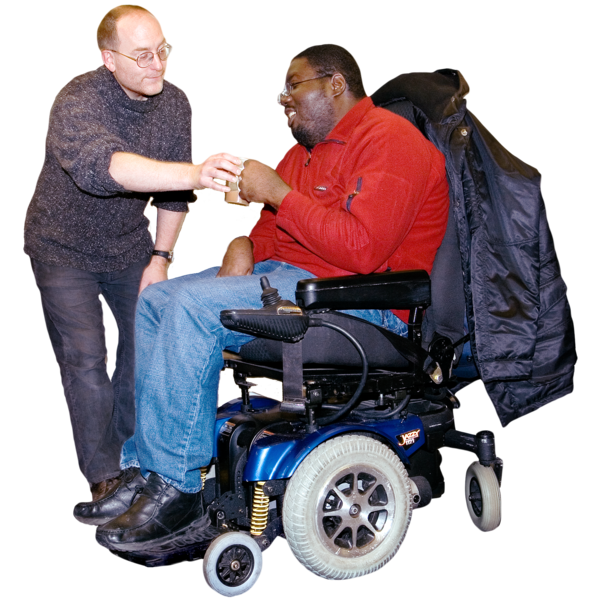 Support workers are people who are paid to give care and support to people who need it.
.
Leadership


Mencap's proud history
It all began in 1946 when Judy Fryd, a mother of a child with a learning disability, formed 'The National Association of Parents of Backward Children' - which later became Mencap.
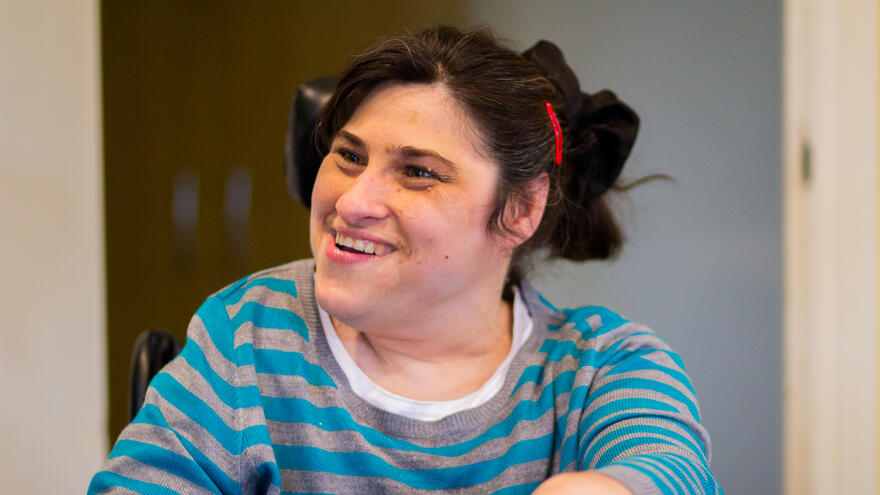
Mencap was founded in 1946 by Judy Fryd.
Judy Fryd was a mother of a child with a learning disability. She wrote a letter to Nursery World magazine inviting other parents to contact her. Many wrote back expressing their anger and sorrow at the lack of services for their children.
Judy started the
organisation
 An organisation are a group of people who work together.
that later became Mencap.
Our vision is "Supporting people with a learning disability to live their lives to the full."
In addition to Mencap, there are hundreds of organisations Organisations are groups like companies and businesses. working with us in communities across England, Wales and Northern Ireland, who respond to the local needs of people with a learning disability and their families.
We call these local groups Network Partners as they are affiliated with Mencap.
As they are affiliated they are all run independently under the Mencap name and they all offer a variety of information, advice and support to people with a learning disability. Some share our name as a local Mencap group and may also share our Mencap brand.
All Network Partners share our values Values are the things that are important to you. Mencap's values are being passionate, inclusive, brave, positive, and kind. while operating as independent charities with their own governance and strategy.
A learning disability is a reduced intellectual ability, usually identified soon after birth or in the early years, and will last a person’s whole life.
Many people with a learning disability, such as people with
Down syndrome
 Down syndrome, also known as Down's syndrome, is a type of disability. People with Down syndrome may find it hard to learn new things and may need support. They may have more problems with their health too.
, may find everyday activities challenging – for example household tasks, socialising or managing money. Other people with a learning disability need to be fully supported in all areas of their life, including communicating, personal care, and staying safe.
They are likely to take longer to learn and need support to develop new skills, understand information or interact with other people.
People with a learning disability may also have a learning difficulty (such as
dyslexia
 Dyslexia is a learning difficulty. People who have dyslexia can find it hard to read, write and spell.
) or be
neurodivergent
The word neurodivergent is used to describe people whose brains work differently to what is considered a 'typical' brain.
Some examples of neurodivergent conditions are autism and ADHD.
(such as having ADHD or being autistic).
Although a learning disability is permanent, many people can develop new skills throughout their lives. And, of course, societies and communities can change to be more inclusive. With the right support and an inclusive community A community is the people and places in an area. , people with a learning disability can thrive.
Mencap's personal support services:
Our support is tailored to individual needs and can be provided in different places .
We can support you wherever you choose – it could be living with your parents, living on your own or sharing with other people. That might be in a supported living house or a residential care service.
Campaigning for learning disability rights Rights are the things everyone should be allowed to do like have a say, or go to school. :
We also advocate, campaign for, and help people with a learning disability know their rights when it comes to education Education is when you learn things. When you fill in a form to get a job, education means you write where you went to school, college or university. , work, travel, housing, support and healthcare.
The
Voices Council
 The Mencap Voices Council are a group of 12 people with a learning disability. They share their views and experiences to help Mencap's Board of Trustees make decisions.
are a group of 12 people with a learning disability who are lead by a Chair and a Vice Chair.
They share their views and experiences to help Mencap's Board of Trustees make decisions.
The people who have the most responsibility Responsibility is managing or being in charge of something. for how Royal Mencap Society is run are our trustee board.
The trustee board is made up of the chair of Royal Mencap Society and up to 13 trustees.
Trustees are appointed for a 4 year term and can serve 2 terms in total.
The board of trustees holds a range of reserved matters and gives certain Certain means you are sure about something. authority to our executive team in order to run Royal Mencap Society efficiently.
At Mencap, at least half of our trustees have a lot of experience of learning disabilities because of personal, voluntary or professional experiences. At least one trustee must be a person with a learning disability.
Trustees have a range of skills and experience in areas including finance, international business,
local authority
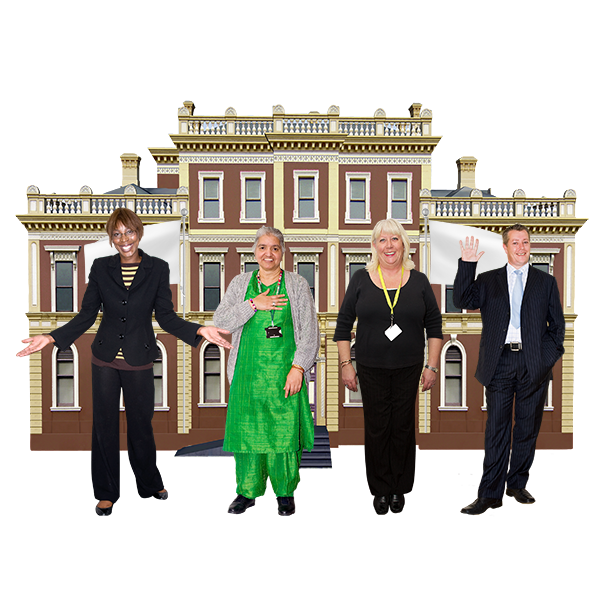 A local authority is also called a council. They are a group of people who make decisions about some of the things in the area where you live like schools, social care (support for people), parks and dustbin collection.
sector, education, IT small and medium business support, strategic planning, risk management, HR, campaigning, strategic communications, fundraising and marketing.
Mencap's executive team are committed to maintaining the highest standards of governance and comply with the principles outlined in the Code of Governance for Voluntary Organisations, which is approved by the Charity Commission.
The executive team prepares matters such as policy, strategy and budgets for consideration and approval by the trustees, who then monitor the implementation of these plans.
HRH The Duchess of Edinburgh has been Mencap's patron since 2022 and is committed to supporting people with a learning disability.
The Duchess is a much-valued patron of the charity and over recent years has publicly supported Mencap in a number of ways, including a visit to a children’s centre in Belfast in 2018 and supporting the charity when it was the official partner of the Virtual London Marathon in 2020.
Other high profile ambassadors include Alexander Dragonetti (best known for starring in The Traitors), Jodie Whittaker (award winning British actress) and The Edge (guitarist with U2) to name but a few.
Our
Myth
 A myth is an idea about something that is not true.
busters are a group of amazing people with learning disabilities who are continually busting myths about learning disability and helping make the UK the best place in the world to live with a Learning Disability.