

We will campaign A campaign is when people work together to try to change something. for a fairer society.

We will work with families and partners to build inclusive communities.

We will deliver the services people need to live their lives to the full.
This
strategy
 A strategy is a plan to show what an organisation, or a person, wants to do and how they are going to do it.
brings all of that together. It shows what we will focus on over the next five years, how we will work, and the impact we want to make by 2030.
Our ambition for 2030
By 2030, we will offer more support to more people, in a wider variety of ways, at every stage of life.
We know that people’s needs change over time. That’s why our work will be centred around key life stages:
- Around birth and early years
- School age
- Becoming an adult
- During adulthood
- As people grow older
At every stage, we will focus on helping people with a learning disability A learning disability is to do with the way someone's brain works. It makes it harder for someone to learn, understand or do things. live the life they choose.
What we will focus on
Our strategy is built around five clear goals. Together, they guide everything we do.

Goal 1: Excellent person-centred services
We will provide high-quality, person-centred services and grow our areas of specialism, so people get the right support at the right time.

Goal 2: Inclusive communities
We will work with communities and our network groups so that people with a learning disability are included, connected and less lonely.

Goal 3: Breaking down barriers
We will challenge inequality by increasing awareness and understanding of learning disability, and by influencing policies that affect people’s lives.
Goal 4: A culture of belonging
We will create a culture where everyone feels welcome, valued and able to achieve our shared goals.

Goal 5: A strong, well-run organisation
We will run Mencap well, with the right resources, technology, systems and processes to deliver our strategy now and in the future.
How we will make progress
Our strategy runs over five years. While we will make progress on all five goals every year, each year has a clear focus:
- Year 1 – Strength: improved quality and strong financial Financial means anything that is to do with money. It is used to describe how people, businesses, or governments get money and how they use it foundations
- Year 2 – Growth: more support for people through care and training
- Year 3 – Breadth: a wider range of specialist services
- Year 4 – Reach: expansion of our community A community is the people and places in an area. programmes
- Year 5 – Society: greater understanding of learning disability
We will also stay open to new opportunities as they emerge, so we can respond to changing needs and make the biggest possible difference.

Our I-statements: what success looks like
Our strategy is guided by what people with a learning disability, families and colleagues tell us really matters.
These I-statements describe what success feels like in everyday life. They help us stay focused on people, not processes, and make sure our decisions and actions always put people with a learning disability at the heart of what we do.
We will return to these statements throughout the life of our strategy to check we are on track and to guard against drift.
These statements describe the life we are working towards for people with a learning disability.
They reflect the things that matter most: safety, choice, belonging,
relationships
 Relationships are about the people in your life. You might have different types of relationships like friendships, family relationships, or a boyfriend or girlfriend.
and being valued as a person.
By 2030, people with a learning disability will be able to say:
- I can live my life to the full.
- I have the support I need, at the right time.
- I feel safe in my environment and when I go out and about.
- I feel cared for and live in a home that is well cared for.
- I have choice,
independence
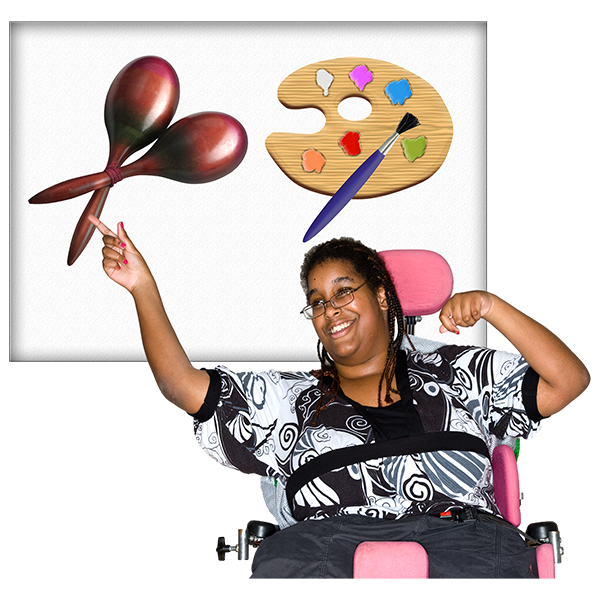 Independence means doing things on your own. Making your own choices.
and control over my life.
- I get the right support to make my own decisions.
- I have choice about where I live and who I live with.
- The people who support me value me as a person and for the contribution I make.
- I belong to my community and know what is going on in my local area.
- I have friends and a social life, including a relationship if I want one.
- I have a job if I want one.
- I have someone to talk to and someone who understands me.
- I am proud to be who I am.
- I have the security of knowing I will be supported, even when I can no longer rely on my family.
- I am not at risk of ending up in prison or a mental health hospital because of my learning disability.
These statements shape how we design services, influence policy, work with communities and support people at every stage of life.
Families are experts in their own lives. These I-statements reflect what families tell us they need: trust, partnership, understanding and support that lasts.
By 2030, families will be able to say:
- I know there are people who will work hard to get to know and support my family member, whatever their needs are.
- I know there are people who understand my family member’s communication needs and support them to share their wishes and experiences.
- People work together with me to achieve the best for my family member.
- My role is recognised as important, and I am important too.
- People empathise with my experiences and understand that my journey is not always easy.
- I have opportunities to support, and be supported by, other families.
- I know my own rights Rights are the things everyone should be allowed to do like have a say, or go to school. and my family member’s rights, and I am confident they matter.
- I do not feel alone. Expert advice and support are available throughout our lives, and help is there from the start.
These statements guide how we work alongside families as partners, not just as service users.
Our colleagues make our strategy possible. These I-statements describe the culture we want to create at Mencap: one where people feel supported, valued and proud of the difference they make.
By 2030, colleagues will be able to say:
- I am part of something meaningful, and I feel that every day.
- I feel proud to work for an
organisation
 An organisation are a group of people who work together.
that is welcoming and inclusive.
- I am supported and encouraged to be my best.
- I feel valued for who I am and what I can be.
- I have the tools I need to do my job well.
- The processes I follow are simple and clear.
- I am recognised and rewarded for my work.
- I know Mencap is financially strong, so we can focus on achieving our goals
These statements help us build a strong organisation that can deliver high-quality support now and into the future.
We will continually return to these I-statements over the course of the next five years.
They help us stay person-centred, measure what really matters, and make sure that by 2030 we are supporting people with a learning disability and their families throughout their lives - especially at the life stages when they need us most.
Measuring our success
We will measure the success of our strategy through:
- Our strategic result measures
- Our i-statements
- The shifts we want to see for people with a learning disability
This will help us stay accountable, learn what works, and keep improving.
More about Mencap
What's it like to work at Mencap?
Find out about our
supported living
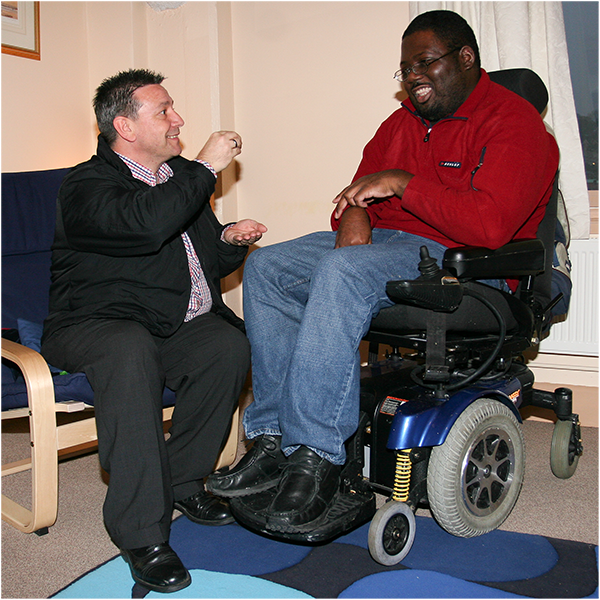 Supported living is when you live in your own home with support from staff. People who live in supported living have a tenancy agreement.
services and what it's like to work at Mencap as a
support worker
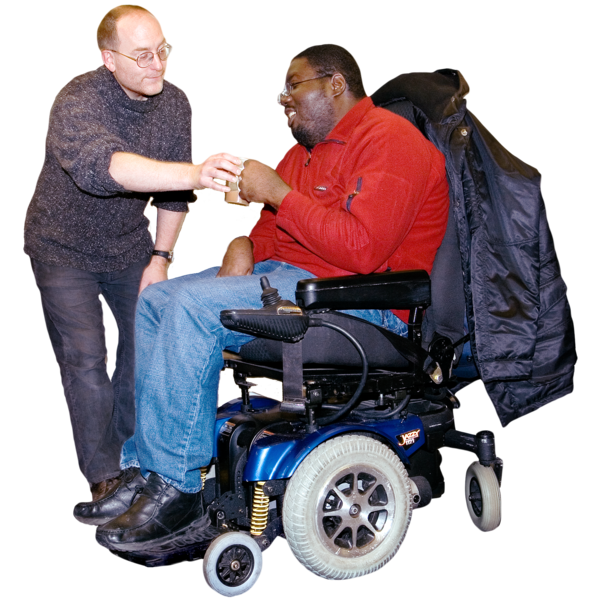 Support workers are people who are paid to give care and support to people who need it.
.