
“Deeply troubling” government legal action puts disability rights Rights are the things everyone should be allowed to do like have a say, or go to school. at risk
Mencap, Mind and the National Autistic Society say that “deeply troubling” legal action by the Department for Health and
Social Care
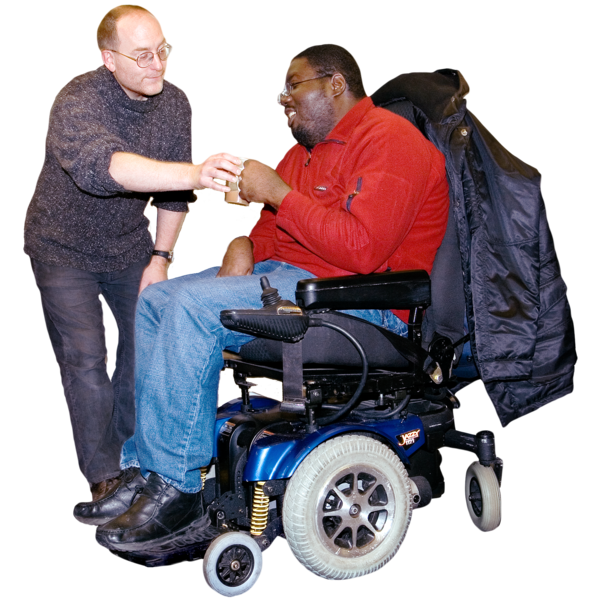 Social care means the services that give care and support to people who need it.
places the rights of thousands of disabled people at risk - especially those who cannot speak up, challenge decisions, or seek help when things go wrong.
The Department has intervened in a Supreme Court case brought by the Attorney General of Northern Ireland which is seeking to fundamentally change legal safeguards for people who lack capacity. The Department is asking the Supreme Court to set aside a 2014 ruling known as ‘Cheshire West’, which extended legal protections to people who couldn’t choose where to live, and made sure those people had a right to challenge the decisions others had taken for them. A hearing is scheduled for October 20.
In its 2014 ruling, the Supreme Court established that if someone is under continuous supervision and control, is not free to leave and cannot
consent
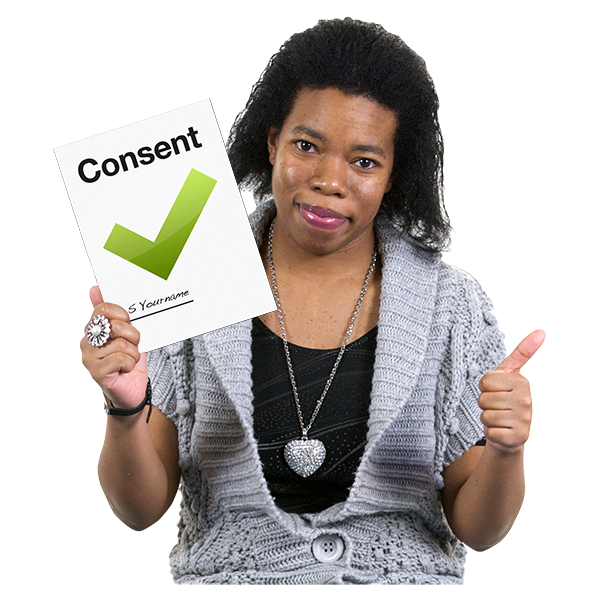 Consent is when you say yes to something, like an operation, or Mencap using your photo for a story. You may have to sign something to say yes. If you can't make your own decisions, someone else can say yes or no for you. They must think about what is right for you.
to this, they are ‘deprived of their liberty’. This applies to people in locked rehabilitation units or
community
A community is the people and places in an area.
placements such as
supported living
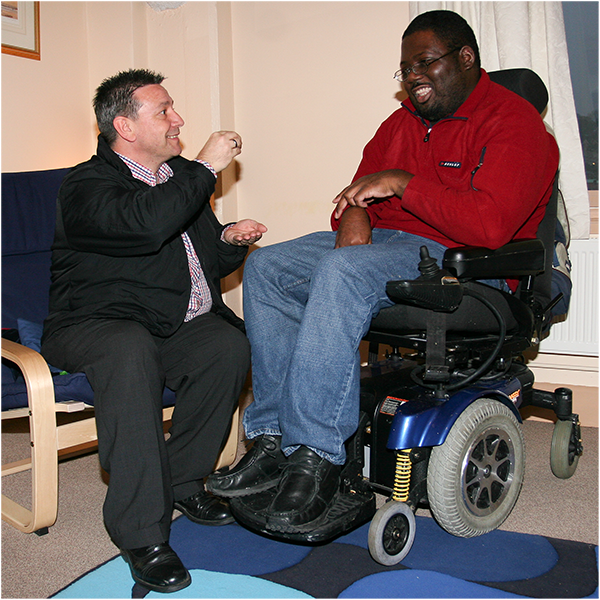 Supported living is when you live in your own home with support from staff. People who live in supported living have a tenancy agreement.
or care homes.
The legal safeguards established in the ‘Cheshire West’ case in 2014 ensure an independent person checks that such arrangements are justified, lawful, and in the person’s best interests. The Supreme Court’s decision could have wide-reaching implications, potentially removing some of these important legal protections for people across the UK.
Unprecedented action by Department of Health and Social Care
The charities say the Department’s actions are unprecedented and go beyond the Northern Ireland AG’s reference.
The charities believe the Department lacks standing in introducing these new arguments; has intervened late in the case, meaning there is inadequate time for the parties to respond and for the lived
experience
Experience is when you have learned or tried something before.
of people to be properly heard; and that the intervention significantly broadens the scope of the case, raising complex legal and
human rights
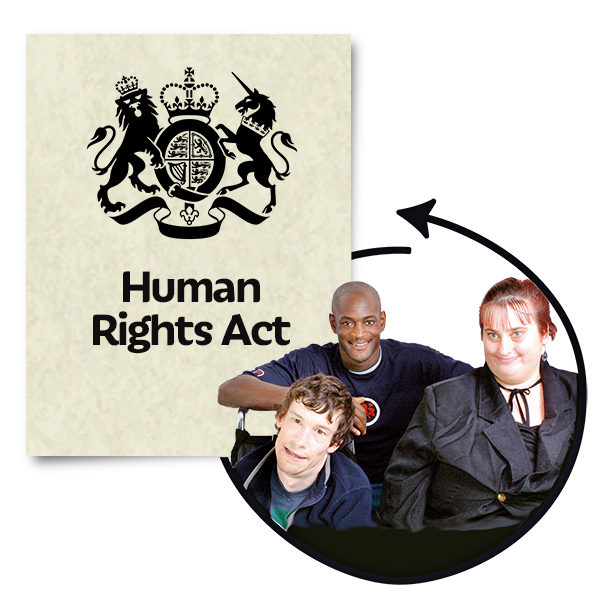 Human rights are the rights that everyone has. These include the right to go to school and the right to start a family.
questions that could impact the
safeguarding
Keeping people safe from being hurt, abused, or neglected is called Safeguarding.
of hundreds of thousands of people with learning disabilities, autistic people, and those with other impairments.
The charities are unable to publish the Department’s intervention, and the Department has not released information about what it is asking the Supreme Court to do. The Department’s decision not to make public the change in law it is trying to effect means other stakeholders—including disabled people, their families, and civil society—have no way of discovering or responding to the arguments being made.*
The charities are calling on the Secretary of State Wes Streeting to:
- Make a public statement about what the Department is asking the Supreme Court to do
- Withdraw the expanded scope of the Department's intervention, which could otherwise radically change disability services outside the usual legislative process
- Seek the Care Quality Commission’s views on how the proposal would affect independent inspection of institutions and the prevention of closed cultures
Joint statement from Mencap, Mind and National Autistic Society
“This action is deeply troubling. This is far too important a change to be done by the back door. Any rewriting of the law around
mental capacity
 Mental capacity means being able to make a decision when it needs to be made.
should be done through
Parliament
Parliament is a group of people who make laws and check what the government is doing.
, in an open transparent and consultative process.
“The Cheshire West judgment has ensured for over a decade that when someone is in such restrictive care, they are entitled to independent scrutiny and a clear route to challenge the arrangements. This ensures the restrictions are truly in their best interests, and not just convenient for others.
“Any change that would remove those protections would mean public bodies would mark their own homework, with no outside check, and would likely have serious consequences for the freedom, safety, and rights of thousands of disabled people, putting them at risk of abuse Abuse is when someone bullies you and does or says something to you that makes you feel hurt, upset or scared. , neglect Neglect is when you are not being cared for or supported. or harm.”
Rebecca Chapman, Irwin Mitchell Solicitors
“The Cheshire West case provided important protections for some of the most vulnerable Being vulnerable means being at risk of harm, or that you need special care because of your age or disability. people in society – those who have done nothing wrong but have restriction on their freedom because of their care needs. Over 10 years after that judgement, this case is a re-examination of those protections. Any such changes should be carefully planned, considered, risk assessed and should be made in accordance with the democratic process, in an open and transparent way. Yet, the SoS has not disclosed its proposals to the public and the court is due to consider the matter on 20 October.”
*Correct at time of publication. The Supreme Court has now published the Department for Health and Social Care’s intervention in this case.
The following testimony is from Independent Mental Capacity
Advocates
Advocates means supporting or speaking up for someone or something.
(IMCA), who
advocate
 An advocate is a person who can help you have your say. An advocate can speak up for you if you find it hard.
for people under the current Cheshire West ruling, a protection that is at risk in this case.
“I worked with an individual for a community Deprivation of Liberty Safeguards (DoLS) application, where all the previous professionals stated P was consenting of care and this was necessary due to the level of restrictions in place. P had also been assessed as lacking capacity.
“When I spoke with P, it was clear they believed everything was too restrictive and wanted to challenge this, but [they] didn't know they were able to do this. I supported P to challenge the application and re-undergo all Mental Capability Assessments. The outcome was that P had capacity and a DoLS was not needed. P is currently looking for alternative accommodation as they wished to live elsewhere in a less restrictive setting.”
-ENDS-
For further information, please contact Mencap’s media team on: [email protected] or 02076 965414 (including out of hours).
Note to editors
About Mencap
Mencap exists to ensure the UK is the best place in the world for people with a
learning disability
A learning disability is to do with the way someone's brain works. It makes it harder for someone to learn, understand or do things.
to live happy and healthy lives. We support people directly and
campaign
A campaign is when people work together to try to change something.
with people with a learning disability, their families and carers. We work to change laws, increase representation and campaign for better health, social care and
employment
 Employment means having a job.
opportunities for the 1.5 million people with a learning disability in the UK.
What is a learning disability?
- A learning disability is a reduced intellectual ability which affects someone for their whole life. Typically, people with a learning disability need more time to learn and process information. They may need extra support to develop skills, complete tasks and interact with others, or they may have more complex needs requiring round-the clock care. The level of support needed is different for everyone and may change during a person’s lifetime.
- Learning disability is NOT a mental illness or a learning difficulty. Often, the term ‘learning difficulty’ is wrongly used in place of ‘learning disability’. Having a learning difficulty (such as ADHD or
dyslexia
 Dyslexia is a learning difficulty. People who have dyslexia can find it hard to read, write and spell.
) may mean a person learns at a different pace or in a different way BUT – unlike a learning disability - it does not affect a person’s intellect.
With the right support, most people with a learning disability can lead happy, healthy, independent lives. At Mencap, it’s our mission to remove societal barriers and shatter misconceptions to make this more possible for more people.
Mencap’s guide to reporting on Learning Disability
When it comes to creating content with people with a learning disability, we know many people feel nervous about saying and doing the wrong thing. Our guide for journalists, covers everything from up-to-date facts and figures to the right language to use. It also includes tips on how to work with people with a learning disability to gather the best content.

About the National Autistic Society
- The National Autistic Society is the UK’s leading charity for autistic people.
- We are here to transform lives, change attitudes and create a society that works for autistic people.
- Since 1962, we have been campaigning for autistic people’s rights and providing support and advice to autistic people and their families.
- To find out more about the charity and
autism
 Autism is a disability. Autistic people find it difficult to understand what other people think and feel. They also find it difficult to tell people what they think and feel. Everyone with autism is different.
, visit autism.org.uk
- Follow the National Autistic Society’s social media accounts on Facebook, Instagram, Threads, X, LinkedIn and YouTube.
About autism
- Autism is a lifelong disability which affects how people communicate and interact with the world.
- At least one in 100 people are autistic which means more than 700,000 people in the UK.
- Autistic people have a range of strengths and challenges. For example, some autistic people also have a learning disability and may need support with daily tasks like washing, cooking or exercising. Other autistic people are in full time work and may benefit from reasonable adjustments.
- Autistic people may:
- Face challenges with communication and social interaction
- Be under- or over-sensitive to sounds, touch, tastes, smells, light and colours.
- Have highly focused interests or hobbies.
- Have repetitive or restrictive behaviour.
- Experience intense anxiety around unexpected Unexpected means not knowing that something was going to happen. change and social situations.
- Experience ‘meltdowns’ or ‘shutdowns’.
Read our guidance Guidance means being given clear instructions to be able to do something well. on how to talk and write about autism.
About Mind
- We’re Mind, the mental health charity. We provide advice and support to empower anyone experiencing a mental health problem. We campaign to improve services, raise awareness and promote understanding. We won't give up until everyone experiencing a mental health problem gets both support and respect Respect means showing someone you think about someone's feelings, wishes or rights. .
- Mind has a confidential Confidential means something is private. information and support line, Mind Infoline, available on 0300 123 3393 (lines open 9am - 6pm, Monday – Friday)
- Our online mental health community Side by Side is a safe space where anyone aged 18 and over with experience of a mental health problem can share their story, connect with others, access Mind’s wider information and resources, and give support in return. Find out more at www.sidebyside.mind.org.uk