


Homes Not Hospitals exhibition
Thousands of people with a learning disability A learning disability is to do with the way someone's brain works. It makes it harder for someone to learn, understand or do things. are locked away in mental health hospitals.
In March 2026 we held an exhibition 'Homes Not Hospitals: The Fight for Freedom' in London to see the real stories of confinement and the families fighting to bring loved ones home.
What is the issue?

Over 2000 people with a learning disability or autistic people are being held in inpatient mental health hospitals in England.
It’s a
human rights
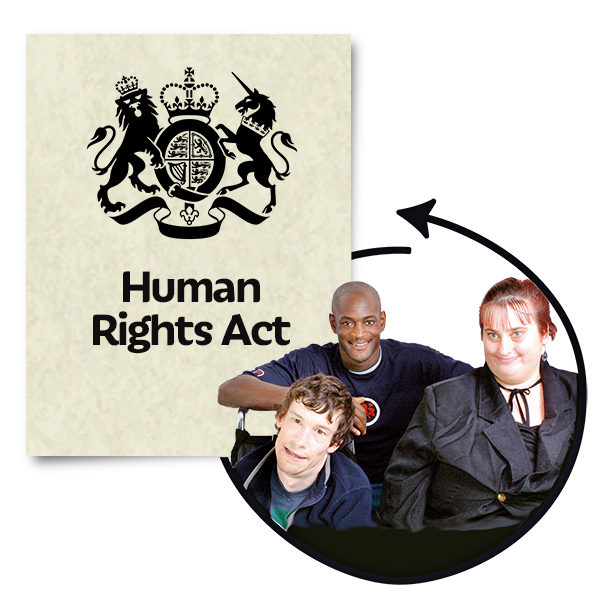 Human rights are the rights that everyone has. These include the right to go to school and the right to start a family.
scandal that we want to stop.
Many people are locked up because there is a lack of the right
community
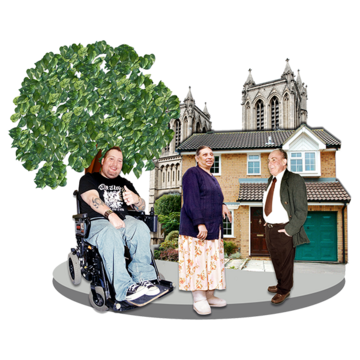
A community is the people and places in an area.
support, skilled
social care
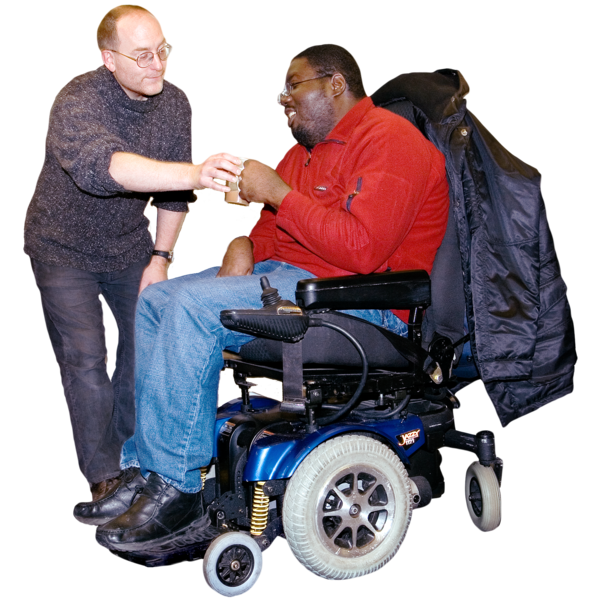 Social care means the services that give care and support to people who need it.
, and suitable housing - not because of a mental health problem.
Elliot’s story
The last government promised to reduce the number of people like Elliot held in mental health hospitals by 50%, but progress is years behind schedule. There must be urgent action to get more people back in their community with the right support.
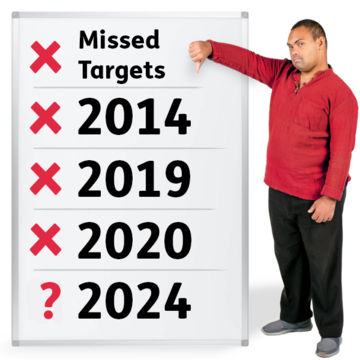
The last government promised to reduce the number of people with a learning disability and autistic people in inpatient mental health hospitals.
They repeatedly missed their own deadlines, and the progress by the last government, the NHS The NHS is the National Health Service. The NHS gives free healthcare to everyone in the UK and includes things like your GP (doctors) surgery and hospitals. and local authorities A local authority is another name for your local council. It is a group of people whose job is to look after the area where you live. Local authorities means more than one local authority. was far too slow.

Thousands of families have been devastated due to this failure to act – and thousands more will continue to suffer if action isn’t taken urgently.

The latest commitment was to reduce the number of people with a learning disability and autistic people in inpatient units by 50% by March 2024.
The last government missed this target, and we estimate it won’t be met until 2033 at the earliest.
Enough is enough – people should be able to live in homes, not hospitals.
"We wish we'd never asked for help." - Josh's story
ITV News talks to Josh and his family, who share how he became one of the thousands of people with a learning disability or autistic people who are locked away in mental health hospitals, and their desperate fight to end his inappropriate detention.
What is Mencap calling for?
An updated and strengthened action plan
The new government needs to update and strengthen the Building the Right Support Action plan and targets as a matter of urgency, as the current targets are out of date. In particular, the plan must tackle the ongoing inappropriate detention of people with a learning disability and autistic people and the shocking lengths of stay. It must also address the huge variation in progress between local areas in reducing the number of inpatients with a learning disability and/or autistic people.
The right support in the community
The last government published a clear model in 2015 for the support and services that should be in place in all local areas. The new government must ensure that local areas develop the right community support- without this the human rights Rights are the things everyone should be allowed to do like have a say, or go to school. scandal will continue. We need urgent investment in community support, with a real focus on early intervention and prevention. Like anyone else, people with a learning disability and autistic people should be able to live life in the community with the right support and suitable housing, close to family and friends.
Your campaigning is working!
People with a learning disability and autistic people can currently be sectioned under the Mental Health Act, even if they don’t have a mental health condition.
In the King's Speech, the new government committed to modernise the Mental Health Act "so it is fit for the 21st Century." This is an important step forward in ending this scandal.
Over 18,000 people signed our open letter with National Autistic Society, Voiceability and the
Challenging Behaviour
 Challenging behaviour can be when someone hurts themselves, hits or pinches someone else, or breaks something. Some people might behave like this because they are upset or because people do not understand them.
Foundation to call for urgent change to mental health
law
 Laws are the rules that everyone in the country has to follow. If you don't follow the rules you can get in trouble with the police.
.
We look forward to working with the government The Government are the people who run the country. They decide how much tax people should pay for things and how things like the National Health Service should work. to make sure they deliver on their promise for change for people with a learning disability and their families.

In your local area
Across England there is a big difference between local areas in the number of adults with a learning disability and/or
autism
 Autism is a disability. Autistic people find it difficult to understand what other people think and feel. They also find it difficult to tell people what they think and feel. Everyone with autism is different.
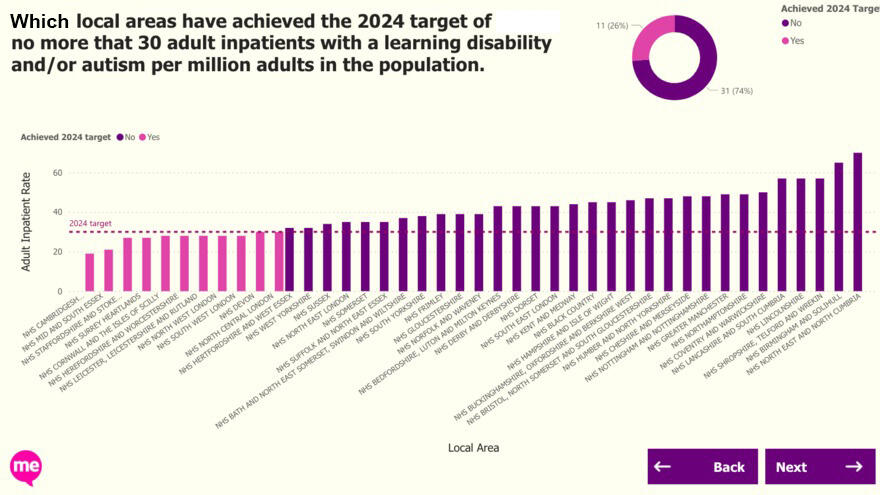
in mental health hospitals. So that we can compare different local areas, we look at how many adults with a learning disability and/or autism are locked up per million adults who live there.
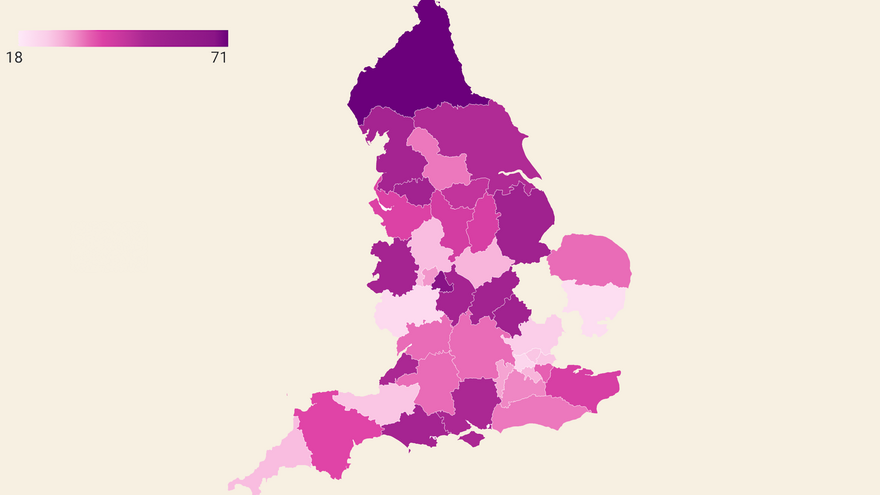
Find out about your local area
We've collected all the data that the government publishes and analysed it to create this resource. Click to find out more about the numbers of adult inpatients in your local area.
The devastating impact of government inaction on people and their families
Families whose loved ones are in inpatient units now or have been in the past, share their stories:
 By Mencap
 Emma Garrod
Campaigning for change
Hear the stories of families whose loved ones were held in mental health inpatient units to understand why things must change.
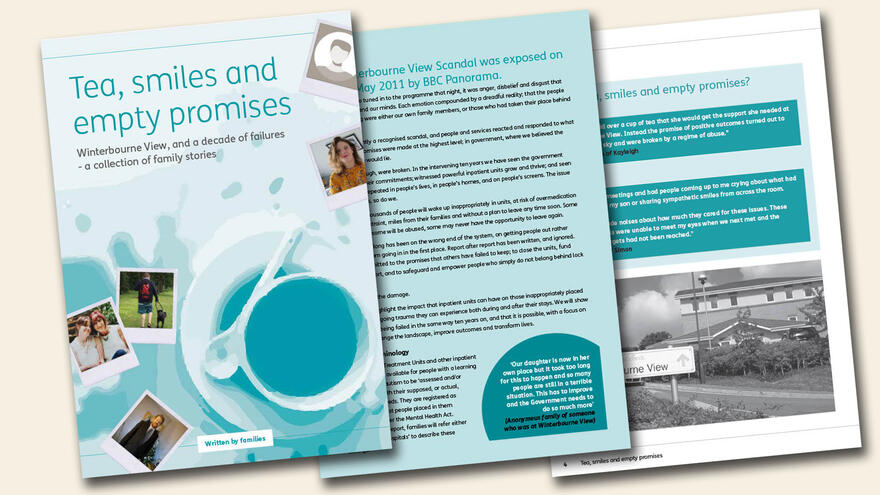
Tea, smiles and empty promises
Families of some former patients at Winterbourne View came together to mark 10 years since the abuse Abuse is when someone bullies you and does or says something to you that makes you feel hurt, upset or scared. scandal at the inpatient unit was uncovered, sharing their harrowing stories to highlight continuation of the scandal and the desperate need for change.
A small number of people with a learning disability may have a mental health problem and benefit from a brief period of
assessment
 An assessment is a way of finding out what help a person needs. When you have an assessment, you might have to go to a meeting or fill in a form.
and treatment in hospital. However, most people with a learning disability should be able to get the care and support they need in their community. Instead, they are being locked away in hospitals inappropriately due to a lack of community support and end up stuck there for years at a time.
We know that people with a learning disability or autistic people may display ‘distressed’ behaviours, or behaviour that is challenging. These behaviours are a way of communicating their needs. They may be communicating that they are in pain, discomfort, or feeling anxious and frustrated. Sometimes these behaviours may include self-injury, or destructive behaviours.
Without the right support, the person may reach a point of crisis and end up being sent to a mental health hospital even when they don’t have a mental health problem.
For people with a learning disability and autistic people who display behaviour that challenges, the right approach is to provide support in the community. This includes a care package from care staff who have the right skills to support people who may display ‘distressed’ behaviour, a suitable environment (e.g for some people with sensory needs, noise can trigger behaviour), and support from health professionals such as learning disability nurses and psychologists.
Mencap, the Challenging Behaviour Foundation and Respond has published a guide offering advice and support for families, and outlining what good community support looks like.
Learning disability is often confused with mental health problems, but they are entirely different. Learning disability is not a mental illness.
Mental health problems can affect anyone at any time, and may be overcome with treatment, which is not true of learning disability.
A learning disability is a reduced intellectual ability which affects someone for their whole life. It means that people might need support with everyday tasks such as shopping, cooking or travelling to new places.
Autism is a lifelong developmental disability which affects how people communicate and interact with the world.
However, people with a learning disability and autistic people may have a mental health problem as well. In these situations, they need the right mental health support like anyone else, and most people should be able to get the support they need in the community.
People with a learning disability and autistic people can currently be sectioned under the Mental Health Act even if they don’t have a mental health problem. We believe this is wrong.
The last government committed to changing the Mental Health Act and to improve how it works for people with a learning disability and autistic people. They published a Draft Mental Health Bill in 2022 with reforms that would remove the ability for professionals to detain someone purely because of their learning disability, or autism. But we are still waiting for the Mental Health Bill to be brought in and made law.
Unfortunately, people can end up being inappropriately sectioned due to a lack of funding and available services in the community. Local authorities and social services have faced many years of
cuts
 Cuts are when there is less money to pay for things like clubs and support.
and it’s currently estimated there are 165,000 adult social care jobs vacant in England right now.
With the system under pressure and a lack of investment in either the social care workforce or appropriate community housing options, people are frequently becoming ‘stuck’ in these places with no other options.
When we refer to “inpatient units” or “mental health hospitals” and “institutions” we are referring to the range of inpatient mental health provision in which people with a learning disability, Autism, or both, may be placed under section. This includes assessment and treatment units (ATUs).
Isabelle, whose son Matthew, was detained in an Assessment and Treatment Unit for 15 months, explains what an inpatient unit is in this video.
The Transforming Care programme was the previous government’s response to the public outcry about the shocking abuse taking place at the Winterbourne View
care home
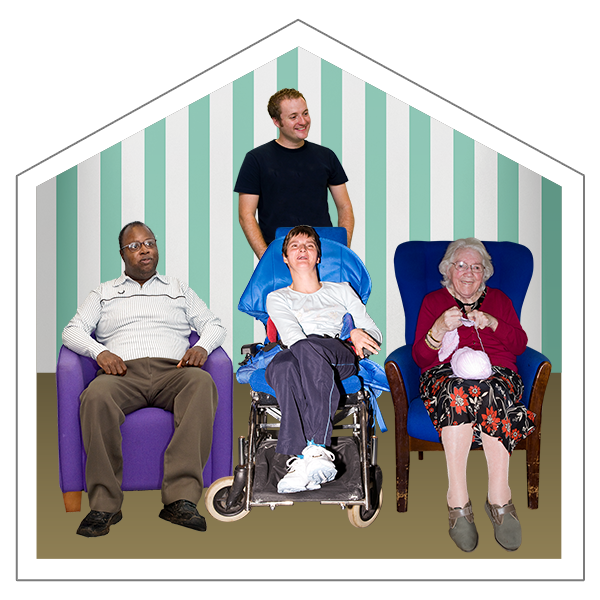 A care home is a place where people who need support live. There are staff there all the time.
, revealed by BBC’s Panorama in 2011.
After the exposure of Winterbourne View, the previous government committed to a programme of work aimed at supporting people to move out of units and back to their local communities. They promised people in inpatient units would be supported to move back to their local communities by 1 June 2014. This simply didn't happen..
In 2015, NHS England has led a 3 year closure programme called ‘Building the right support’. NHS England promised that by May 2019:
- 35-50% of inpatient beds for people with a learning disability and/or Autism would be closed
- the right support would be developed in local communities for people with a learning disability and/or Autism and behaviour that challenges.
NHS England published a 'service model' setting out the range of local support hat should be available in each area by March 2019.
This target was missed and the last government promised to close 35% of inpatient beds by March 2020. This was missed as well.
The last government then committed to closing 50% of inpatient beds by March 2024. This target is in the NHS long term plan, but was also missed.
If you have any concerns about the wellbeing of your loved one, please contact Mencap’s Learning Disability Helpline. Our trained advisers can offer support and advice, or signpost to appropriate services who can help.
As every individual case will be different, we want to make sure any advice is relevant to your case. You can visit our website which has lots of information and resources, or contact our helpline on [email protected]. You can also call 0808 808 1111 (10am to 3pm, Monday to Friday).
You may also want to read our Meeting the Challenge guide around poor care and concerns about care practices.

Care. Community. Campaign
Support to live life to the full.
This is learning disability.