
 By Mencap
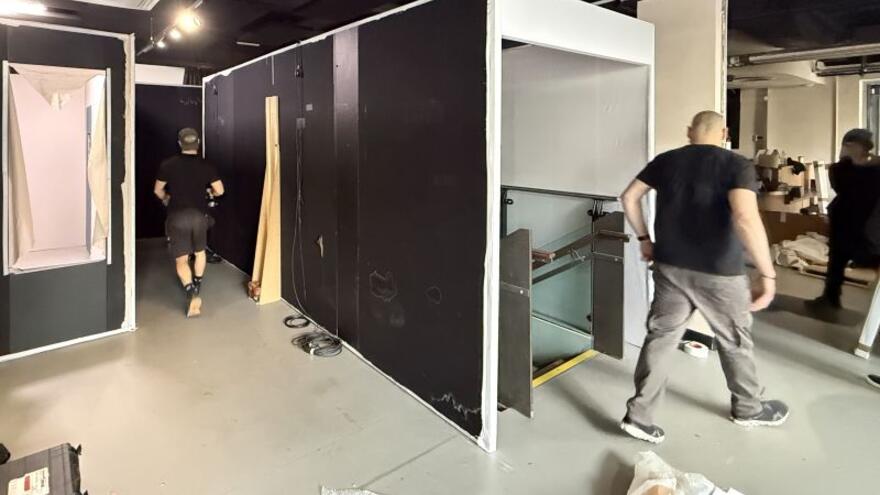
Walking down Brick Lane towards Rich Mix, you can feel the energy of a space preparing to tell important stories. When our team arrived to begin installing Homes Not Hospitals: The Fight for Freedom, we weren’t just setting up an exhibition, we were bringing years of lived
experience
Experience is when you have learned or tried something before.
, family
advocacy
 Advocacy is when you get support to have your say.
, and creative collaboration into one place.
Inside the venue, the early stages of installation began: panels being carried in, materials unpacked, and the first pieces of artwork finding their place. Every element being lifted onto a wall or positioned under a spotlight represented something bigger, a person’s life interrupted by long‑term detention, and a family fighting for their loved one to come home.
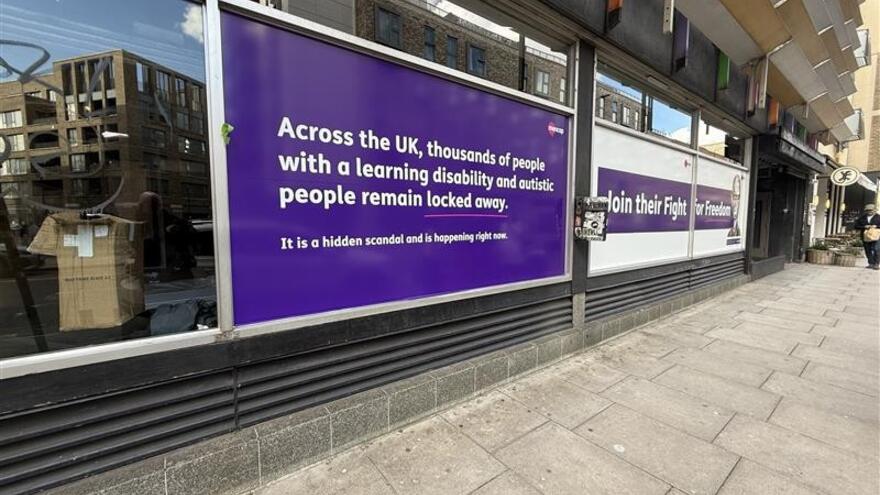
Outside, vinyl graphics were carefully applied to the windows. The design work is rooted in co‑production, shaped directly by families who have lived through the trauma of having someone they love detained in a mental health hospital. Their voices guided the tone, the visuals, and the stories that fill the space.
Inside, our graphic designer adjusted posters and wall graphics, each one created to make people pause and reflect. Pencil drawings, photography, sound, and immersive installations work together to move beyond statistics and bring visitors closer to the emotional reality of detention and the hope of life in the community A community is the people and places in an area. .
As the team moved through the space, checking lighting, placing labels, and testing audio, the purpose of the exhibition remained at the centre of every decision. Behind every detainment is a family missing birthdays, celebrations, and the everyday moments that make up a life together.
When the final vinyl was smoothed onto the window and the team stepped back, the message was clear: this exhibition invites people to observe, listen, reflect and take action.
What the exhibition explores
Homes Not Hospitals: The Fight for Freedom shares the experiences of people with a learning disability A learning disability is to do with the way someone's brain works. It makes it harder for someone to learn, understand or do things. and autistic people who have been detained in mental health hospitals, and the fight their families have led to bring them home.
The families involved Involved is being included in something or taking part in something. in co‑producing this exhibition have been campaigning for many years. Some first came together after the Winterbourne View abuse Abuse is when someone bullies you and does or says something to you that makes you feel hurt, upset or scared. scandal. As promised reforms failed to materialise, more families joined, each with their own story of a loved one admitted into the mental health hospital system.
The exhibition moves beyond numbers and reports, focusing instead on the people at the heart of this issue. Through personal testimony, photography, sound, and immersive installations, visitors encounter:
- First‑hand experiences from people and their families
- Powerful visual and audio storytelling
- The realities of detention and the hope of life in the community
Visitors are invited to engage deeply with these stories, reflect on the impact of long‑term detention, and consider the change that is urgently needed.
How to visit the exhibition
Homes Not Hospitals: The Fight for Freedom is open to the public at Rich Mix in Shoreditch, London. Entry is free, and everyone is welcome.
Location: Rich Mix Bethnal Green Road Shoreditch, London
Opening dates: 13 March – 19 March 2026 (closing at midday on the final day)
Opening hours:
- Monday to Friday: 9am – 9pm
- Saturday and Sunday: 10am – 9pm
Whether you stay for ten minutes or spend an hour exploring, the exhibition offers space to listen, reflect, and understand the human stories behind long‑term detention and the fight for freedom that continues today.