
Mandatory Reconsiderations

Since October 2013 if you want to challenge a benefit decision, the first step is to request a
mandatory
Mandatory means that something must be done.
reconsideration.
If you are receiving the following benefits, you cannot
appeal
 To appeal means saying you want someone to think about a decision again.
a decision at Tribunal without first requesting a mandatory reconsideration:
- Income Income is all the money you get from things like paid jobs and government benefits. Support
- Attendance Allowance
-
Personal Independence Payment
 Personal Independence Payment (PIP) is the name of a benefit that some people with a disability or health condition get. The money is to pay for extra help you might need to look after yourself and to get around. Some people who used to get Disability Living Allowance (DLA) now get PIP instead.
- Universal Credit
-
Disability Living Allowance
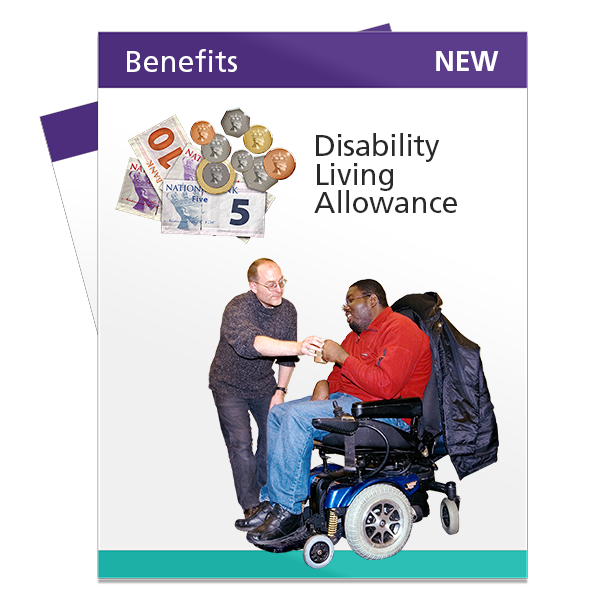 Disability Living Allowance (DLA) is the name of a benefit that some people with a disability get. The money is to pay for extra help you might need to look after yourself and to get around. Disability Living Allowance is being replaced by a benefit called Personal Independence Payment (PIP).
-
Employment
 Employment means having a job.
and Support Allowance
- Jobseeker’s allowance.
Please note that for benefits not listed above, a different process applies because they are not administered by Department for Work and Pensions ( DWP DWP stands for the government Department for Work and Pensions. ).
What are mandatory reconsiderations and how do they work?
If you receive a decision from the DWP which you do not agree with, you may formally ask them to reconsider their decision and look at your case again.
The request is a called a mandatory reconsideration because you must do this before you are allowed to appeal to the Tribunal about the decision.
Once you have asked the DWP to reconsider their decision, they will send you a Mandatory Reconsideration Notice which will include their new decision and their reasons. The DWP are not required to respond within a fixed number of days.
Instead, they must respond within a ‘reasonable’ time.
Asking for a mandatory reconsideration
You can ask for a mandatory reconsideration by phone, in person or in writing (although if you are able to, it is best to do it in writing).
You should keep a copy of this because it may be helpful to refer to later, and, if applicable, can be used in your submission to the Tribunal, at a later stage.
You must ask for a mandatory reconsideration within a certain Certain means you are sure about something. time frame, known as the dispute period. You need to ask for mandatory reconsideration within one month of the date on your decision letter. If you’re writing, the letter or form must arrive by then.
You should always check your decision notice as this will have the time limit written on it and you must aim to submit your request before the deadline.
Try to gather as much evidence as you can which supports the arguments that you are making and send this to the DWP. It may make your case stronger and save you the lengthy process of going to Tribunal.
If you get Universal Credit, you can use your journal to ask for mandatory reconsideration.
If you’re unable to use your journal, you can ask for mandatory reconsideration in any of the following ways:
- Writing to the address on your decision letter
- Filling in and returning a form
- Calling the Universal Credit helpline
Universal Credit helpline - Monday to Friday, 8am to 6pm
Telephone: 0800 328 5644
Welsh language: 0800 328 1744
Textphone: 0800 328 1344
The Possible Outcomes of a Mandatory Reconsideration
The DWP’s response from the mandatory reconsideration may be either:
a) The DWP agree to change their original decision. The new decision will then be backdated to replace the original decision. Any money that is due to you will also be backdated. There will be a reduction in the money backdated to reflect any replacement benefit that you claimed during the reconsideration process.
Or
b) The DWP doesn’t change their original decision. If this happens and you wish to appeal, you should go to the (independent) Tribunal.
In both cases, the DWP will send you two copies of the reconsideration, in writing.
If you wish to appeal to the Tribunal, you must enclose one copy of the reconsideration with your appeal form.
Next Steps after a Mandatory Reconsideration Decision
If you have received the mandatory reconsideration notice and you disagree with the reconsidered decision, you may appeal and take your case to the independent First-tier Tribunal.
This appeal right can only happen once the mandatory reconsideration has been carried out by the DWP. The Tribunal will look at both arguments (yours and the DWP’s), then make a decision.
At a Tribunal hearing, there will be an independent panel of three people who make the decision – not the DWP. The Tribunal has the power to decide and they can either agree with you and replace the DWP’s decision, or they can agree with the DWP about the original decision.
Frequently Asked Questions (FAQ)
Take a look at some of our answers to the following FAQ around mandatory reconsiderations.
Who will carry out my mandatory reconsideration?
The reconsideration will be carried out by a DWP decision maker who has not looked at your case before. They may attempt to call you if they require further information or any clarification.
They will make at least two attempts to call you and if there is any evidence you wish to submit, they will usually allow you one month within which to send it to them. If they cannot reach you, they will reconsider their decision based on the information they already have.
I’ve missed the deadline – what can I do?
You have one month to submit the request for a reconsideration. However, there are a few exceptions. You may be able to request one after the one-month time limit if:
- Your request is seen as reasonable,
- ‘Special circumstances’ apply to your case
- Your request is likely to succeed.
The definition of special circumstances is very limited: it must be a strong reason that can justify a late request. (For example, it will not be enough if you didn’t send one because you didn’t know you had one month. However, if you were seriously unwell or in hospital, this may be acceptable.)
You should write to the DWP as soon as you can to and explain why you missed the deadline. The later you request it, the stronger your reasons need to be to explain why you are late.
The late reconsideration request can be looked at up to 13 months after the date of the decision letter. However, it is important to remember that you would need extremely strong reasons for a late request, and it is at the discretion of the DWP to consider your request. This means that they may not allow a late request and therefore, you will not be able to take your case to a Tribunal.
There is also no right of appeal if a decision not to extend the deadline has been made.
Can I include new evidence in the request for a mandatory re-consideration?
Yes, you can include new evidence in the request.
Once the DWP have received the request, they will contact you if they need any clarification of any of the information you’ve given or they will ask you if you have any more evidence to provide.
If you do, they will tell you where you need to send it. We recommend you send evidence by registered post or get a proof of postage.
Once you’ve told the decision maker that you have more evidence, they can put the reconsideration on hold for up to one month, to allow you to send in all your new evidence. You should try and gather evidence from any GP, specialist, therapist etc. that are involved Involved is being included in something or taking part in something. in providing treatment for you.
Please note that if you do not send the evidence within one month, the DWP will carry out the reconsideration just with the information you have already provided. It is important to be aware that the decision will only consider evidence that relates to your condition at the time of the original decision and not how you are now.
Can the outcome of the mandatory reconsideration go against me at Tribunal?
No, the Tribunal are independent and will consider evidence from both parties. However, the information provided by the DWP on what you’ve told them, their
assessment
 An assessment is a way of finding out what help a person needs. When you have an assessment, you might have to go to a meeting or fill in a form.
, the information on your appeal form and the information you provide if you attend the hearing, are all considered as evidence.
My condition has worsened since the date of the decision, what should I do?
When carrying out a mandatory reconsideration, the DWP will consider how you were at the time of the original decision. They will not look at how you are now and whether you meet the criteria now, but whether you met them at the time of the DWP’s original decision.
Therefore, if there has been a change in your circumstances or your condition has got significantly worse, you should consider making a new application for PIP/AA/ESA because you may be entitled to a higher rate of the benefit now than when you made the original application.
For more information about this resource, please contact the Learning Disability A learning disability is to do with the way someone's brain works. It makes it harder for someone to learn, understand or do things. Helpline.
Phone: 0808 808 1111
Email: [email protected]
This resource was first published: 07/09/2023
Last amended: 07/09/2023