
Day services

Day services
Why are day opportunities important?
Day support can be important for learning new skills, taking part in activities, meeting people, maintaining
relationships
 Relationships are about the people in your life. You might have different types of relationships like friendships, family relationships, or a boyfriend or girlfriend.
, getting out into the
community
A community is the people and places in an area.
and receiving support outside the home. It can also give family members and carers a break from caring and help them continue with work, family life and managing their own wellbeing.
Without suitable daytime support, some people may become isolated, lose routines and confidence, have less opportunity to participate in ordinary community life, or place unsustainable pressure on family carers.
What matters is not simply whether a service A service gives people what they need, like healthcare services that help people when they are ill, and support services that give people support. is called a “day service”, but whether the support actually helps the person achieve the outcomes that matter to them.
Key message
A
council
 A council is also called a local authority. They are a group of people who make decisions about some of the things in the area where you live. These include: schools, social care (support for people), parks and dustbin collection.
can change how support is provided, but it must ensure that eligible needs are genuinely met in practice. A day service, activity, holiday, transport arrangement or personal
budget
 A budget is a plan where you look at how much money you have and how you will spend it.
should be considered in the context of the individual person’s needs, outcomes and real ability to participate.
Your rights under the Care Act
If a
local authority
 A local authority is also called a council. They are a group of people who make decisions about some of the things in the area where you live like schools, social care (support for people), parks and dustbin collection.
assesses a person as having eligible needs, it must ensure that those needs are met. This does not automatically mean that the authority must provide a particular day centre, a particular number of sessions, or support in one specific building. The authority has some choice about how needs are met.
The need is not the service. It is the difficulty or deficit caused by the person’s condition, illness or disability. The Care Act eligibility regulations set out the areas of life in which a person may be unable to achieve specified outcomes, and the resulting impact on wellbeing.
However, the arrangements suggested by the council must genuinely meet the person’s assessed eligible needs and outcomes in practice, objectively speaking. A council cannot simply say that a cheaper, different or “more person-centred” model will work without considering whether it is
accessible
 Accessible means something is easy for people to use or join in with. For example: Accessible writing means the writing is easy to read and understand.
, available and suitable for the individual in the real world.
A care and support plan should explain:
- The person’s needs and desired outcomes.
- The outcomes the council has assessed as creating eligibility in the relevant Care Act domains.
- How the council proposes to meet the needs.
- The personal budget for funding that proposal.
- Any contribution the person is asked to make through the charging system.
If circumstances change, or the existing arrangements no longer work, the plan may need to be reviewed and revised.
What can day support include?
Day support can take many forms. It may include a day centre, a personal assistant,
direct payments
 Direct payments are when the money for your care and support, or benefits, is paid to you.
or commissioned supported activities,
education
Education is when you learn things. When you fill in a form to get a job, education means you write where you went to school, college or university.
or training, volunteering, community groups, help with travel, individual support at home and in the community, or a combination of these.
A day centre may be right for some people, but not for everyone. Equally, a personal budget or community activity is not automatically a suitable replacement for being able to attend a centre for a reasonable part of the day. The question is whether the proposed arrangements meet the person’s own needs, are realistically available, and work in their day-to-day life.
Choice must be real. A list of theoretical local activities is not enough if the providers cannot provide the support required, are inaccessible, cannot be reached, or cannot meet the person’s communication, sensory, behavioural, personal-care or safety needs.
The
Ombudsman
 An ombudsman is someone who can help you if you have complained about a service, like a hospital. If you think that the service has not looked at your complaint properly, you can take your complaint to the ombudsman. The ombudsman is an independent person who will look at your complaint.
’s decision concerning North Northamptonshire Council (24 019 678) illustrates this point.
The council had agreed that a man required 40 hours a week of community support to access social, recreational and
leisure
 Leisure is when you have time to do things you enjoy like playing sports or going to the pub.
activities. It then failed over a lengthy period to arrange the remaining hours because it could not find a provider. The effect was that his mother undertook the missing support, even though it was not care she was genuinely willing or able to provide without cost to her own private and social life.
A shortage of suitable providers does not itself mean that an assessed eligible need has disappeared; it is a problem the council must address through lawful care planning and commissioning.
Activities, trips and holidays
Day support is not limited to personal care or attendance at a building. Depending on the person’s assessed needs and outcomes, it may include support to take part in activities, maintain relationships, learn skills, go out in the community, take trips, join groups, or have a holiday.
A council is not required to fund every leisure activity or holiday that a person would like to have. But it must not reject activities, trips or holidays simply because it sees them as “luxuries” or as outside adult
social care
 Social care means the services that give care and support to people who need it.
. The question is whether the need for activity, participation, a break, support to travel or a holiday arises from the person’s disability and has been assessed as a care and support need.
In R (BG and KG) v Suffolk County Council [2022] EWCA Civ 1047, the Court of
Appeal
 To appeal means saying you want someone to think about a decision again.
confirmed that recreational activities and holidays can, in appropriate circumstances, be eligible needs under the Care Act 2014 and can be met through
financial
Financial means anything that is to do with money. It is used to describe how people, businesses, or governments get money and how they use it
support. The case does not mean that every holiday must be funded. It means that councils must assess the person’s own needs and must not apply a blanket rule that this type of support can never form part of a care and support package.
If an activity is important to meeting an assessed need, the plan should say what support is required, how it will be arranged, what the personal budget covers, and which ordinary living costs remain the person’s responsibility Responsibility is managing or being in charge of something. .
It can be important to distinguish between:
Funding the support needed to access an activity, such as a personal assistant or enabler.
Funding the person’s ordinary cost of participating in the activity itself.
In Oxfordshire County Council (23 014 767), an Ombudsman’s report, the council took the position that Mr G’s direct payment could fund a personal assistant to support him to access activities, but not the ordinary price of activities such as paddle boarding or a cinema pass.
The Ombudsman upheld the complaint because of faults in Oxfordshire’s handling, communication and direct-payment arrangements, albeit not in terms of its approach to the consumption cost of the activities.
The report is not authority for a blanket rule that activity costs can never be funded: the question remains whether the cost is necessary to meet an assessed need, whether it forms part of the personal budget, or whether it should be allowed as disability-related expenditure in the financial
assessment
 An assessment is a way of finding out what help a person needs. When you have an assessment, you might have to go to a meeting or fill in a form.
.
In RW v Royal Borough of Windsor and Maidenhead [2023] EWHC 1449 (Admin), the High Court held that the cost of activities connected to a social and life-skills group was capable of being treated as disability-related expenditure in the person’s financial assessment.
This does not mean that every activity cost must be disregarded for means assessment for charging purposes, but it shows why a council must consider the facts of the individual case.
Transport, access and charges
Transport can be crucial. A day opportunity that a person cannot get to safely, practically or affordably may not be a real alternative at all. When deciding how to meet eligible needs, a council should consider whether the person can actually access the proposed service or activity, including the help they need with travel, mobility, communication, safety and transitions.
Transport is not an automatic universal entitlement. A district council, where there is one, may offer travel concessions to people with needs. A person may receive the mobility component of
Personal Independence Payment
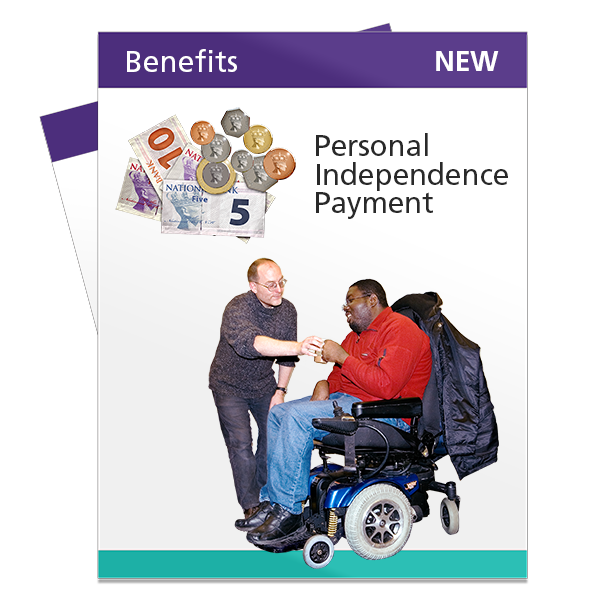 Personal Independence Payment (PIP) is the name of a benefit that some people with a disability or health condition get. The money is to pay for extra help you might need to look after yourself and to get around. Some people who used to get Disability Living Allowance (DLA) now get PIP instead.
, and it cannot be counted by the council as
income
Income is all the money you get from things like paid jobs and government benefits.
for Care Act means-testing. Not everyone can drive a mobility vehicle as an alternative to receiving the money, and there is no rule that a vehicle must always be available to the person who needs to attend day support.
But if travel support is necessary in order for the arrangements in the care and support plan to meet the person’s eligible needs, the council must address that practical issue. It should not treat a service as available merely because it exists on paper.
The Ombudsman has criticised councils which treat mobility benefit as the complete answer without assessing the person’s actual access needs. In a Brighton and Hove complaint report, (23 013 280) the council was criticised for failing to complete a proper transport assessment for a person who needed to get to day care to meet assessed eligible needs, while relying on the person’s mobility component instead. The relevant question is whether the care plan is genuinely workable, not simply whether the person receives a mobility-related benefit.
Transport has a particular position in the charging rules. The Care and Support (Charging and Assessment of Resources) Regulations 2014 identify transport, along with shopping, meals-on-wheels and recreational activities, as examples of “non-care related support”. This can allow a council to take the actual cost of that support into account in a way that reduces the person’s minimum-income protection, if they will not willingly use their own mobility component—often through an appointee—to organise the necessary travel privately – in effect, incentivising the person to make, or have made for them, private arrangements.
It is therefore especially important to ask the council:
- Is transport being provided as part of meeting an assessed care and support need?
- Is it being treated as non-care-related support for charging purposes under a formal charging policy and, if so, was that policy consulted on before adoption?
- What is the full charge and how has it been calculated?
- Does the charge make the proposed arrangement inaccessible in practice?
- Does the care and support plan or financial assessment need to be reviewed?
Do not assume that entitlement to the mobility component of PIP answers these questions. The council must still assess the person’s actual needs and consider whether the proposed support plan is genuinely accessible.
When services change or close
Councils may seek to modernise, reduce, close, decommission, retender, relocate or replace
day services
 Day services are things some people with a learning disability do in the day, usually as part of a group. For example: drama or craft.
. A change may also happen when a service is temporarily suspended and is not reopened, when transport is withdrawn, when charges increase, or when a personal budget is reduced or set at a different rate.
Modernisation is not always a euphemism for a budget cut. A new approach can be positive if it is genuinely person-centred and the alternative arrangements meet people’s needs. But a council should not use words such as “choice”, “independence” or “community-based support” to avoid explaining what will actually replace an existing service and how people will be supported to use it.
A general policy about modernisation, personal budgets or community support is not necessarily the same as a decision to close a particular day centre or withdraw a particular service. In R (LH) v Shropshire Council [2014] EWCA Civ 404, the Court of Appeal held that an earlier broad
consultation
 Consultation is finding out what people think about something.
did not fairly consult people on the specific closure of Hartleys Day Centre.
For more information on consultation, see the companion guide, Know your rights: Consultations.
Consultation and individual review
Consultation asks whether a service should close or change. Assessment and review ask what this particular person needs and how those needs will be met. They are related, but they are not the same thing.
A council may, in some circumstances, decide in principle whether a service should close or be replaced before it has completed a full reassessment of every person who uses it. But it must have enough reliable, person-sensitive information to understand the likely effects of its proposal, what the person was getting out of the particular style of day services for which they had been funded, the risks of taking that beneficial outcome away, and whether realistic alternatives appear available.
Before an individual person’s actual arrangements are changed, the council must carry out the necessary review, assessment, care planning, involvement,
advocacy
 Advocacy is when you get support to have your say.
and capacity work. It must be satisfied that the final arrangements will meet that person’s eligible needs, and do so lawfully. A general consultation cannot replace this individual process.
The council should not assume that a new, cheaper or different model will meet needs in the abstract. It should consider practical matters such as support levels, staffing, familiarity, communication, transport, personal care, safety, activity, relationships, routine, family-carer impact and the actual availability of alternatives.
The Reading Borough Council Ombudsman’s decision (25 001 921) provides a practical example. Reading failed for six months to commission support for community engagement that had already been included in the person’s formal care plan. It then attempted to direct the person towards free community provision instead. A council can consider universal and community services, but it cannot treat their theoretical availability as a substitute for support already assessed as necessary unless it has lawfully reviewed the plan and is satisfied that the alternative will actually meet the person’s needs.
People living in care homes
Living in a
care home
 A care home is a place where people who need support live. There are staff there all the time.
does not automatically mean that all of a person’s needs for activity, daytime support, community access, social participation or relationships are already met. The council should consider the person’s assessed needs and the actual support available in the home.
A generic activities programme in a care home may be valuable, but it will not necessarily meet every resident’s eligible needs or agreed outcomes. The question is whether the arrangements genuinely work for the individual.
A person can continue to spend their own money on their wellbeing. If the ordinary personal- expenses Expenses means the money you spend to buy things or pay for services. allowance is insufficient for a person’s assessed or disability-related expenditure, it may be appropriate to seek a larger allowance or ask for the position to be considered in the person’s financial assessment.
Councils sometimes refer to “double funding” when a care-home resident also receives day support. That description does not decide the legal question. The authority must still ensure that the final arrangements meet the person’s overall eligible needs.
Involvement, carers and advocacy
The council must involve the person in assessment, care planning and review or revision of care and support plans. It must also involve any carer the person has. Carers may be affected directly when day support changes, because a reduction in activity, transport or
respite
 Respite is when a person goes somewhere for a few hours or days to have a break. People with a learning disability can have respite from their carers and family, and carers and family can have respite from the people they care for.
can increase the amount of care they provide. Informal carers are not obliged to provide care and support, even if they want to.
If a person or carer has substantial difficulty understanding, remembering, using or weighing relevant information, or communicating their views, the council must consider whether it has a duty to arrange an independent
advocate
 An advocate is a person who can help you have your say. An advocate can speak up for you if you find it hard.
. A person may also need accessible information, extra time, trusted-person support or individual meetings in order to take part meaningfully.
If you think a proposed change will affect a carer, ask for a carer’s assessment as well as a review of the cared-for person’s care and support plan.
The Wirral Council Ombudsman’s decision (25 002 493), is particularly relevant. The carer had eligible needs including regular recreation, looking after her home, access to work, using community facilities, meeting nutritional needs and caring for another child. Wirral offered a standard one-off £300 direct payment before completing the assessment, capped its offer at £400, and treated that as the available support. The Ombudsman found that support for carers must follow an assessment of their individual eligible needs; councils should not impose arbitrary upper limits on the cost of meeting needs through particular routes, and the council should have explored whether respite for the carer could be arranged through the cared-for person’s support plan with the ICB.
This matters when day support changes. A council should not assume that a family will absorb the gap, or that a small standard payment for a carer answers the consequences of losing day services, community support or respite.
What can you do if you are affected?
Ask the council to explain the proposal clearly. You may want to ask:
- What exactly is changing: closure, decommissioning, non-reopening, reduction, retendering, transport, charging or a new model of support?
- What service or support will replace the current arrangement?
- What evidence shows that the alternative can meet the person’s needs?
- How will the person get there and what will transport cost?
- What will happen to activities, relationships, routine, personal care, communication, safety and family-carer support?
- When will the person’s individual assessment, review and care planning take place?
- What accessible information, meetings, advocacy and support are available?
- How can people comment on the proposal, and when will the final decision be made?
When responding to a consultation, explain clearly what the present service provides in real life, what would be lost, what practical risks there are, and what support or alternative arrangement would be needed to make the change work.
Do not assume that the council will understand these points without being told.
If a proposed change would affect the way a person’s eligible needs will be met, it is not lawfully possible simply to make the change without a revision exercise. This means a proportionate reassessment, consideration of the current needs and the available lawful options for meeting them, and a revised care and support plan.
If the person has a carer, ask for the carer’s needs and willingness and ability to continue caring to be considered too.
Complaints and getting help
If you are unhappy with a decision about day support, transport, charging, assessment, review, care planning, consultation or the way a service change will affect you, you or a carer can normally make a complaint through the council’s adult social care complaints procedure. Put concerns in writing if you can, explain what has happened, why you think it is wrong, and what outcome you want.
If you remain dissatisfied after the council has had a reasonable opportunity to respond, you can complain to the Local Government and Social Care Ombudsman. The Ombudsman is free and investigates complaints about councils and adult-social-care providers. It can consider maladministration or service failure causing injustice, but it cannot normally quash a council decision in the way a court can.
If you believe that a council proposal or decision is likely to be unlawful, you can write to the council’s Monitoring Officer and ask them to consider their statutory responsibilities under the Local Government and Housing Act 1989. This is not an ordinary appeal route and does not usually stop implementation, but it may be important where a decision has not yet been carried out.
Legal challenges can be subject to strict time limits. Seek specialist advice promptly if a final decision is imminent or has already been made.
Further information
- The Care Act 2014 and Care and Support Statutory Guidance Guidance means being given clear instructions to be able to do something well. : assessment, eligibility, care planning, review, advocacy, charging and carers’ rights Rights are the things everyone should be allowed to do like have a say, or go to school. .
- The
Equality
 Equality is when everyone is treated fairly.
and
Human Rights
 Human rights are the rights that everyone has. These include the right to go to school and the right to start a family.
Commission: information about reasonable adjustments and the public sector
equality
Equality is when everyone is treated fairly.
duty.
- The Local Government and Social Care Ombudsman: information about complaints about councils and adult social care.
- CASCAIDr: resources on adult social care law, charging, transport, assessment, care planning and remedies.
- Your local council: ask for the relevant consultation documents, transport policy, charging policy, care and support review, carer’s assessment, advocacy assessment and complaints procedure.
- Mencap: current advice and support information for people with a learning disability A learning disability is to do with the way someone's brain works. It makes it harder for someone to learn, understand or do things. , families and carers.
This online resource was published from an existing PDF on 27/08/2026
Last review: August 2026
Next review due: August 2027.