
Know your rights: Consultations

Know your rights: Consultations
Guidance
Guidance means being given clear instructions to be able to do something well.
on
consultation
 Consultation is finding out what people think about something.
and changes to adult
social care
 Social care means the services that give care and support to people who need it.
and support packages.
What is a consultation?
A consultation is when a public body asks for people’s views on proposals to change services or policies. Consultations can be an important part of decision-making. They can help ensure that people who use services, their families and carers can influence changes that affect them.
In adult social care, consultation may concern a proposal to close, decommission, reduce, retender, reorganise or replace a service. It may concern a
care home
 A care home is a place where people who need support live. There are staff there all the time.
, day service, transport arrangement, home-care provider, charging policy, or a new model of support.
A consultation is not a decision that has already been made. It should take place while the proposal is still capable of being changed by the views and evidence received.
Consultation is also not the same as an individual
assessment
 An assessment is a way of finding out what help a person needs. When you have an assessment, you might have to go to a meeting or fill in a form.
or review. A
council
 A council is also called a local authority. They are a group of people who make decisions about some of the things in the area where you live. These include: schools, social care (support for people), parks and dustbin collection.
may consult on a strategic proposal affecting a service, but it may separately have duties to assess or review an individual’s needs, involve the person and their carer, prepare or revise a care and support plan, consider
advocacy
 Advocacy is when you get support to have your say.
and capacity, and ensure that eligible needs continue to be met.
When should there be a consultation?
There is no general rule that a
local authority
 A local authority is also called a council. They are a group of people who make decisions about some of the things in the area where you live like schools, social care (support for people), parks and dustbin collection.
must consult before every service change. A legal duty to consult may arise from:
- A specific statutory requirement.
- A clear promise made by the authority.
- An established and sufficiently consistent past practice, capable of creating a legitimate expectation.
- The common-
law
 Laws are the rules that everyone in the country has to follow. If you don't follow the rules you can get in trouble with the police.
duty of fairness in the circumstances of the particular decision.
Consultation is particularly likely to be required where a proposal would make a significant change to an established service, such as closing a care home or day centre, ending a home-care arrangement, changing transport, increasing charges, or replacing a service with a substantially different model.
A general consultation about a policy of “modernisation”, personal budgets or service redesign may not be enough to consult people fairly about the specific closure of the service they use. In R (LH) v Shropshire Council [2014] EWCA Civ 404, consultation on a general programme did not fairly consult users and relatives about the particular closure of Hartleys Day Centre.
If a proposal changes substantially after consultation, further consultation may be required where the change is sufficiently material that people have not had a fair opportunity to comment on the proposal actually being considered.
An example of this principle can be seen in the case law on consultation in relation to charging policies.
A council is not automatically under a common-law duty to consult before changing an adult-social-care charging policy. A duty may arise from legislation, a clear promise to consult, or a sufficiently regular and consistent past practice capable of creating a legitimate expectation.
If a council chooses to consult, however, it must consult fairly. People must have enough information and time to understand the proposed policy, its likely financial Financial means anything that is to do with money. It is used to describe how people, businesses, or governments get money and how they use it consequences and any alternatives, and the council must genuinely consider the responses before making its decision. In R (B) v Cornwall County Council, a consultation on non-residential social-care charging was found defective because consultees had not been given sufficient time to respond; the authority later cured the problem by consulting again before remaking its decision.
A general consultation on a charging policy does not replace the need to assess an individual person’s income Income is all the money you get from things like paid jobs and government benefits. , capital, disability-related expenditure and ability to pay in accordance with the applicable legal rules.
What does fair consultation mean?
The common-law principles of fair consultation are often described as the Gunning principles. In summary, consultation must be:
- At a formative stage, before the authority has made up its mind.
- Accompanied by enough information and reasons to permit intelligent consideration and response.
- Open for adequate time for people to consider the proposal and respond.
- Followed by conscientious consideration of the responses before the final decision.
The Government The Government are the people who run the country. They decide how much tax people should pay for things and how things like the National Health Service should work. ’s 2018 Consultation Principles are useful guidance, although they are not statutory rules for local authorities A local authority is another name for your local council. It is a group of people whose job is to look after the area where you live. Local authorities means more than one local authority. and do not themselves create a separate cause of action. They say that consultations should:
- Be clear and concise.
- Have a purpose.
- Be informative.
- Form only one part of a wider process of engagement.
- Last for a proportionate amount of time.
- Be targeted.
- Take account of the groups being consulted.
- Be agreed before publication.
- Facilitate scrutiny.
- Be followed by a response published in a timely fashion.
- Avoid election An election is when people choose who should be in charge of something. This could be in charge of a group, an area, or the country. People choose by voting. The person with the most votes wins. periods where possible.
A council should not treat those principles as a substitute for its own legal duties under the Care Act 2014,
Equality
 Equality is when everyone is treated fairly.
Act 2010,
Human Rights
 Human rights are the rights that everyone has. These include the right to go to school and the right to start a family.
Act 1998, or the common law.
How long should a consultation last?
There is no universal legal minimum or maximum Maximum means the highest amount, or greatest value that something can be. consultation period. In particular, there is no rule that every consultation must last two, six or twelve weeks. The question is whether the time allowed is adequate and proportionate in the circumstances.
Relevant factors include:
- How significant, complex and urgent the proposal is.
- The likely effect on people who use the service and their carers.
- Whether enough information has been provided to understand the proposal.
- Whether people need time to obtain advice, advocacy or support to respond.
- Whether the authority has undertaken genuine earlier engagement.
- The accessibility Accessibility is about making it easier for someone to join in, get, use or do something. of the consultation materials and response methods.
In R (AA) v Rotherham Metropolitan Borough Council [2019] EWHC 3529 (Admin), which concerned closure of a day centre for adults with learning disabilities, the court assessed the later, shorter consultation in the context of the earlier engagement. The case does not establish a minimum consultation period, but it shows that fairness is assessed by looking at the process as a whole.
A short consultation may be unfair where people need
accessible
 Accessible means something is easy for people to use or join in with. For example: Accessible writing means the writing is easy to read and understand.
information, support to understand the proposals, advocacy, individual meetings, or help to respond. A council should not assume that an online questionnaire is enough merely because it is available. In R (Binder) v Secretary of State for Work and Pensions [2022] EWHC 105 (Admin), a disability-related consultation was unlawful because its design did not permit the intelligent consideration and response required by the common law.
How should you respond?
First, make sure you understand the exact proposal. Ask the council to explain plainly:
- What is proposed: closure, decommissioning, retendering, non-reopening, reduction or replacement with a new model?
- Which services, buildings, providers and people will be affected?
- What alternatives are proposed, and what evidence shows that they are available and suitable?
- What will happen to transport, activities, social contact, routine, continuity of care, communication, family contact and carer support?
- What will happen if a proposed alternative cannot meet an individual’s needs?
- What accessible formats, meetings, advocacy and support are available to help people take part?
- When will individual assessment, review and care planning happen?
If there are meetings or events, attend if possible. They may provide an opportunity to ask questions, explain the practical consequences of the proposal and suggest alternatives.
When responding in writing, address each question clearly. Explain what the existing service does in practice, what would be lost, what risks or impacts are likely, and what alternative arrangements would be necessary. Do not assume that the council will understand these points without being told.
A consultation is also an opportunity to put forward an alternative plan. If you believe the council could meet its objectives in a different way, explain the proposal and the evidence supporting it.
Accessibility and participation
When consulting on changes affecting people with learning disabilities, dementia, sensory impairments, communication needs or other disabilities, a council should make sure that people can understand the proposals and genuinely participate.
Easy-read documents may be important, but easy read Easy Read is a way of making written information easier to understand. Pictures are usually added next to the writing. will not meet every person’s needs. Depending on the people affected, a fair and lawful process may require:
- Plain-language and accessible explanations of the actual proposal and its consequences.
- Easy-read, large-print, audio, Braille, translated or other alternative formats.
- Paper, telephone, face-to-face and non-digital ways to respond.
- Meetings that allow people to ask questions and express their views, individually or in groups.
- Communication support, trusted-person support or advocacy.
- Enough time for people to obtain help and make an informed response.
These steps are not merely good practice. A council exercising public functions has duties under the Equality Act 2010 to make reasonable adjustments so that disabled people are not placed at a substantial disadvantage. It must also comply with the public sector equality duty, which requires real, timely and informed consideration of the impact of its decision on disabled people and of possible steps to remove or reduce disadvantage.
An equality impact assessment can help demonstrate that the authority has considered these matters. But there is no freestanding legal duty to produce a document with that title, and a completed form will not establish compliance if the authority has not in substance understood the likely effects of its proposal, considered alternatives or mitigation, and had due regard to the statutory equality aims.
If the consultation is not good enough
If you believe that a consultation is inaccessible, unclear, rushed, based on inadequate information, conducted after the decision has effectively been made, or does not address the actual service closure or change, raise the problem in writing as soon as possible.
Ask the council to correct the problem, extend the process, provide accessible information, hold further meetings, disclose relevant evidence, or consult again where appropriate. Explain why the flaw prevents people from making an informed response.
If a change may affect an individual’s eligible needs or care and support plan, ask for an assessment or review. Ask for the person and their carer to be involved Involved is being included in something or taking part in something. , and ask the council to consider independent advocacy where needed.
Legal challenges to public decisions can be subject to strict time limits. If a decision is imminent or has been made, seek specialist advice promptly.
Individual Care Act rights
A general public consultation is not a substitute for individual rights Rights are the things everyone should be allowed to do like have a say, or go to school. under the Care Act 2014.
Where a proposed service change affects how an individual’s needs are met, the council may need to assess or review the person’s needs and care and support plan. It must involve the person in that process. It must also involve any carer the person has, as well as any person whom the adult asks it to involve. A carer’s statutory involvement is not expressed as depending on the adult’s
consent
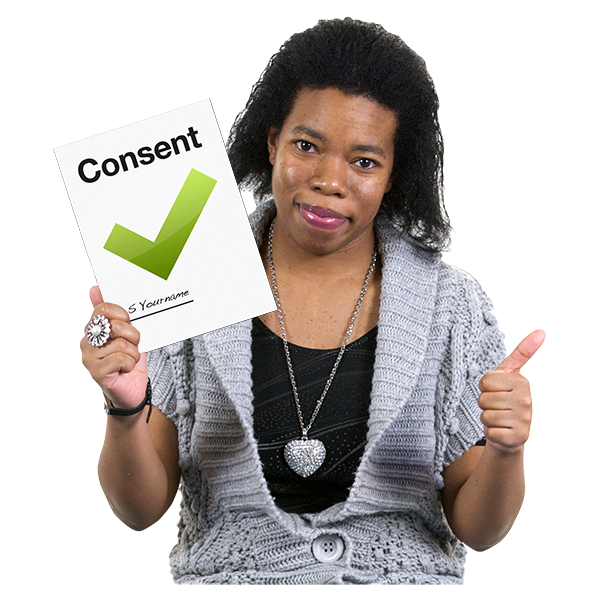 Consent is when you say yes to something, like an operation, or Mencap using your photo for a story. You may have to sign something to say yes. If you can't make your own decisions, someone else can say yes or no for you. They must think about what is right for you.
.
“Involvement” is not defined in the Act. It should mean meaningful participation in the process: the opportunity to give information about needs, outcomes, communication, risks, daily life and the sustainability of caring; to understand the proposal; and to comment on possible arrangements and their impact.
Involvement does not necessarily give a carer an unlimited right to receive all of the adult’s confidential Confidential means something is private. records or assessment paperwork. A capacitous adult’s confidentiality, data-protection rights and views about disclosure remain relevant. The better approach is to involve the carer as fully as possible in the assessment and planning process, receive and consider the carer’s evidence, seek and record the adult’s views about sharing information, and share information where there is a lawful and proportionate basis. “GDPR” should not be used as a blanket reason to refuse to hear from, or involve, a carer.
The council must also consider whether the person or carer would have substantial difficulty being involved in an assessment, care plan or review. If so, and there is no appropriate person able and willing to support them, it must arrange an independent
advocate
 An advocate is a person who can help you have your say. An advocate can speak up for you if you find it hard.
under the Care Act 2014.
Capacity is decision-specific. If there is reason to doubt whether a person can make a relevant decision or take part in a particular process, the
Mental Capacity
 Mental capacity means being able to make a decision when it needs to be made.
Act 2005 applies. The authority must take practicable steps to support the person to make their own decision before concluding that they lack capacity; any best-interests decision must then be made lawfully.
Consultation, closure and individual assessment
The law does not require an artificial choice between consulting first and assessing first.
A council may be able to consult on, and decide in principle, whether a service should close, be decommissioned or be replaced without first completing a full reassessment of every person who uses it. But it must have enough reliable, person-sensitive information at that stage to understand the likely consequences of the proposal, the risks, and whether realistic alternative provision appears available.
The authority cannot simply assume that a cheaper or new service model will meet people’s needs. It should have an evidence base that addresses who uses the service, broad needs and vulnerabilities, likely effects on wellbeing and carers, practical alternatives, transport, continuity, capacity, equality impacts and potential mitigation.
Before an individual person’s actual arrangements are changed, the authority must undertake the necessary individual review, assessment, care planning, involvement, advocacy and capacity work. It must be satisfied that the final arrangements will lawfully meet that person’s eligible needs.
The care-home closure cases illustrate this two-stage approach. In Cowl v Plymouth City Council [2001] EWCA Civ 1935, the Court of
Appeal
 To appeal means saying you want someone to think about a decision again.
rejected an argument that a full assessment of every resident was always required before an in-principle closure decision. But it did not permit the council to treat a closure decision as resolving the later individual question of whether, when and how a particular resident could safely be moved.
The greater the anticipated impact on particular people, the more individual-sensitive evidence may be needed before a strategic decision. This may be especially important where a person has dementia, profound cognitive impairment, exceptionally settled attachments, a serious risk of distress or deterioration on relocation, very specialist needs, or a relevant promise or “home for life” assurance.
Care homes, home care and day services
Care homes
Closure of a care home may engage Article 8 of the European Convention on Human Rights particularly directly because the home is the resident’s home. Relocation may affect private life, family visiting, autonomy, identity, routine,
relationships
 Relationships are about the people in your life. You might have different types of relationships like friendships, family relationships, or a boyfriend or girlfriend.
and psychological integrity.
Article 8 does not give a resident an absolute right to prevent a closure or to remain in a particular building regardless of cost or wider public interest. But it requires the authority to take the interference seriously, obtain sufficiently individual-sensitive evidence, consider alternatives and mitigation, and justify the proportionality of its decision. R v North and East Devon Health Authority, ex p Coughlan [2001] QB 213 remains an exceptional case concerning a “home for life” assurance; it does not mean that every care-home closure is unlawful.
Home care
A change of home-care provider may have a serious personal effect even though the person remains in their own home. It may affect continuity, communication, trust, personal care, dignity Dignity means you treat yourself and others well and with respect. , safety and the person’s ability to remain at home.
In R v Essex County Council, ex p Bucke [1997] COD 66, the court accepted that financial considerations could be relevant to a change of carer, but held that proper consultation was required where the impact on the service user would be appreciable, particularly in relation to personal care. A retender should not be treated as a purely procurement exercise where it disrupts intimate and established care arrangements.
Day services
A council may close a day centre, decommission commissioned day provision, decide not to reopen a temporarily suspended service, or replace existing provision with a different model. It should identify exactly which decision it is taking and when the decision becomes final. A general policy of “modernisation”, personal budgets or community A community is the people and places in an area. support is not necessarily a decision to close a particular centre or withdraw a particular service.
The fact that a service was temporarily suspended—for example because of public-health restrictions, building problems, staffing difficulties, provider withdrawal or financial pressure—does not mean that permanent non-reopening can occur without a lawful decision-making process.
R (LH) v Shropshire Council [2014] EWCA Civ 404 establishes the importance of consulting affected users and relatives on the particular closure proposal, rather than relying solely on an earlier high-level policy consultation. B v Worcestershire County Council [2009] EWHC 901 (Admin) is relevant where an authority proceeds without sufficient evidence that alternatives can meet the needs previously served. Conversely, R (AB) v Slough Borough Council [2022] EWHC 1772 (Admin) confirms that there is no universal rule requiring full individual assessments of every user before a strategic closure decision. The adequacy of the evidence, consultation and proposed arrangements is fact-specific.
Day-service changes may engage Article 8 through private life: autonomy, relationships, community participation, routine, dignity, psychological integrity and personal development. The impact can be substantial where the service is central to a person’s communication, social world, emotional stability, safeguarding Keeping people safe from being hurt, abused, or neglected is called Safeguarding. , meaningful activity, or ability to continue living with family. It may also affect the sustainability of caring.
What should happen after consultation?
A fair process does not end when the consultation closes. Before making a final decision, the authority should conscientiously consider the responses and evidence received.
A sound adult-social-care process will ordinarily make clear:
- Who responded, in meaningful and appropriately anonymised terms.
- The principal themes, evidence and alternatives put forward.
- What the authority learned from people using the service, carers, families, providers and
representative
 A representative is also called a rep. A representative is someone who speaks up for everyone in their group or team.
organisations
Organisations are groups like companies and businesses.
.
- Whether the proposal changed, and why.
- The equality, care and human-rights impacts identified.
- The alternatives and mitigation considered, and reasons for rejecting them.
- The evidence relied on by the decision-maker.
- What individual transition Transition means changing from one thing to another. Transition sometimes means things like when you change from having children's social care to adult social care. , review, assessment, planning, advocacy and appeal arrangements will apply before anyone’s care changes.
Not every item above is a freestanding legal requirement in every case. But omissions can be important evidence when considering whether consultation was genuine, informed and conscientiously considered.
Key points to remember
- Consultation must be meaningful, not a formality after a decision has been made.
- A general policy consultation may not be enough for the proposed closure of a particular service.
- There is no fixed lawful consultation period; adequacy depends on the proposal and the people affected.
- Accessible documents alone may not be enough. People may need time, meetings, communication support, advocacy and non-digital ways to participate.
- General consultation cannot replace individual Care Act assessment, review, involvement, care planning or advocacy.
- A council may decide in principle to close or change a service before every individual review is complete, but it needs a sufficient evidence base and must complete the individual work before changing a person’s actual care arrangements.
- Closure of a care home, change of home-care provider and closure of a day service can all have serious consequences, but they engage different considerations and require different evidence.
- Human-rights, equality and wellbeing impacts should be addressed as part of the decision-making process.
Remedies
If you are unhappy with an adult social care decision, assessment, review, care plan, charging decision, consultation process or the way a proposed service change will affect you, you can usually make a complaint through the council’s adult social care complaints procedure. Ask the council for a copy of its procedure and put your concerns in writing. Explain what has happened, why you think it is wrong, what evidence you have, and what outcome you want.
If you remain dissatisfied after the council has had a reasonable opportunity to respond, you can complain to the Local Government and Social Care
Ombudsman
 An ombudsman is someone who can help you if you have complained about a service, like a hospital. If you think that the service has not looked at your complaint properly, you can take your complaint to the ombudsman. The ombudsman is an independent person who will look at your complaint.
. The Ombudsman is a free and independent service which investigates complaints about councils and adult social-care providers, including care homes and home-care agencies. The Ombudsman can investigate maladministration or service failure causing injustice; it cannot normally decide whether a council’s policy is lawful in the way a court can, and it may decline to investigate where judicial review is a more appropriate remedy. The usual first step is to complain to the council. The Ombudsman says a reasonable period for the council to provide a full response to a complaint will normally be up to 16 weeks.
If you believe that a council proposal or decision is likely to be unlawful, rather than just one that gives grounds for a complaint, you can also write to the council’s Monitoring Officer and ask them to consider their statutory duties under sections 5 and 5A of the Local Government and Housing Act 1989. A Monitoring Officer must report where it appears that a proposed decision, decision or omission has caused, is causing, or is likely to cause a breach of law or maladministration. This is not an ordinary appeal route and the Monitoring Officer is not an independent complaints body; they are the council’s statutory governance officer. However, raising a specific, evidenced concern promptly may be important where a decision has not yet been implemented.
A complaint, referral to the Ombudsman or request to the Monitoring Officer does not usually stop a decision from being implemented. If a final decision is imminent or has already been made, seek legal advice urgently. Judicial-review claims must be brought promptly and normally no later than three months after the grounds arise.
Further information and help
This guide gives general information. It is not legal advice. The law applying to a proposed change will depend on the service, the people affected, the council’s published policies, what has been promised previously, and the evidence available.
For information and support from Mencap, visit Mencap’s
website
 A website is a page you can go to on the internet like Google or YouTube.
or contact Mencap through its current published advice and support channels.
You may find the following sources useful:
- Care Act 2014 and Care and Support Statutory Guidance — information about assessment, eligibility, care and support planning, review, advocacy, charging and carers’ rights.
- Equality and Human Rights Commission — information about the Equality Act 2010, reasonable adjustments and the public sector equality duty.
- Local Government and Social Care Ombudsman — information about making a complaint about a council’s adult-social-care decision-making or service.
- GOV.UK — the Cabinet Office Consultation Principles and general information about public consultations.
- Local council adult social care team — ask for the relevant consultation documents, equality information, decision reports, care-and-support review, carers’ assessment, independent advocacy assessment, complaints procedure and charging policy.
- Independent advocacy organisations — if a person has substantial difficulty being involved and has no appropriate person able and willing to support them, ask the council to consider its duty to arrange an independent advocate.
- Specialist legal advice — seek advice promptly if a final decision is imminent or has already been made, because judicial-review challenges are subject to short time limits.
If you are a person with a learning disability A learning disability is to do with the way someone's brain works. It makes it harder for someone to learn, understand or do things. , a family member or a carer and you are affected by a proposed change, ask the council for information in a format you can understand and for help to take part. Do not assume that a general consultation ends your right to an individual assessment, care-plan review, carers’ assessment, advocacy or an explanation of how your own needs will be met.
This online resource was published from an existing PDF on 08/09/2026
Last review: September 2026
Next review due: August 2027.