
Unsafe, unsupported and priced out; a report released today by Mencap reveals the impact of the UK public transport on people with a learning disability, with thousands stuck indoors, unable to travel.
A new report released today highlights the devastating impact that the public transport system has on people with a learning disability A learning disability is to do with the way someone's brain works. It makes it harder for someone to learn, understand or do things. .
The
survey
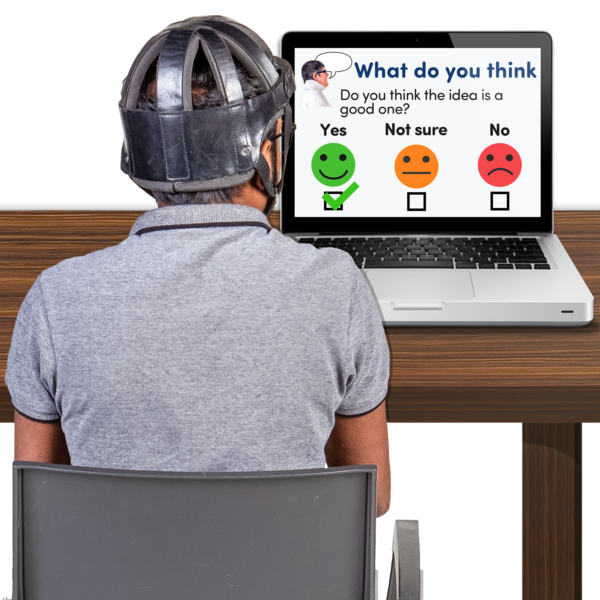 A survey is when someone asks you to answer some questions.
revealed that heartbreakingly, over a third (39%) of respondents say they didn’t go out in the past month because they were worried about using public transport; meaning many were intentionally staying at home and missing out on socialising in their
community
A community is the people and places in an area.
, or vitally, being able to access work.
Nearly half (48%) of survey respondents said that they find public transport hard to understand; “I would not be able to use public transport without my support staff as I cannot read. I get my words mixed up and I do not know what stops to get off at or which bus I need to be catching,” said one person with a learning disability.
The research Research is a way of finding out information which could come from books, or asking people what they think. , conducted by learning disability charity Mencap included a survey of over 1100 participants with a learning disability - a reduced intellectual ability which affects someone for their whole life. The majority do not drive, highlighting their absolute reliance on public transport as a way to get around.
The report identifies six key barriers to using public transport for people with a learning disability:
- Public transport is confusing
- Travel passes and tickets are not fit for purpose
- Travel spaces are not
accessible
 Accessible means something is easy for people to use or join in with. For example: Accessible writing means the writing is easy to read and understand.
- Public transport is unreliable
- Public transport staff do not understand learning disability
- Public transport is unsafe.
The seven focus groups Where a group of people meet to talk about a topic, and a researcher asks them some questions. which featured people with a learning disability from across the UK, found that sadly many people had experienced negative interactions with public transport staff, e.g: “They can be rude and angry,”; “I remember one time I got on the bus and I didn’t have the right change out in time. The bus driver said, ‘for god’s sake!’ and slammed his hand down”.
The issue of safety is one of the most eye-opening findings with only 42% of respondents with a learning disability agreeing that they feel safe using public transport - and of these, many explained that this is dependent on whether they are receiving support from a carer or family member. People reported experiences of being verbally abused or even physically abused or witnessing
antisocial behaviour
Antisocial behaviour (ASB) is when someone who doesn't live with you annoys, harms or upsets you.
Types of antisocial behaviour are: saying nasty things, hitting you, making loud noises, making you angry or scared.
and avoiding travelling late at night or during hours when school children would be travelling, for fear of being targeted. “I sometimes get verbal
abuse
Abuse is when someone bullies you and does or says something to you that makes you feel hurt, upset or scared.
on public transport because of my appearance,” said one participant, while another added; “Although I like riding on buses and trains… people can be nasty, call names, refuse to let me past… It is very frightening.”
Aside from fear of abuse and anger, simply navigating the system and meeting the cost of journeys – particularly around accessing discount travel cards, were some other ongoing issues.
Nearly a third (29%) of respondents with a learning disability said that the cost of public transport stops them or sometimes stops them from using it and only 43% of survey respondents said they have a disability travel pass - reasons for this included being ruled ineligible for a pass, not receiving a necessary companion pass or because they found the process of applying for a pass too inaccessible.
Many people with a learning disability and their families also have to cover the additional cost of paying for tickets for their
support workers
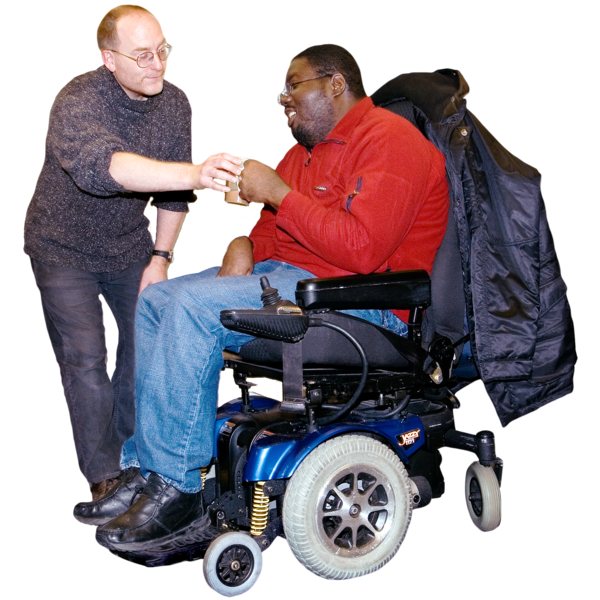 Support workers are people who are paid to give care and support to people who need it.
, which pushes the price up: “Though I have a travel pass, it still costs me as I have to pay for my carer as my travel pass is just for me. It's not fair.”
A common frustration was having to provide proof of having a learning disability each time and having to reapply periodically for a pass when they have a lifelong disability - “For the bus pass I have now, the doctors had to send proof in a letter of my disability and everything that I am, onto the transport company to prove that I am disabled. How could we fake it? We have it from day one. And why do you have to keep doing it? It is the same disability every time and it is not going to go overnight.”
Other barriers that left people feeling that they couldn’t use public transport included over two thirds (66%) of respondents reporting that public transport is too crowded, and over a third (36%) respond that there are not enough staff at their station, which stops them from accessing it.
Many reported frequency of buses or trains as an issue, particularly on weekends, when timings could mean hours of waiting if they missed one. Over half (57%) say that there is not enough public transport near them or it does not come often enough and this stops them from using public transport.
Jon Sparkes, OBE, Chief Executive at learning disability charity Mencap says: “At Mencap, we have long known that the state of public transport is letting people with a learning disability down.
“Navigating complex and inaccessible timetables, dealing with delays or cancellations and even feeling your safety is at risk can all be extremely stressful, causing fatigue and anxiety to many – it's no surprise some people with a learning disability end up avoiding public transport at all. But this is a crying shame - as it impacts people having their own
independence
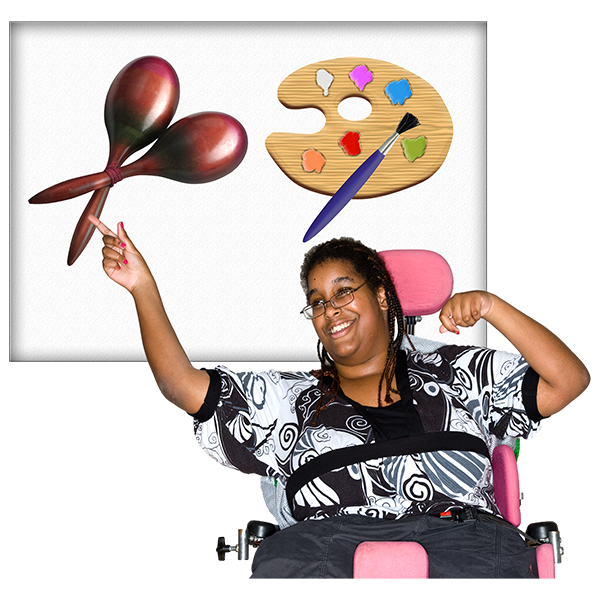 Independence means doing things on your own. Making your own choices.
, holding down jobs, visiting friends and family and enjoying days out just like everyone else.
“People with a learning disability are the best people to advise travel operators on how to make their services safe and user friendly so accessible travel can be the rule – not the exception. We hope the industry is listening.”
Ruba Aljarf, Programme Director at the Motability Foundation said: “We are proud to have funded Mencap to carry out this important research, which focuses on the lived experience of people with a learning disability, and the barriers they face when accessing public transport. At the Motability Foundation we want to amplify the voices of disabled people, and research like this is vital in showing the changes we need to address transport inequality.”
Following the release of this report, Mencap want to see the Government The Government are the people who run the country. They decide how much tax people should pay for things and how things like the National Health Service should work. , policymakers and transport operators engage with these findings and work to make improvements that will benefit people with a learning disability, consulting them throughout the process.
- Research gathered across 1107 participants with a learning disability by Mencap in Autumn 2024/Spring 2025. The research included a quantitative survey plus a series of qualitative focus groups and interviews with ten participants, who carried out video journeys on public transport, about their experiences.
-ENDS-
For further information, please contact Mencap’s media team on: [email protected] or 02076 965414 (including out of hours).
Note to editors
About Mencap
Mencap exists to ensure the UK is the best place in the world for people with a learning disability to live happy and healthy lives. We support people directly and
campaign
A campaign is when people work together to try to change something.
with people with a learning disability, their families and carers. We work to change laws, increase representation and campaign for better health,
social care
 Social care means the services that give care and support to people who need it.
and
employment
 Employment means having a job.
opportunities for the 1.5 million people with a learning disability in the UK.
What is a learning disability?
- A learning disability is a reduced intellectual ability which affects someone for their whole life. Typically, people with a learning disability need more time to learn and process information. They may need extra support to develop skills, complete tasks and interact with others, or they may have more complex needs requiring round-the clock care. The level of support needed is different for everyone and may change during a person’s lifetime.
- Learning disability is NOT a mental illness or a learning difficulty. Often, the term ‘learning difficulty’ is wrongly used in place of ‘learning disability’. Having a learning difficulty (such as ADHD or
dyslexia
 Dyslexia is a learning difficulty. People who have dyslexia can find it hard to read, write and spell.
) may mean a person learns at a different pace or in a different way BUT – unlike a learning disability - it does not affect a person’s intellect.
With the right support, most people with a learning disability can lead happy, healthy, independent lives. At Mencap, it’s our mission to remove societal barriers and shatter misconceptions to make this more possible for more people.
Mencap’s guide to reporting on Learning Disability
When it comes to creating content with people with a learning disability, we know many people feel nervous about saying and doing the wrong thing. Our guide for journalists, covers everything from up-to-date facts and figures to the right language to use. It also includes tips on how to work with people with a learning disability to gather the best content.
