
A powerful and immersive exhibition, launching in East London on Friday 13 March, has been curated by families and campaigners to raise awareness of the shocking and ongoing inappropriate detention of people with a learning disability A learning disability is to do with the way someone's brain works. It makes it harder for someone to learn, understand or do things. and autistic people in mental health hospitals.
According to latest data there are currently 2,050 people with a learning disability and autistic people locked away in units. 245 of them from London. Many are there not because they need inpatient mental health treatment but because the right support to meet their needs is not available in the community A community is the people and places in an area. .
Across the country, people with a learning disability and autistic people are being detained in mental health units for long periods of time - many far from home, on average for four and a half years but sometimes for decades.
In these settings there is often high use of restraint, including pinning people to the floor, chemical injections to tranquilize people, and keeping people in isolation for months on end, leaving many more traumatised than when they arrived.
Latest data shows, within one year, people with a learning disability and autistic people in mental health hospitals were subjected to over 100,000 uses of restraint, with over a third being used against children.
30 year old Londoner Stephen, who has severe
autism
 Autism is a disability. Autistic people find it difficult to understand what other people think and feel. They also find it difficult to tell people what they think and feel. Everyone with autism is different.
and a learning disability, spent over seven years detained in mental health units. His mother Leo Andrade says:
“We were initially told it was only going to be for an
assessment
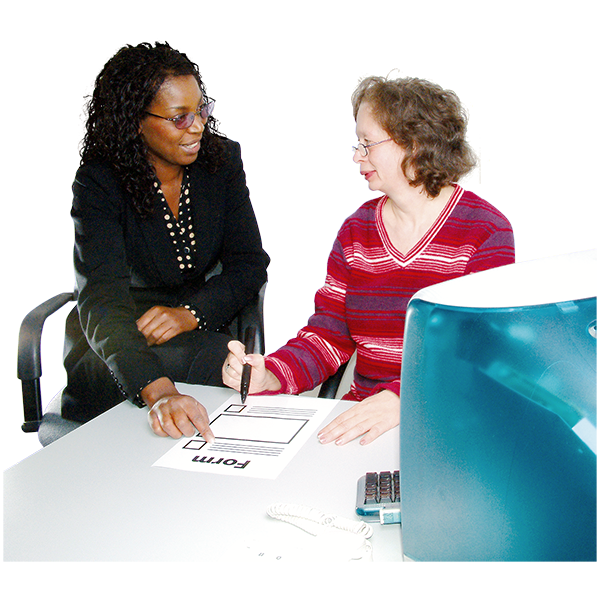 An assessment is a way of finding out what help a person needs. When you have an assessment, you might have to go to a meeting or fill in a form.
, and he would be out in 18 weeks. We know now that was a lie. He was trapped in a unit where staff didn’t have the right skills around supporting people with autism and learning disability and who could give my son the support he needed. They mistreated and abused my son. He had numerous broken bones and was also drugged with 8 different antipsychotics a day.
“It was heartbreaking visiting Stephen. He was so out of it - he had lost all speech and mobility and would soil and wet himself. I was totally powerless to get him out.”
Sara's son Josh, 22, has been in a mental health unit his whole adult life, she says, “he spent his 21st birthday in a seclusion room with us forced to pass his presents through a hatch in the door. He’s also spent months in isolation, barely seeing any daylight.”
Sara has shared her family’s experience Experience is when you have learned or tried something before. as part of the exhibition. She says, "We wish we’d never asked for help, it’s the biggest regret of our lives. He was taken from us and locked up and we are still waiting for him to come home. It's easy to lock people like Josh away and just forget about them rather than get them out of there. It's an easy life to just lock people with a learning disability away, drug them and keep them quiet.”
It is 15 years since BBC Panorama exposed shocking physical and psychological abuse of people with a learning disability at Winterbourne View, a mental health hospital near Bristol. This exhibition brings renewed scrutiny over the ongoing injustice of warehousing people with a learning disability in mental health hospitals, due to a lack of suitable housing and
social care
 Social care means the services that give care and support to people who need it.
.
Jon Sparkes, OBE, Chief Executive of learning disability Mencap, says:
"This exhibition powerfully reveals the human cost of keeping people with a learning disability and autistic people locked up in Mental Health Hospitals when they should be living their lives to the full, with the right support in the community.
“People with a learning disability and autistic people are still being shut away in these settings, when they don’t need to be there, often miles from home and cut off from the communities they should be part of. This should not be happening 2026.
“Recent Mental Health Act reform holds hope for change, but progress is slow and currently the system continues to fail people with a learning disability and autistic people it needs to support. The Government The Government are the people who run the country. They decide how much tax people should pay for things and how things like the National Health Service should work. has committed to setting out a roadmap for developing suitable housing and social care, but change can’t come fast enough.
“This exhibition is a stark reminder that behind every statistic is a son, a daughter, a brother, a sister, whose freedom has been taken from them. It doesn’t have to be this way. With the right support in the community, people can live full, meaningful lives in homes - not hospitals - close to those who love them.”
More information on Exhibition: Homes Not Hospitals: ‘The Fight for Freedom’ - a free exhibition open to the public from 13 –19 March 2026 at Rich Mix, 35-47 Bethnal Green Rd, London E1 6LA
-ENDS-
Note to editors
About Mencap
There are 1.5 million people with a learning disability in the UK and they deserve to live their life to the full. So Mencap supports people with a learning disability to succeed in the things that matter to them. To ensure that people with a learning disability are not left behind at any stage of their life, we campaign for a fairer society; work with families and partners to build inclusive communities; and we deliver person-centred services. We’ve spent 80 years changing lives. Now, with Mencap 2030, we’re changing the future.
What is a learning disability?
A learning disability is a reduced intellectual ability which affects someone for their whole life. Typically, people with a learning disability need more time to learn and process information. They may need extra support to develop skills, complete tasks and interact with others, or they may have more complex needs requiring round-the clock care. The level of support needed is different for everyone and may change during a person’s lifetime.
Learning disability is NOT a mental illness or a learning difficulty. Often, the term ‘learning difficulty’ is wrongly used in place of ‘learning disability’. Having a learning difficulty (such as ADHD or
dyslexia
 Dyslexia is a learning difficulty. People who have dyslexia can find it hard to read, write and spell.
) may mean a person learns at a different pace or in a different way BUT – unlike a learning disability - it does not affect a person’s intellect.
With the right support, most people with a learning disability can lead happy, healthy, independent lives. At Mencap, it’s our mission to remove societal barriers and shatter misconceptions to make this more possible for more people.
Mencap’s guide to reporting on Learning Disability
When it comes to creating content with people with a learning disability, we know many people feel nervous about saying and doing the wrong thing. Our guide for journalists, covers everything from up-to-date facts and figures to the right language to use. It also includes tips on how to work with people with a learning disability to gather the best content.
For further information, please contact Mencap’s media team on: [email protected] or 02076 965414 (including out of hours).
