
Employers across the UK are being held back from hiring people with a learning disability A learning disability is to do with the way someone's brain works. It makes it harder for someone to learn, understand or do things. by a ‘misplaced fear’ of getting it wrong, not by cost or capability, new polling reveals.
The
survey
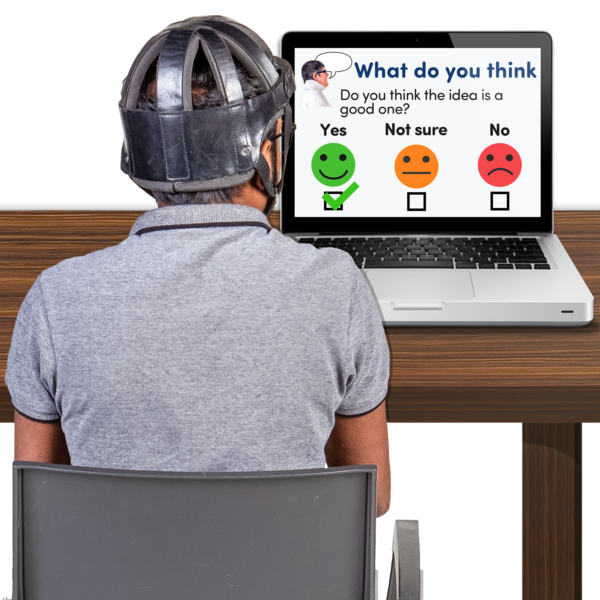 A survey is when someone asks you to answer some questions.
of more than 1,600 UK employers, conducted by Survation for the learning disability charity Mencap1, shows a clear gap between positive attitudes and real-world action. Whilst most employers say people with a learning disability can be productive and valuable employees, many are not translating that belief into hiring decisions, often due to uncertainty about practical issues such as health and safety, making reasonable adjustments, and how to support someone in their role.
- 80% of employers believe people with a learning disability can be productive at work, yet 48% employ none
- 37% cite health and safety concerns as a barrier
- 30% worry about saying or doing the wrong thing
- Nearly a quarter (23%) say they don’t know what adjustments to make
- But most say adjustments are not expensive (53%) and are straightforward with the right support (69%)
The findings challenge the narrative that financial Financial means anything that is to do with money. It is used to describe how people, businesses, or governments get money and how they use it pressures are the main barrier to inclusive hiring2. They point instead to a lack of confidence and understanding among employers, despite broad openness to employing people with a learning disability.
Around one million people with a learning disability in the UK are of working age3. People want the opportunity to earn, contribute and live independently4, but employers’ nervousness is preventing them from entering the workforce. A learning disability is a life-long condition, usually identified in early childhood, that affects intellectual ability. People with a learning disability, such as
Down syndrome
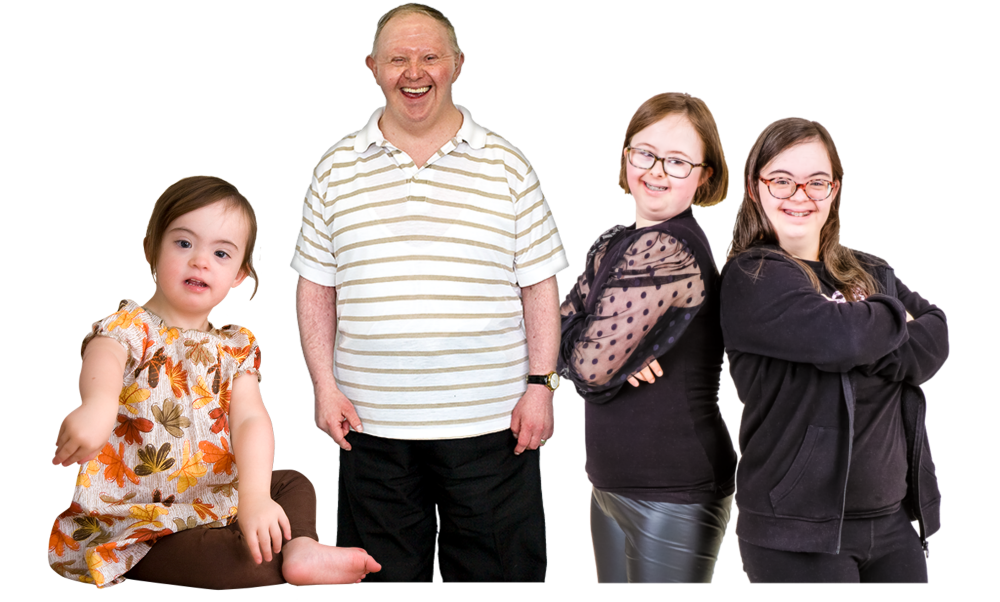 Down syndrome, also known as Down's syndrome, is a type of disability. People with Down syndrome may find it hard to learn new things and may need support. They may have more problems with their health too.
, may take longer to learn and need support to develop skills, understand information and communicate, but with the right support, many can work.
Mencap says employers should not be put off by concerns around complexity or cost. While employers have a legal duty to make reasonable adjustments under the
Equality
 Equality is when everyone is treated fairly.
Act 2010, in practice these are often simple and low-cost, such as offering extra time to learn tasks, providing clear instructions, or adjusting working hours.
The charity says practical guidance Guidance means being given clear instructions to be able to do something well. and support are readily available, including through its Mencap Training Academy, which offers intensive support with recruitment, training and job coaching.
During Learning Disability Week (15 to 21 June) Mencap is calling on employers to move beyond hesitation and recognise people with a learning disability as a valuable and overlooked part of the UK workforce rather than being written off.
The findings come amid wider concern about economic inactivity and labour shortages, highlighting a large, overlooked workforce being shut out of jobs. Only a few weeks ago Alan Milburn warned of a “lost generation”. At the same time, growing debate about people not in
education
Education is when you learn things. When you fill in a form to get a job, education means you write where you went to school, college or university.
,
employment
 Employment means having a job.
or training (NEET), risks underplaying the role of reasonable adjustments and employer support in enabling people to work. For people with a learning disability, Mencap says, generations have already been shut out of the workplace.
Jon Sparkes OBE, chief executive at Mencap, said: ‘Too many employers are held back by a misplaced fear of getting it wrong.
‘The good news is that most already believe people with a learning disability can do the job, but that belief isn’t translating into action.
‘Our research Research is a way of finding out information which could come from books, or asking people what they think. shows the barriers are often about confidence and understanding, not cost. Adjustments are usually simple, and the benefits to businesses are clear.
‘If we’re serious about widening access to work, employers need the right information and support to move beyond good intentions and act on the commitment people with a learning disability bring.’
Polling suggests many employers are open to change but lack practical knowledge Knowledge is knowing a lot about something. of how to get started. Almost a third worry about saying or doing the wrong thing, while others raise concerns about time, health and safety, or managing adjustments.
Four in ten (40%) employers say they would consider hiring someone with a learning disability but have not yet done so, while only a small minority (8%) say nothing would change their mind.
Mencap is calling on employers to:
- Make recruitment processes
accessible
 Accessible means something is easy for people to use or join in with. For example: Accessible writing means the writing is easy to read and understand.
from the start
- Provide clear, simple internal guidance on reasonable adjustments
- Offer entry‑level opportunities and supported routes into work
- Build confidence among managers through training and real‑world examples
and on policymakers to:
- Invest in and improve employment programmes such as Access to Work and supported internships A work placement for young people with additional needs, where they get support from a job coach.
- Improve awareness of employers’ legal responsibilities
- Expand access to practical support for businesses
- Reduce barriers to entry-level employment opportunities and expand routes into work
The charity says much of the uncertainty employers feel can be addressed with straightforward, practical support, while also helping people with a learning disability to access and succeed in work. Through the Mencap Training Academy, employers can access step-by-step guidance on inclusive recruitment5, understand what reasonable adjustments look like in practice, and build confidence among managers and teams. People with a learning disability can also access support to develop skills, prepare for employment, and get into work.
Employers and people with a learning disability can find out more at Mencap Training Academy - www.mencap.org.uk/academy
ENDS
Notes to editors
1Polling was conducted by Survation on behalf of Mencap between 5 and 27 May 2026, with a sample of 1,608 employers, business leaders and HR managers across the UK. Full data available on request.
2FE News (2025 analysis) found many employers assume hiring disabled workers requires costly accommodations, despite evidence to the contrary
Disability Horizons research (2024, based on Leonard Cheshire data) found that 66% of managers [say] the cost of workplace adjustments are a deterrent to hiring disabled individuals.
A Disability Rights UK / Reed in Partnership survey (2023) found 19% of employers believe modifying equipment makes it expensive to employ disabled people and that 49% say additional funding for adaptations would help.
3Estimates suggest there are around 1.5 million people with a learning disability in the UK, including approximately one million of working age, based on modelling from NHS The NHS is the National Health Service. The NHS gives free healthcare to everyone in the UK and includes things like your GP (doctors) surgery and hospitals. Digital, the former Public Health England learning disability profiles, and Office for National Statistics population data (as used by Mencap).
4Mencap’s work and learning disability research (2023) surveyed 188 people with a learning disability; 86 per cent of respondents who were not in paid work said they would like a paid job. As the survey was based on a relatively small sample it is not
representative
 A representative is also called a rep. A representative is someone who speaks up for everyone in their group or team.
of the wider population, but highlights the gap between people’s aspirations and the opportunities available.
5A supported internship through the Mencap Training Academy is an intensive academic year-long programme with a minimum of 420 hours of
work experience
 Work experience is when you try out a job to help you learn new skills.
. The charity provides learning disability awareness sessions and in-work support through a job coach. It supports with making reasonable adjustments to recruitment processes and to job descriptions to make roles more accessible.
Note to editors
About Mencap
There are 1.5 million people with a learning disability in the UK and they deserve to live their life to the full. So Mencap supports people with a learning disability to succeed in the things that matter to them. To ensure that people with a learning disability are not left behind at any stage of their life, we campaign A campaign is when people work together to try to change something. for a fairer society; work with families and partners to build inclusive communities; and we deliver person-centred services. We’ve spent 80 years changing lives. Now, with Mencap 2030, we’re changing the future.
What is a learning disability?
A learning disability is a reduced intellectual ability which affects someone for their whole life. Typically, people with a learning disability need more time to learn and process information. They may need extra support to develop skills, complete tasks and interact with others, or they may have more complex needs requiring round-the clock care. The level of support needed is different for everyone and may change during a person’s lifetime.
Learning disability is NOT a mental illness or a learning difficulty. Often, the term ‘learning difficulty’ is wrongly used in place of ‘learning disability’. Having a learning difficulty (such as ADHD or
dyslexia
 Dyslexia is a learning difficulty. People who have dyslexia can find it hard to read, write and spell.
) may mean a person learns at a different pace or in a different way BUT – unlike a learning disability - it does not affect a person’s intellect.
With the right support, most people with a learning disability can lead happy, healthy, independent lives. At Mencap, it’s our mission to remove societal barriers and shatter misconceptions to make this more possible for more people.
Mencap’s guide to reporting on Learning Disability
When it comes to creating content with people with a learning disability, we know many people feel nervous about saying and doing the wrong thing. Our guide for journalists, covers everything from up-to-date facts and figures to the right language to use. It also includes tips on how to work with people with a learning disability to gather the best content.
For further information, please contact Mencap’s media team on: [email protected] or 02076 965414 (including out of hours).
