
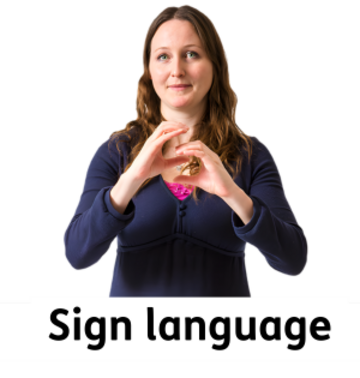
Some people are non-verbal, which means they do not use spoken words to communicate.
Non-verbal people can still communicate in other ways, like using gestures, pictures, or devices.
Non-verbal communication and learning disabilities
Some people with a learning disability A learning disability is to do with the way someone's brain works. It makes it harder for someone to learn, understand or do things. may be non-verbal, or might have difficulties using spoken language.
People can be non-verbal temporarily, this is sometimes called situationally or selectively mute. This may happen at times of increased stress, anxiety or sensory overload.
This can happen because they find it harder to understand or use language, they process information differently, or need support to communicate. Communication difficulties can cause frustration or anxiety, when it's hard to express their needs.
Non-verbal autism
Autism or autism spectrum disorder (ASD) is not a learning disability, but 1 in 3 people who are autistic also have a learning disability. And around 40% of autistic people are thought to be non-verbal or don’t use speech as their preferred way to communicate.
Non-verbal
autism
 Autism is a disability. Autistic people find it difficult to understand what other people think and feel. They also find it difficult to tell people what they think and feel. Everyone with autism is different.
, or non-speaking autism, refers to people on the autism spectrum who do not use spoken language to communicate. However, being non-verbal does not prevent meaningful communication, as non-verbal communication techniques can be used.
Non-verbal communication aids
People who are non-verbal may communicate in different ways without spoken words, this includes using:
- eye contact and facial expression
- gestures - like pointing, hand leading and signing
- body language
- touch
- movement
- picture cards, photos or symbols
- objects of reference
- electronic devices - these are also called augmentative and alternative communication (AAC) devices.
Non-verbal communication can be used to convey emotions as well as needs.
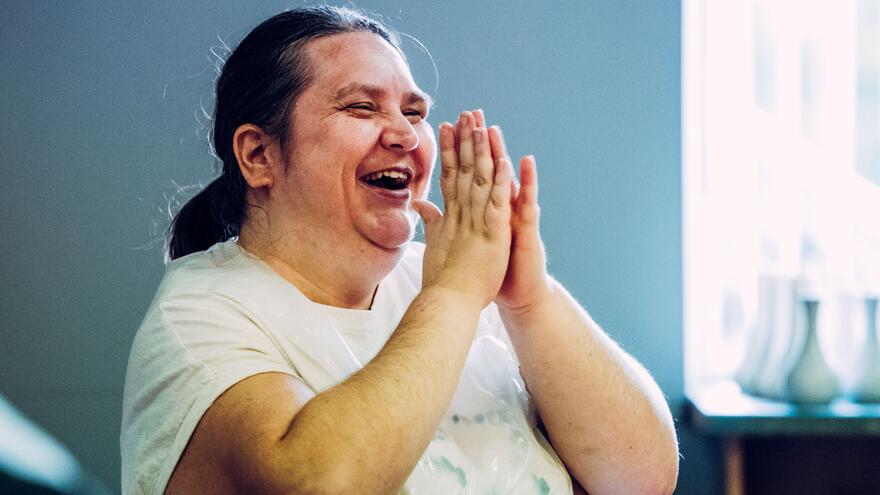
Supporting someone who is non-verbal
There are many ways to support someone who does not use speech.
You can use clear and simple communication by speaking slowly and use plain language, allowing extra time for their response. Use visual supports like: pictures, symbols, or objects. Explore alternative communication such as signing, Makaton, gestures or communication aids.
Respect Respect means showing someone you think about someone's feelings, wishes or rights. how the person chooses to communicate and look for non-verbal cues. With the right support, people who are non-verbal can communicate effectively and be fully included in decisions about their lives.
Total communication approach
The total communication approach is about finding and using the right combination of communication aids for each person. This approach uses a combination of communication methods to make sure individuals have successful and meaningful interactions and conversations with people.
People who are non-verbal or temporarily non-verbal will use a mixture of communication tools throughout their lives. So by exploring a variety of communication approaches, they'll find which is best for them. It is then helpful to be consistent and apply their chosen methods across home, education Education is when you learn things. When you fill in a form to get a job, education means you write where you went to school, college or university. and working life.
Find out more about the total communication approach on the Sense website.
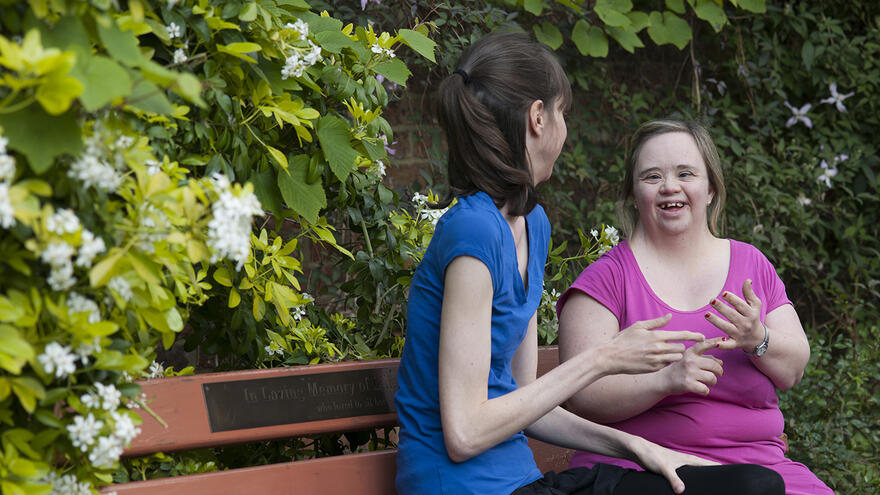
Makaton
Makaton is a language programme that uses signs, symbols and speech; giving a person different options when communicating.
We've worked with The Makaton Charity on some useful information about Makaton and how it is used.
Visit the webpage to find out more.
Key notes
- Non-verbal does not mean unable to communicate.
- People can communicate in different ways.
- If someone is non-verbal, it doesn't mean they'll always be non-verbal.
- Challenging behaviour might be caused by frustration if there are communication difficulties.
- Explore many communication tools, people may use a combination to communicate effectively.
Questions and answers about non-verbal communication
Non-verbal is when a person doesn't use spoken words. They might communicate in other ways, such as:
- gestures (like pointing, hand leading and signing)
- facial expressions and eye contact
- pictures or symbols
- communication devices
Yes, many non-verbal people understand what is said to them. Understanding is different for each person.
No. Some non-verbal people have a learning disability, but others do not.
Every person is different.
Yes. With the right support, many non-verbal people can find ways to communicate that work best for them.
This might include:
- signs
- symbols
- technology
or a combination of communication tools.
No. Some people can start speaking again.
And someone who uses verbal speech may become temporarily non-verbal.
- Foundation for people with learning disabilities: Communicating with and for people with learning disabilities
- National Autistic Society: Autism and communication
- NHS UK: How to care for someone with communication difficulties
- Child Mind Institute: What is non-verbal learning disorder
- Oxford Health NHS Trust: Alternative and Augmentative Communication
- Leeds Autism Services: non-verbal communication