

Carers of adults with a
learning disability
A learning disability is to do with the way someone's brain works. It makes it harder for someone to learn, understand or do things.
have
rights
Rights are the things everyone should be allowed to do like have a say, or go to school.
to an
assessment
 An assessment is a way of finding out what help a person needs. When you have an assessment, you might have to go to a meeting or fill in a form.
of support.
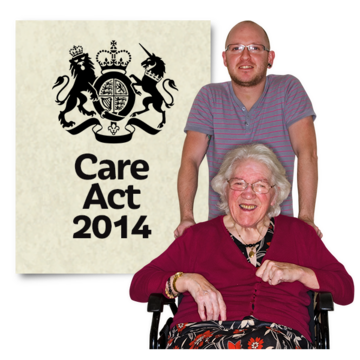
The Care Act means local authorities A local authority is another name for your local council. It is a group of people whose job is to look after the area where you live. Local authorities means more than one local authority. must meet a carer's eligible needs.
Key rights for carers
The Care Act sets out the following key rights for people who care for a disabled adult:
- A carer will be entitled to an assessment if it appears that they need support. The carer’s assessment must establish whether the carer is willing and able to continue providing care to the disabled person they are caring for, what impact this has on the carer’s wellbeing, what outcomes the carer wishes in day-to-day life, and whether the carer wishes to access education Education is when you learn things. When you fill in a form to get a job, education means you write where you went to school, college or university. , training, or recreational activities.
- The carer will have the same rights to an assessment and support as the disabled adult themselves. Therefore once a carer’s assessment has been carried out, the
local authority
 A local authority is also called a council. They are a group of people who make decisions about some of the things in the area where you live like schools, social care (support for people), parks and dustbin collection.
will see which of the carer’s needs are eligible for support, and will then produce a support plan to meet the carer’s needs.
- Local authorities are under a duty to meet a carer’s eligible needs, subject to a financial Financial means anything that is to do with money. It is used to describe how people, businesses, or governments get money and how they use it assessment.
The Care Act
The Care Act strengthens the rights of people who care for a disabled adult.
Useful links on The Care Act


Caring for a child
Do you care for a child or young person who has a learning disability?
If so, take a look at what support is available to you, your family, and the person with a learning disability.
Useful links
We've created the following factsheets to help you with the benefits application, Care Act assessment and follow-up process:
- Delays in receiving benefits (PDF, 52 KB) - this factsheet explains the options that may be available to you while you're waiting for your first payment.
- Reasonable adjustments - explains what changes can be made for people with a learning disability.
- What happens next (PDF, 367 KB) - this factsheet sets out what should happen after your Care Act assessment.
- Reviews and new assessments (PDF, 219 KB) - this factsheet is for people who already receive care and support through a package of
social care
 Social care means the services that give care and support to people who need it.
and what they can expect from the review and assessment process.
- Direct payments (PDF, 72 KB) - this factsheet explains how people with a learning disability and their families can receive
direct payments
 Direct payments are when the money for your care and support, or benefits, is paid to you.
to arrange their social care support themselves.
This information about support is for people who care for an adult with a learning disability.
Yes. The Care Act set out carers rights to get support and an assessment to look at what help you need.
It is a check to find out what help you need, what impact caring has on you, and what support could help.