
Mencap's history
Mencap's history

80 years of Mencap
2026 marks 80 years of Mencap supporting people with a learning disability to live their lives to the full.

It marks 80 years of working towards people with a learning disability having the same rights Rights are the things everyone should be allowed to do like have a say, or go to school. and chances to do things as everyone else.

How Mencap started
In 1946 a lady called Judy Fryd wrote a letter to a magazine called Nursery World.

She wanted to let people know her daughter wasn't able to go to a school with everyone else.

Judy thought this was wrong.

The letter was the start of a group that turned into Mencap.

You can find out more about Judy Fryd, her daughter Felicity and the start of Mencap at https://www.mencap.org.uk/easyread/blue-plaque-judy-fryd-founder-mencap

Below are some of the main things from the story of Mencap over the past 80 years.

Mencap in the 1940s
In 1946 Judy Fryd wrote to Nursery World magazine and asked other parents to contact her.

Judy started 'The National Association of Parents of Backward Children'. This turned into Mencap.

Mencap in the 1950s
In 1955 the association changed its name to 'The National Society for Mentally Handicapped Children'. It opened a home called Orchard Dene for people with a learning disability.

In 1958 the National Society started a project called the Brooklands Experiment. The project showed that children with a learning disability who lived with a family and had nursery education Education is when you learn things. When you fill in a form to get a job, education means you write where you went to school, college or university. learned more than children with a learning disability in hospitals.
Mencap in the 1960s
In 1963 Queen Elizabeth the Queen Mother opened the National Society's new hostel and training workshop in Slough, Buckinghamshire. It was the first training centre like this for adults with a learning disability.

In 1966 the National Society started Gateway clubs. Gateway clubs were groups where people with a learning disability could try sports and do fun activities together.

In 1969 the National Society changed its name to Mencap.

Mencap in the 1970s
In 1975 Mencap started its Pathway
employment service
 An employment service is a place that can help you get a job. This might be a job centre or an organisation.
. The Pathway
employment
 Employment means having a job.
service
A service gives people what they need, like healthcare services that help people when they are ill, and support services that give people support.
helped people with a learning disability to have support and training at work. This helped more people with a learning disability apply for jobs.

In 1976 the Mencap Trust Company started. The Mencap Trust Company look after money that families want to give to people in their family who have with a learning disability. They help families plan the best way to do this. They make sure the person with a learning disability can spend the money on the things that are important to them.
Mencap in the 1980s
Mencap's work helped to make sure that people with a learning disability were included in the Further and Higher Education Act.

Mencap set up the first homes in the community A community is the people and places in an area. for people with a learning disability in the UK. Before this, people with a learning disability often lived in special homes or hospitals which were not part of the community.

In 1985 Mencap opened homes for people with profound and multiple learning disabilities.
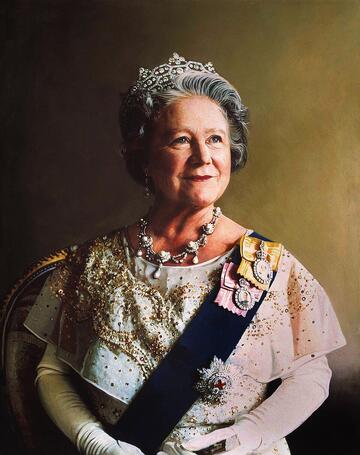
In 1986 Queen Elizabeth the Queen Mother became the patron of Mencap.

Mencap in the 1990s
People with a learning disability were elected as Mencap national assembly members. They helped to decide how Mencap was run.
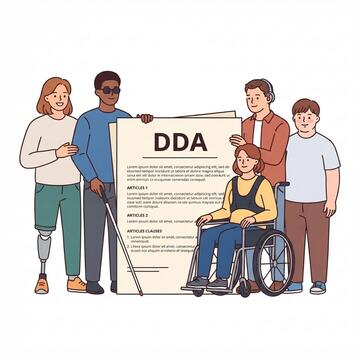
In 1995 the Disability
Discrimination
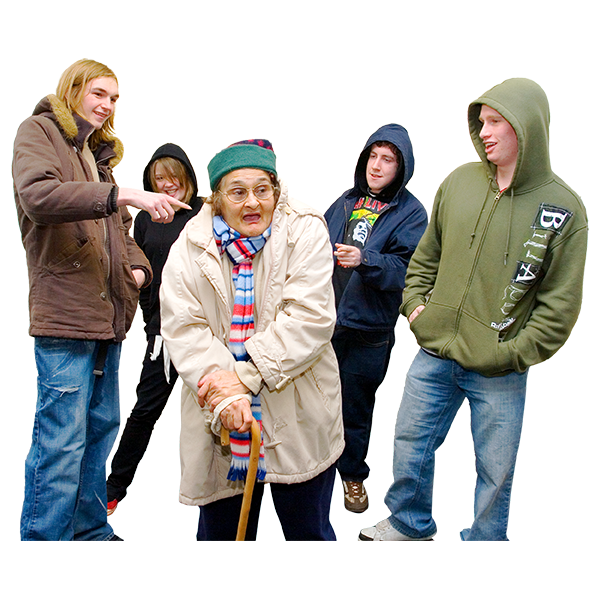 Discrimination is when someone is treated differently (usually in a bad way) because of things like their disability or their religion.
Act was passed. It wanted to stop disabled people from being treated badly.

In 1998 Golden Lane Housing was set up as a charity. It wanted to help people with a learning disability have more choices about good places to live.
Mencap in the 2000s
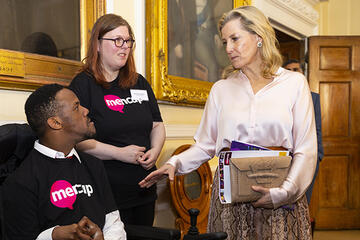
In 2004 the Countess of Wessex became Mencap's patron.

In 2008 Mencap updated its look. It made a new font called FS Me with the help of people with a learning disability.

In 2009 the UK agreed to the United Nations Convention on the Rights of Persons with Disabilities. This gives disabled people the same
human rights
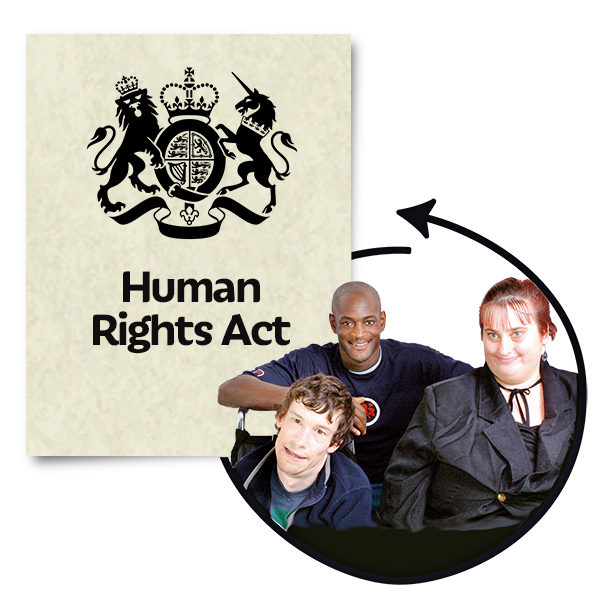 Human rights are the rights that everyone has. These include the right to go to school and the right to start a family.
as non-disabled people.

In 2009 the International Paralympic Committee voted that athletes with a learning disability could take part in the Paralympic Games again.
Mencap in the 2010s
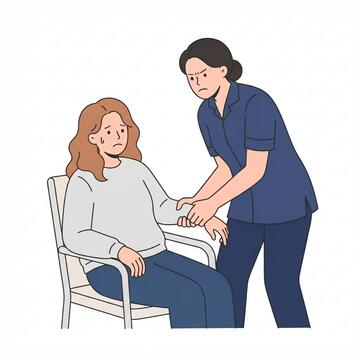
In 2011 a BBC TV programme showed people with a learning disability being treated badly in a long stay hospital called Winterbourne View. Since then, Mencap and the
Challenging Behaviour
 Challenging behaviour can be when someone hurts themselves, hits or pinches someone else, or breaks something. Some people might behave like this because they are upset or because people do not understand them.
Foundation have been working with families to fight for people with a learning disability to be able to live in the community with the right care and support.

In 2015 Mencap started a campaign A campaign is when people work together to try to change something. called Hear My Voice. The campaign wanted MPs to know about the things that are difficult for people with a learning disability. It also wanted more people with a learning disability to vote.

In 2016 Mencap started a campaign called Here I am. The campaign helped people see and understand people with a learning disability.

In 2018 Mencap started a campaign called Treat Me Well. This campaign worked to change how the NHS The NHS is the National Health Service. The NHS gives free healthcare to everyone in the UK and includes things like your GP (doctors) surgery and hospitals. cares for people with a learning disability in hospital.

Mencap in the 2020s
In 2020 Mencap was the main charity partner for the London Marathon. The race was cancelled because of the coronavirus pandemic. Team Mencap ran the race virtually instead. The team included 10 people with a learning disability.
In 2020 Mencap started campaigning for people with a learning disability to be some of the first people to get Covid-19 vaccines. Numbers from Public Health England said that up to 6 times more people with a learning disability were dying from the virus than other people.

In 2021 the government The Government are the people who run the country. They decide how much tax people should pay for things and how things like the National Health Service should work. agreed that people with a learning disability should be some of the first people to get Covid-19 vaccines.

In 2022 Mencap told people about a group called the
Myth
 A myth is an idea about something that is not true.
Busters. The group has 18 people with a learning disability. They show that everyone with a learning disability is different and they should be seen and heard as much as everyone else.

In 2024 Mencap's work with Omaze UK raised £3.9 million. Mencap used this money to run campaigns to help to make the UK a place where people with a learning disability are included and treated fairly.

In 2025 Mencap started a campaign called I'm in. The campaign tells people about the
learning disability register
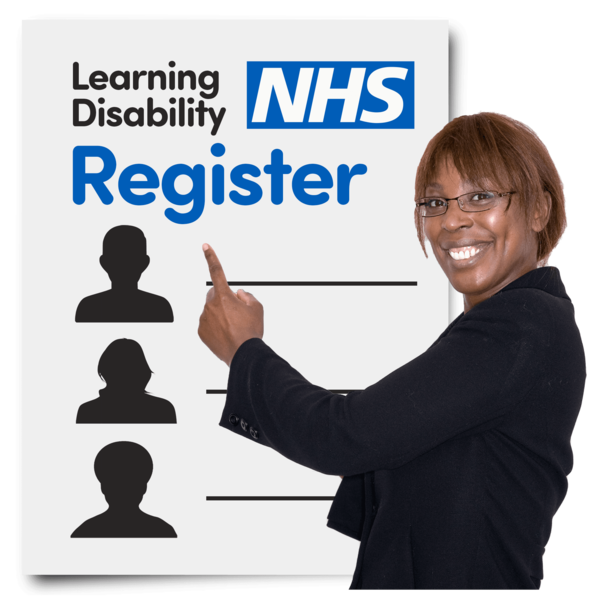 The learning disability register is a list of people with a learning disability that the doctor’s surgery looks after.
. The register helps people with a learning disability get better health care and a free
health check
 A health check is when you see a nurse or doctor so they can help you to stay well.
every year.
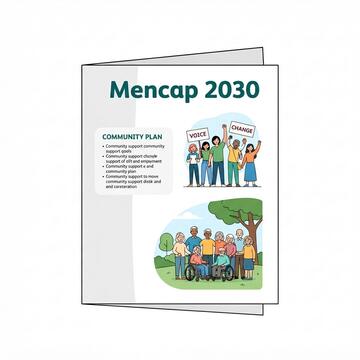
In 2026 Mencap started a new 5 year plan called Mencap 2030. The plan looks at the most important things Mencap wants to do.

In 2026 Mencap celebrated being the top UK charity for people with a learning disability for 80 years.
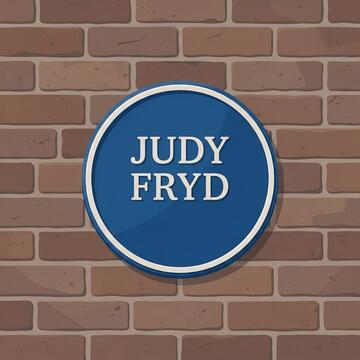
In March 2026 Historic England put up a blue plaque where Judy Fryd lived and worked.

What next?
We will carry on campaigning, telling people about learning disability and helping people with a learning disability to live their lives to the full.

First published 19/10/2026
Last updated 19/10/2026