
 Harry Roche
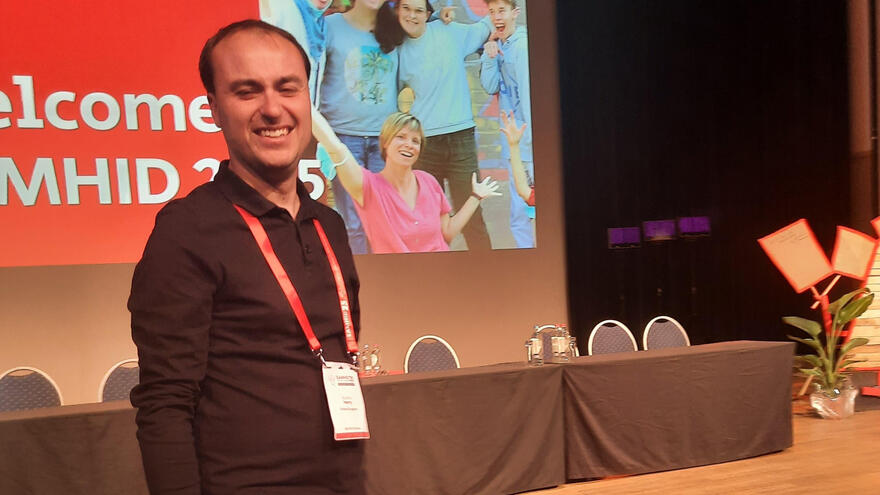
I’ve just got back from presenting at the European Association for Mental Health in Intellectual Disability (EAMHID) Congress. It’s a big event that the EAMHID puts on every two years, and it’s all about sharing ideas about how we can work together to support the mental health of people with a learning disability A learning disability is to do with the way someone's brain works. It makes it harder for someone to learn, understand or do things. .
I was privileged to attend this year’s congress as a keynote speaker, to talk about the
rights
Rights are the things everyone should be allowed to do like have a say, or go to school.
for people with a learning disability to make their own decisions. I'm the first person with a learning disability to give a keynote speech, at the international
conference
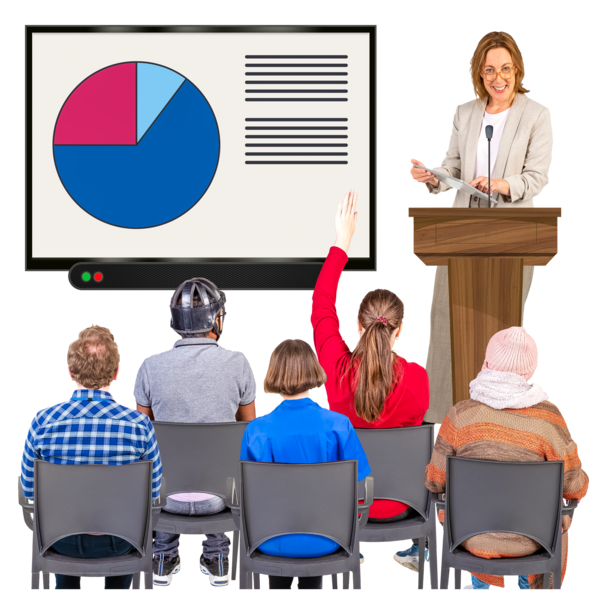 A conference is a meeting that lots of people are invited to.
, arranged by one of the biggest
organisations
Organisations are groups like companies and businesses.
in Europe, and I feel it was a big moment and achievement for me to be there.
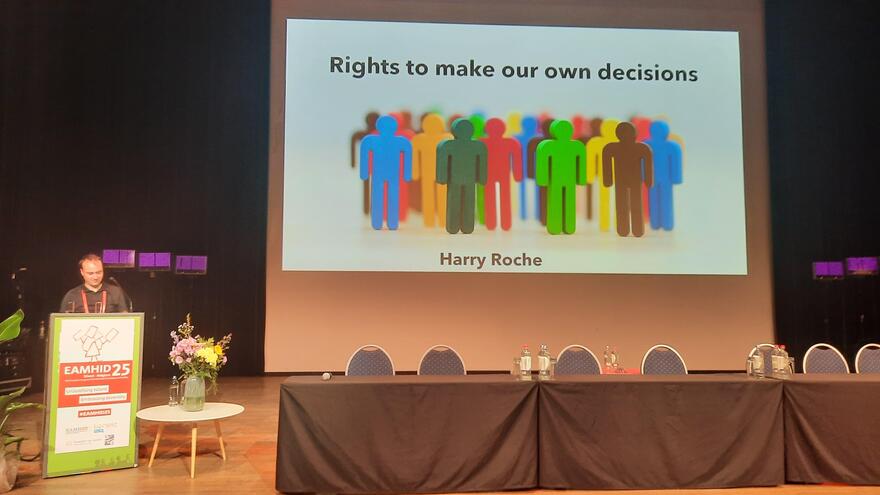
A keynote means it’s one of the main speeches in front of a big audience at the event on that day, with a presentation. There were about 400 people watching me, but I wasn’t nervous – I love speaking up in public and using my voice!
My speech was about highlighting that although people with disabilities – including people with a learning disability – have rights in
law
 Laws are the rules that everyone in the country has to follow. If you don't follow the rules you can get in trouble with the police.
to make their own decisions, have the right to
education
Education is when you learn things. When you fill in a form to get a job, education means you write where you went to school, college or university.
, and the right to choose where they live under the UN Convention on the Rights of Persons with Disabilities (CRPD for short), a lot of countries don’t fully
respect
Respect means showing someone you think about someone's feelings, wishes or rights.
them.
So though we have these rights on paper, they’re not always respected.
For example, a report by the EU Commission in 2020 said that there are at least 1.4 million people living in institutions and that number hadn’t really changed for the last 10 years. In the UK, an investigation from Mencap and ITV News found that over £500 million is spent locking people with a learning disability and autistic people in mental health hospitals in England. Mencap said this is a gross misuse of public funds being wasted on the wrong kind of care. And figures from the NHS The NHS is the National Health Service. The NHS gives free healthcare to everyone in the UK and includes things like your GP (doctors) surgery and hospitals. show that the number of people with a learning disability in paid work is going down year on year.
It’s a mystery to me why we are seeing so little change despite the UN CRPD, but it’s not all bad news across the world. I’ve seen glimmers of hope in the actions of countries like Spain, who gave people with a learning disability the right to
vote
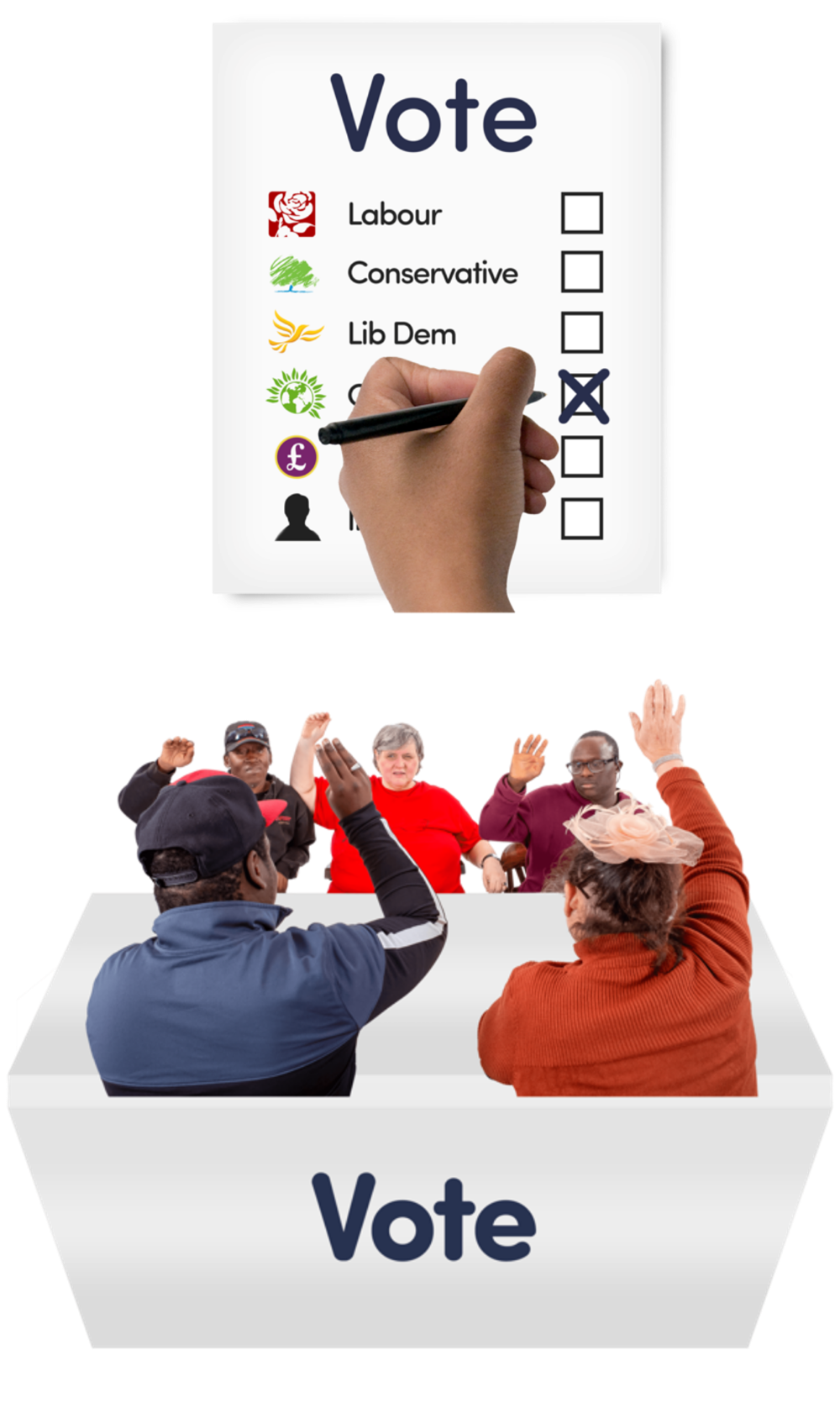 People vote in an election. In elections for councillors or MPs, you vote by putting a cross next to the name of the person you want to choose. In less formal elections, like in a small group, you might vote by putting your hand up. The person with the most votes wins.
finally in 2019.
This year Canada was praised by the CRPD committee for their actions to help people with disabilities to vote. That was after Canada introduced a Disability Inclusion Action Plan to make sure people were given opportunities to get a job and live in
accessible
 Accessible means something is easy for people to use or join in with. For example: Accessible writing means the writing is easy to read and understand.
and inclusive communities.
Watch my keynote speech - all about the rights of people with a learning disability to make their own decisions - at the 2025 EAMHID Congress in full here.
There have been a number of inspirational people like Mar Galceran, the first Spanish parliamentarian with
Down Syndrome
 Down syndrome, also known as Down's syndrome, is a type of disability. People with Down syndrome may find it hard to learn new things and may need support. They may have more problems with their health too.
, and Hungarian self-
advocate
 An advocate is a person who can help you have your say. An advocate can speak up for you if you find it hard.
Laszlo Bercse – who I had the pleasure to work with at Inclusion Europe – who spoke in the European
Parliament
Parliament is a group of people who make laws and check what the government is doing.
to call for institutions to be closed down forever.
I also shared the story of the late Sir Robert Martin from New Zealand, who was the first member of the CRPD Committee with a learning disability. He was a real inspiration to me and other people with a learning disability as a passionate self-advocate who was always fighting for change.
I also talked about the importance of making sure that people with a learning disability have the support and tools they need to become self- advocates Advocates means supporting or speaking up for someone or something. themselves, making sure that we always have a community A community is the people and places in an area. of people who are shouting about their rights and reminding governments of the need to respect them.
I loved having the chance to network and talk with people from across Europe, and I really enjoyed seeing Dance Syndrome perform in the breaks – they were really inspiring. It was such a positive event and I loved having the chance to be a part of it.
Giving my speech made me feel incredible.
It was a really, really, really good feeling and it was amazing to look around the room. I felt like I was on stage in a theatre and it was a whole new world to me. But it was important for someone with lived experience like me to be in the same room as doctors, professors, researchers, and self-advocates, all coming together because they want to make a difference, and send a message to the world that things have to change!
I was so glad that I’d done it, I was delighted to put my point of view across and enthusiastic to help bring change for people with a learning disability everywhere.
Thank you to the National Lottery Community Fund for their generous grant, funding this work.