
Even if you’ve spent years championing
accessible
 Accessible means something is easy for people to use or join in with. For example: Accessible writing means the writing is easy to read and understand.
design, inclusive
research
Research is a way of finding out information which could come from books, or asking people what they think.
will still challenge you, in all the best ways. That was the lesson we kept learning throughout our work with Mencap.
We weren’t just designing for people with learning disabilities. We were designing with them. That meant reshaping our methods, our materials, and even our own thinking.
Our approach
Mencap asked us to make a design system that helps people with learning disabilities feel confident and independent online.
To do this, we worked with people with learning disabilities to co-design the research itself. We needed to understand what digital life feels like for people who are often left out of the conversation.
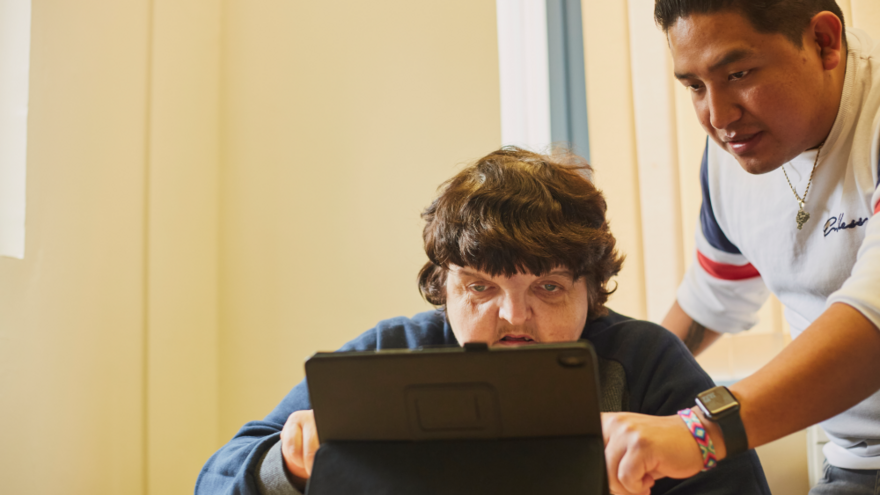
We moved beyond standard audits and built a research process grounded in lived experience Experience is when you have learned or tried something before. .
This included:
- Diary studies with follow-up interviews
- Expert interviews with professionals and carers
- Surveys, tree tests, and support transcript analysis
- In-centre research, delivered by people with learning disabilities
- Comprehensive content and analytics audit.
When it came time to test design choices, we didn’t just present participants with a set of questions. We co-designed and built the A/B testing sessions together. The format, visuals, and feedback mechanisms were shaped by the people taking part.
We piloted the sessions in a Mencap centre in St Helens. From there, Mencap staff with learning disabilities took them nationwide. These sessions weren’t just more inclusive - they gave participants the opportunity to lead. Confidence and ownership followed.
What we heard
The barriers people described weren’t just technical. Many spoke about confidence and fear. Support was sometimes overbearing or inconsistent. Some said they avoided digital tasks entirely to avoid failure or frustration.

One participant told me he played fantasy football online. I asked, without thinking, “Who helps you with that?”
He answered immediately, “No one. I don’t want them stealing my ideas.”
He was using a complex product entirely on his own, and was clearly proud of it. What mattered to him wasn’t ease of use - it was autonomy, motivation and contro l. This experience, along with so many other moments, reminded us to continually check our own biases about what people with a learning disability A learning disability is to do with the way someone's brain works. It makes it harder for someone to learn, understand or do things. can do, and their fully formed needs and motivations.
Another moment stood out during one of the in-person testing sessions. A participant initially kept to the sidelines. He didn’t take part in the planned activities and seemed unsure about getting involved Involved is being included in something or taking part in something. .
Later, with a little encouragement from a
support worker
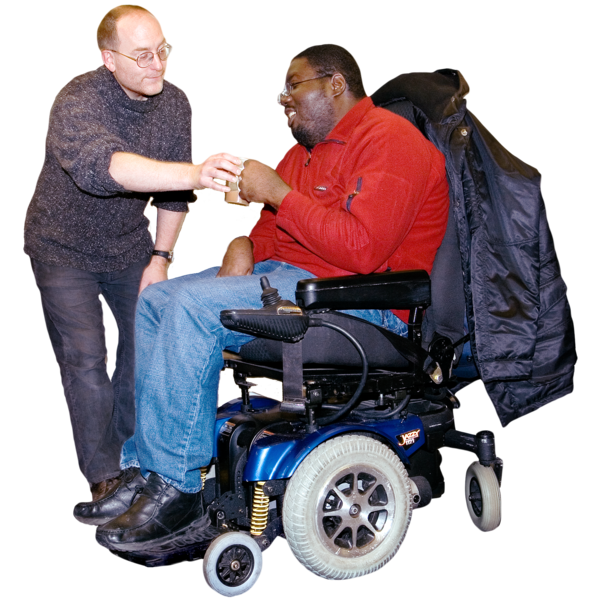 Support workers are people who are paid to give care and support to people who need it.
, he approached us with an iPad. He wanted to show us something.
What he shared were dozens of digital portraits of celebrities, created in Procreate (a professional-level illustration app). He had learned to use it himself. He was confident, skilled, and enthusiastic.
That moment showed us two things.
First, our methods may not always feel inviting or familiar. If people don’t understand the value or the format feels off-putting, they may choose not to engage. That doesn’t mean they have nothing to say.
Second, we can’t make assumptions about someone’s ability based on whether they take part in a test. The challenge may not be about skill. It might be about trust, motivation, or confidence. Sometimes we’re simply not asking the right way.
These were humbling moments and powerful reminders to stay curious, flexible and never make assumptions.
What we’d tell any researcher
If you want your research to be more inclusive and empowering, try this:
Start with co-design
Bring people with lived experience in from the beginning. Ask how they’d like to take part, what’s comfortable, and what works for them.
Create low-pressure ways to engage
Not everyone wants to join a formal interview. Casual conversations, visual prompts, or group-based activities can feel more natural.
Explain your approach clearly
People are more likely to engage when they understand why you’re asking something. Be open about what you’re doing and why.
Stay flexible
If a method isn’t working, adapt it. Some of the most powerful insights come from moments you didn’t plan for.
Let people lead
When someone builds confidence, offer them the chance to help shape or even deliver the work. Peer-led sessions can create more comfort, more honesty, and more impact.
Final thought
Inclusive research asks more of us. It asks us to slow down, listen harder, and stay open to being surprised. When people feel trusted, safe, and respected, they won’t just take part in your research. They’ll shape it.
Who are Reason Digital?
Reason Digital partner with organisations Organisations are groups like companies and businesses. who care to create digital tools alongside people with lived experience.
 Harry Roche
 By Mencap