
For many people with a learning disability A learning disability is to do with the way someone's brain works. It makes it harder for someone to learn, understand or do things. , important information can be confusing, complicated and difficult to access. That can make it harder to make choices, stay informed and live independently.
Google DeepMind worked with Mencap and people with a learning disability while developing the Easy Read Easy Read is a way of making written information easier to understand. Pictures are usually added next to the writing. Co-Creator Tool. Their expertise and feedback was used to help improve the tool.
This tool is designed to help organisations Organisations are groups like companies and businesses. create Easy Read information more quickly and consistently, giving more people access information they can understand.
The Easy Read Co-Creator Tool uses AI to support the creation of
accessible
 Accessible means something is easy for people to use or join in with. For example: Accessible writing means the writing is easy to read and understand.
information while keeping human expertise and oversight at the heart of the process.
Why accessible information matters
Information helps us make decisions every day, from understanding healthcare appointments and applying for jobs to managing money, accessing support and taking part in our communities.
When information is difficult to understand, people can be excluded from decisions that affect their own lives.
For Ciara Lawrence, Engagement Lead at Mencap, accessible information is about being included in society.
If society change their attitude towards us and made things into Easy Reads and made things accessible, then we can join in, we can be part of society.
Register your organisation's interest
We're inviting organisations to register their interest in becoming one of the first to use the Easy Read Co-Creator Tool. This tool could help your organisation to create Easy Read information, helping more people access information they can understand.
Seed funding is available to eligible organisations if they need financial Financial means anything that is to do with money. It is used to describe how people, businesses, or governments get money and how they use it help to take part.
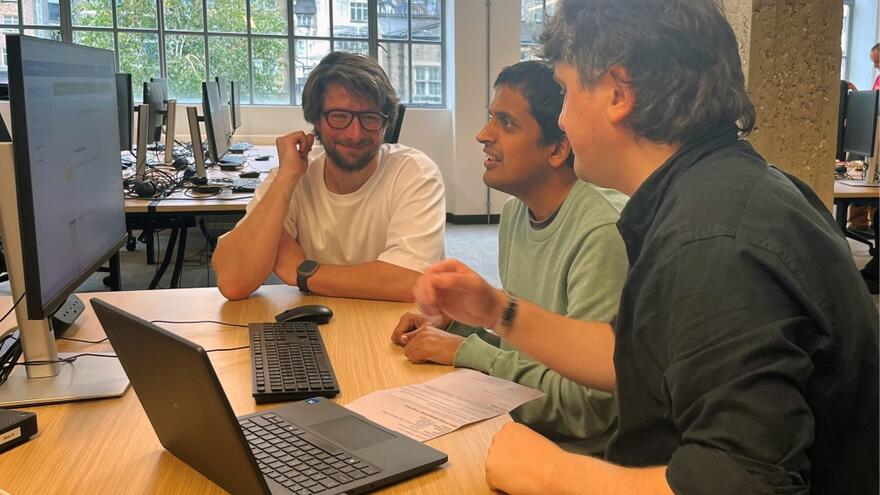
Created with people with a learning disability
People with a learning disability played an important role in developing and testing the tool, sharing their lived experiences and helping Google DeepMind refine the tool with support from Mencap's accessibility Accessibility is about making it easier for someone to join in, get, use or do something. experts.
Vijay Patel, Campaigns Assistant at Mencap, was involved Involved is being included in something or taking part in something. in testing the tool during development.
When Google DeepMind were having conversations with us along the way, I felt really, really included and valued, because of my experience as a person with a learning disability, but also having experience and the knowledge Knowledge is knowing a lot about something. of Easy Read.
Co-production remains at the heart of Easy Read
Easy Read should always be created with people with a learning disability.
The Easy Read Co-Creator Tool has been designed to support that process, not replace it. Lived experience, human review and co-production remain essential to creating information that is accurate, useful and genuinely accessible.
People with a learning disability will continue to review, edit and improve content throughout the process, helping ensure Easy Read information works for the people it is intended for.
Helping make accessible information the norm
Mencap is one of the UK's leading experts in creating accessible information. For decades, we've supported organisations and government departments to create Easy Read resources and improve accessibility for the people they serve. But creating high-quality Easy Read takes time. As a result, many organisations are unable to provide accessible versions of all the information they share.
The Easy Read Co-Creator Tool has been developed to help tackle that challenge.
Inspired by a family's experience
For Sarah Cowen-Rivers, Senior Strategic Campaigns and Communications
Manager
 A manager is a boss at work. They tell you what you need to do and give you support if you need it.
at Mencap, improving access to Easy Read is personal.
Sarah grew up with her younger brother Danny, who has a learning disability. When Easy Read versions are available, Danny will often choose them. Without them, he can find himself having to read information several times to fully understand it.

Looking ahead
Google.org is providing $1 million in funding to support Mencap to train and support up to 50 organisations to use the Easy Read Co-Creator Tool between 2027 and 2030.
This funding will help organisations build their confidence in creating accessible information and support more people with a learning disability to access information they can understand.
As organisations begin using the tool, Mencap, Google DeepMind and people with a learning disability will continue learning, testing and improving the approach together.
This is why we're inviting organisations to register their interest in using the Easy Read Co-Creator Tool.

The tool is designed for organisations that create information for the public. This could include patients, customers, service A service gives people what they need, like healthcare services that help people when they are ill, and support services that give people support. users, residents, supporters or employees
The programme is currently focused on supporting organisations, rather than individuals, to create more accessible information.
We will prioritise organisations where accessible communication can deliver the greatest impact by increasing inclusion, participation and
independence
 Independence means doing things on your own. Making your own choices.
for people with a learning disability. Selection will focus on sectors where there is a clear need for accessible information, alongside organisations that demonstrate a commitment to improving accessibility, have the reach to benefit large numbers of people, and are willing to work collaboratively to embed lasting change.
No. People remain central to the process. The tool supports the creation of Easy Read content, but human review, editing and approval remain essential.
Yes. People with a learning disability have helped shape and test the tool throughout its development and will continue to play an important role in reviewing and improving content.
Because creating effective Easy Read information is something people and technology do together. The tool supports the process, while people with a learning disability and Easy Read expertise remain at the heart of it.
Mencap wants to help shape AI so it works for people with a learning disability. Google DeepMind involved people with a learning disability from the start, giving them a meaningful role in shaping and testing the tool.
This is a co-production tool with built-in safeguards. It is designed to be used with human oversight: a person must check and approve everything it produces. People with a learning disability must also be involved in creating and checking the accessibility of the Easy Reads it produces. Responsible AI should work for people with a learning disability, keeping their needs and experiences at the heart of its use.
Google Deep Mind made some investment in user testing, which took significant time. Google.org is providing a $1m grant to fund our 3-year roll-out programme. This work is aligned to our
strategy
 A strategy is a plan to show what an organisation, or a person, wants to do and how they are going to do it.
which aims to help people with a learning disability live their lives to the full.
In testing it performs very well, but a person must always check the Easy Read against the original to ensure accuracy. That's built into how it works.
That's a risk we thought about, which is why testers with lived experience helped shape the images as the tool was developed. A person is responsible for checking every image and can create their own using the tool.
Not at the moment. We've started with organisations because one organisation reaches many people, and we're rolling it out carefully, with the right training and support.
Yes, Mencap colleagues have taken part in the testing process. We are proud to be using the tool and plan to use it more now it’s launched.
No. The tool does not store uploaded content, and the data is not used to train AI models.