
Unlawful Public Body Statements

Unlawful public body statements and how to tackle them
This resource aims to support those encountering difficulties with statutory agencies in relation to the provision of
social care
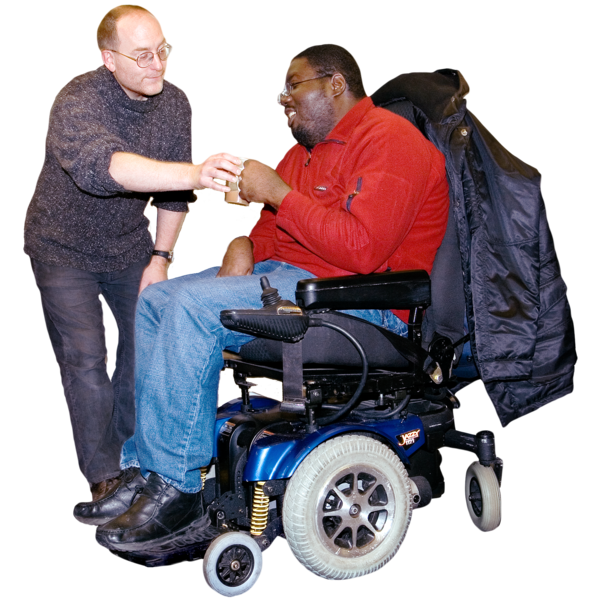 Social care means the services that give care and support to people who need it.
. Problems within social care and support can arise at any stage, and even if you know what your
rights
Rights are the things everyone should be allowed to do like have a say, or go to school.
are, it can feel daunting and confusing when trying to challenge public officials. This resource can be read alongside the ‘Jargon Buster’ factsheet.
Many public officials and parents or supporters of those with a
learning disability
A learning disability is to do with the way someone's brain works. It makes it harder for someone to learn, understand or do things.
misunderstand the
law
 Laws are the rules that everyone in the country has to follow. If you don't follow the rules you can get in trouble with the police.
, often because the law is not clear or explained to them sufficiently. As a result, myths can develop and spread across various different situations.
Common Unlawful Statements
“You have to have a diagnosis A diagnosis is when a medical professional like a doctor has said you have a certain illness or condition. to get support”
A medical diagnosis can be crucial in terms of treatment, but it is not essential to trigger a duty to provide support. It can take a long time to reach an accurate diagnosis, and sometimes the process of diagnosis does not always start until later in somebody’s life. Despite the lack of diagnosis, it is often clear that a person has disability related needs and it would be unlawful for a public body to refuse to provide support simply because there was no formal diagnosis.
If you are being told that you need a diagnosis to get support and you need more information on how to challenge this, please contact the Learning Disability Helpline on 0808 808 1111.
“We don’t / can’t do that”
Public bodies have far-reaching powers to provide a wide variety of support to disabled people and their carers. There are very few limitations on what they can do, which means that public bodies are not allowed to have ‘blanket policies’ about what they won’t do (unless the law allows this).
An example of a situation in which a public body is allowed to have restriction on what they can do is that social services cannot provide health services, and there are some limitations on what support can be provided to people who are subject to immigration control.
“The Panel /
Manager
 A manager is a boss at work. They tell you what you need to do and give you support if you need it.
says no”
Local authorities
A local authority is another name for your local council. It is a group of people whose job is to look after the area where you live. Local authorities means more than one local authority.
use ‘panels’ of various types, for example funding panels, as a way of deciding how needs should be met. It is often the case that a
social worker
 A social worker is someone who can help you get the support you need. Social workers usually work for your local council.
has spent a long time assessing a person, identifying their needs and suggesting a package of care which is then overruled by
a senior manager or funding panel.
Panels can sometimes depart from recommendations by social workers if it can be justified, but it is commonly difficult to do this. Assessed needs must be met – the issue is how will they be met.
“If you have an IQ of more than 70, you don’t qualify for help”
An example of this may be that some local authorities suggest that people with
Autism
 Autism is a disability. Autistic people find it difficult to understand what other people think and feel. They also find it difficult to tell people what they think and feel. Everyone with autism is different.
, Aspergers or ADHD – high functioning or otherwise – do not qualify for support. Although public bodies are allowed to create departments that focus on specific impairment groups, they cannot refuse to provide support to somebody just because they have impairments that are outside that department’s terms of reference.
“There is a
maximum
Maximum means the highest amount, or greatest value that something can be.
amount of hours/amount of money you can receive through
Direct Payments
 Direct payments are when the money for your care and support, or benefits, is paid to you.
”
Direct payments are cash payments made by social services to people who have been assessed as needing support. There is a general right to have a direct payment. The amount of direct payment must be sufficient to meet the persons assessed needs.
There is no upper limit on the amount of direct payments and it would be unlawful
for an authority to suggest this was the case.
“We are not the authority responsible for your care and support”
Sometimes, local authorities refuse to provide support on the basis that they are not responsible as the person is ‘ordinarily resident’, for example, in another area. In situations where a person is left without support because two public bodies are arguing about who is responsible, this is unlawful. There must be no gaps in provision of support to the person while the public bodies resolve their dispute.
These are just a few examples of certain Certain means you are sure about something. commonly-found myths. In general, any policy that seeks to place a restriction on a person’s entitlement regardless of their need is usually unlawful and you should seek clarification from the public body in question. Commonly, the frontline member of staff (who are usually social workers) are not aware that what they are saying is unlawful.
“The
budget
 A budget is a plan where you look at how much money you have and how you will spend it.
has been cut /
the budget
 The Budget is the plan the government has for what it will spend money on and how it will raise money to pay for the spending. The Budget tells us if there will be any changes to how much people pay for things.
has run out”
This is a common one. The public body in question may agree that the disabled person or carer has needs, but will refuse to meet the need due a shortage of resources. This can be shortage of
money but also shortage of actual provision, for example
respite
 Respite is when a person goes somewhere for a few hours or days to have a break. People with a learning disability can have respite from their carers and family, and carers and family can have respite from the people they care for.
care places or
adequately trained staff. It can also arise when there has previously been support in place which is suddenly cut for ‘budget reasons’.
Unqualified statements that support will either be refused or cut because of lack of
money or resources are unlawful.
Solving the problem
If you have been told something you are unsure of, or something you know is likely
to be unlawful, the first step is to get it in writing.
Make a note of what has been said – record the time, date, place and who was
present when you were told the piece of information.
Mencap have produced a precedent letter ‘Can I have that in writing?’ which sets
out how to frame a request of this nature.
It is usually a good idea to send the letter to the most senior person within the service in question. You can also send a copy to the authority’s Monitoring Officer. A monitoring officer is usually a solicitor or barrister, so they are more likely to pick up on any unlawful act by the
local authority
 A local authority is also called a council. They are a group of people who make decisions about some of the things in the area where you live like schools, social care (support for people), parks and dustbin collection.
and help to resolve the problem more quickly than if you had just addressed it to the complaint’s department who are not legally trained and may not spot issues as quickly.
Asking the public body to clarify in writing the “unlawful statement” is useful for two reasons. Firstly, it acts as a public record of what was said. Secondly, it gives the body an opportunity to reconsider what has been said and explain that what was said was actually wrong.
If this doesn’t provide any clarity, seek legal advice.
This resource was drafted using information produced by Cerebra, Cardiff Law School and Professor Luke Clements
For more information about this resource, please contact the Learning Disability Helpline.
Phone: 0808 808 1111
Email: [email protected]
This resource was first published: 28/07/2023
Last amended: 28/07/2023