
Interagency Disputes – Continuing Healthcare and Social Care

This resource explains what happens when there is a dispute between health services and
social care
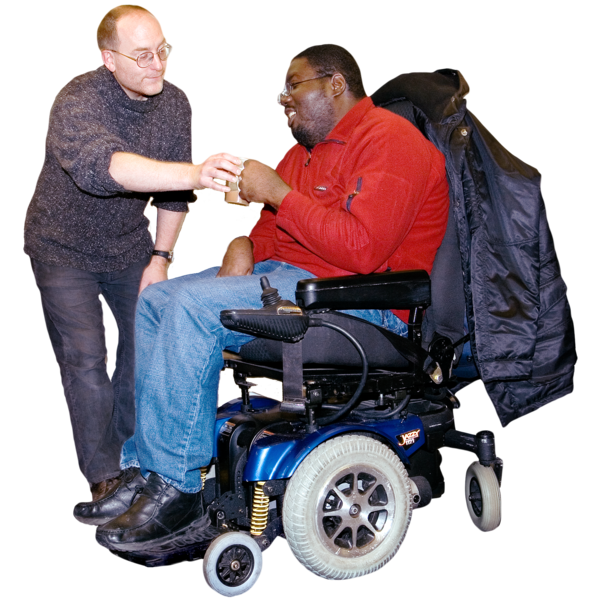 Social care means the services that give care and support to people who need it.
services, over who is responsible for a person’s package of care. Health services are often referred to as ‘
NHS
The NHS is the National Health Service. The NHS gives free healthcare to everyone in the UK and includes things like your GP (doctors) surgery and hospitals.
Continuing Healthcare’ run by Integrated Care Boards (ICBs).
This is separate to disputes between different local authorities A local authority is another name for your local council. It is a group of people whose job is to look after the area where you live. Local authorities means more than one local authority. , or between local authorities and education Education is when you learn things. When you fill in a form to get a job, education means you write where you went to school, college or university. services. Mencap has produced additional resources on those issues.
When do disputes between healthcare and social care services arise?
It is the nature of a person’s needs (i.e., whether it is a health care need or a social care need) that determines where funding should come from.
Sometimes a person has services from both social care and health care and the funding can be split and shared between them, depending on the person’s individual needs.
Most Continuing Healthcare disputes and appeals are caused by errors in defining the type of needs. For example, some health needs may have been incorrectly recorded as social care needs and vice versa.
What is Continuing Healthcare (CHC)?
NHS Continuing Healthcare is the name given to a package of care that is arranged and funded solely by the NHS for individuals who are not in hospital and have been assessed as having a primary health need.
There is no charging for NHS care, and this means that NHS Continuing Healthcare funding covers 100% of the cost of receiving full time care either at home, in a
care home
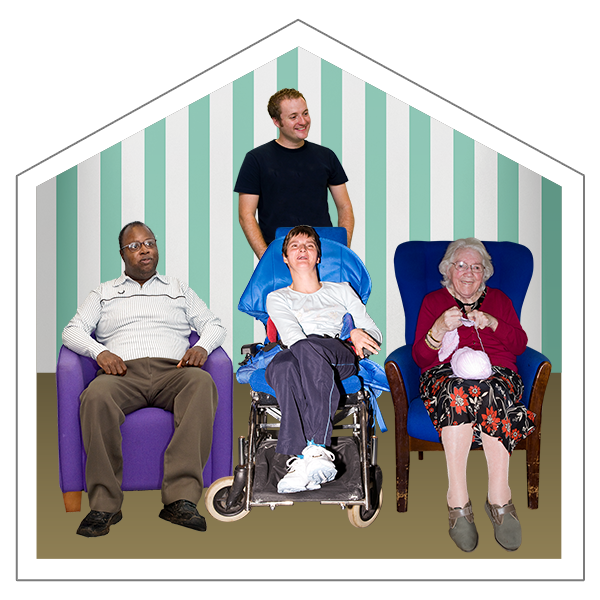 A care home is a place where people who need support live. There are staff there all the time.
or elsewhere.
An
assessment
 An assessment is a way of finding out what help a person needs. When you have an assessment, you might have to go to a meeting or fill in a form.
will take place if a person:
- Needs full time care; and
- Has a primary health need
This is not a
financial
Financial means anything that is to do with money. It is used to describe how people, businesses, or governments get money and how they use it
or means tested assessment. If a person is being assessed by a
local authority
 A local authority is also called a council. They are a group of people who make decisions about some of the things in the area where you live like schools, social care (support for people), parks and dustbin collection.
for social care needs, the LA can also refer the person for a CHC assessment. The assessment will look at, amongst other things, a person’s needs and whether they are health needs.
CHC funding covers 100% of the cost of care. If a person is eligible for CHC then the NHS will pay for and arrange both their health care and their social care needs. This differs from social care support, which often requires the person to make contributions to the cost of their care. If a person is not eligible for CHC then the local authority A local authority is another name for your local council. It is a group of people whose job is to look after the area where you live. will be responsible for arranging to meet their eligible social care needs and the NHS will arrange and meet their health care needs. In other words, continuing healthcare is free and social care is not.
How do I know if a need is a healthcare need or a social care need?
The National Framework for NHS Continuing Healthcare provides guidance Guidance means being given clear instructions to be able to do something well. on how to determine a person’s needs.
Whilst there is not an exact legal definition of a healthcare need, in general terms it can be said that a healthcare need is one related to the treatment, control or prevention of a disease, illness, injury or disability, and the care or aftercare of a person with these needs (whether or not the tasks involved Involved is being included in something or taking part in something. have to be carried out by a health professional).
The National Framework also explains that in general terms, it can be said that a social care need is one that is focused on aiding with:
- Activities of daily living
- Maintaining
independence
 Independence means doing things on your own. Making your own choices.
- Social interaction
- Enabling the individual to play a fuller part in society
- Protecting the individual in vulnerable Being vulnerable means being at risk of harm, or that you need special care because of your age or disability. situations
- Helping them to manage complex
relationships
 Relationships are about the people in your life. You might have different types of relationships like friendships, family relationships, or a boyfriend or girlfriend.
- In some circumstances, helping them to access a care home or other supported accommodation
Some situations are very clear as to whether it is a heath need or social care need, for example someone who needs full time nursing care would not be suitable for a social care package on its own. In fact, it is illegal for a local authority to take on
responsibility
Responsibility is managing or being in charge of something.
for providing care to someone who should be receiving care from the NHS. Sometimes public bodies misunderstand the
law
 Laws are the rules that everyone in the country has to follow. If you don't follow the rules you can get in trouble with the police.
surrounding whether a need is a healthcare need or social care need.
Where do disputes arise?
An example:
Mr Williams receives general nursing care three times every day and has support with shopping and accessing his local
community
A community is the people and places in an area.
centre. He is currently paying for some of this support as his package is funded by his local authority as a social care package with relevant financial contributions from Mr Williams. He asked his
social worker
 A social worker is someone who can help you get the support you need. Social workers usually work for your local council.
if he could get CHC funding but was told that because he was not receiving specialist nursing or treatment he wouldn’t qualify. Sometimes, disputes arise because social workers and healthcare practitioners misunderstand the law. The Coughlan Test, a landmark legal test following a Court of Appeal case, established that both general and specialist nursing care falls under CHC funding as a general rule, if it goes beyond what can be expected of a local authority.
The dispute is taking a long time to resolve, and the person in need of care and support is without a package of care. What should I do?
Local authorities and CCGs have dispute resolution procedures regarding CHC and joint packages. However, there should be no gap in provision whilst disputes are resolved. In NHS England’s guidance, ‘Who Pays?’, the underlying principle is that there should be no gaps in responsibility. Therefore, no treatment should be refused or delayed due to uncertainty or ambiguity as to which agency is responsible for funding an individual’s healthcare provision. The NHS is expected to act in the best interests of the patient at all times and work together in the spirit of partnership. Local authorities also have a duty to collaborate with other agencies in the best interests of the individual.
For more information about this resource, please contact the Learning Disability A learning disability is to do with the way someone's brain works. It makes it harder for someone to learn, understand or do things. Helpline.
Phone: 0808 808 1111
Email: [email protected]
This resource was first published: 07/09/2023
Last amended: 20/09/2023