
Financial charges for care

Payments and charges: individuals requiring care
It is now usual for people in receipt of adult
social care
 Social care means the services that give care and support to people who need it.
to have to contribute towards the cost of their care. However, there are
certain
Certain means you are sure about something.
types of care and support which the
Local Authority
 A local authority is also called a council. They are a group of people who make decisions about some of the things in the area where you live like schools, social care (support for people), parks and dustbin collection.
(“LA”) must not charge for providing. These include:
- Intermediate care, including re-enablement, which must be provided free of charge for up to 6 weeks
- Community A community is the people and places in an area. equipment (aids and minor adaptations). Aids must be provided free of charge whether provided to meet or prevent/delay needs. A minor adaptation is one costing £1,000 or less
- After-care services/support provided under section 117 of the mental health act 1983
- Any service or part of service which the NHS The NHS is the National Health Service. The NHS gives free healthcare to everyone in the UK and includes things like your GP (doctors) surgery and hospitals. is under a duty to provide. This includes continuing healthcare and the NHS contribution to registered nursing care
- More broadly, any services which a local authority A local authority is another name for your local council. It is a group of people whose job is to look after the area where you live. is under a duty to provide through other legislation may not be charged for under the act
-
Assessment
 An assessment is a way of finding out what help a person needs. When you have an assessment, you might have to go to a meeting or fill in a form.
of needs and care planning may also not be charged for since these processes do not constitute ‘meeting needs’.
- Assuming that the care being provided does not have to be provided by the LA free of charge, the LA can decide whether or not to charge you for providing the care. In England, the Care Act 2014 (“the Act”) sets out what the LA needs to consider when assessing your financial Financial means anything that is to do with money. It is used to describe how people, businesses, or governments get money and how they use it resources to see how much you are able to pay towards the cost of meeting your care needs.
The Care and Support Statutory Guidance also contains information on how a LA should charge for care in accordance with the Care and Support (Charging and Assessment of Resources) Regulations 2014.
The LA should have a financial assessment policy which it should follow when deciding
how much you should pay for your care.
The amount you are expected to pay for care will depend on your circumstances and factors
such as whether:
- You are cared for in a
care home
 A care home is a place where people who need support live. There are staff there all the time.
or in your own home (this affects the rules about assessable
income
Income is all the money you get from things like paid jobs and government benefits.
)
- The value of your own home is disregarded (because it is occupied by a spouse or dependant relative) or considered; and
- You have decided to top-up the basic local authority care provision (for example, by choosing a larger room in a care home or by choosing a more expensive care home).
- Even if you are part of a couple, you will be assessed individually (if it is only you receiving the care and support). Any assets which you hold jointly with your partner will be divided equally for the purposes of the financial assessment, unless there is evidence to show that you own it in unequal shares.
Residential care
If you are living in a care home, you will be expected to contribute most of your income towards the cost of your care and support. Some income will be disregarded, including:
-
Direct payments
 Direct payments are when the money for your care and support, or benefits, is paid to you.
- Mobility component of DLA or
Personal Independence Payment
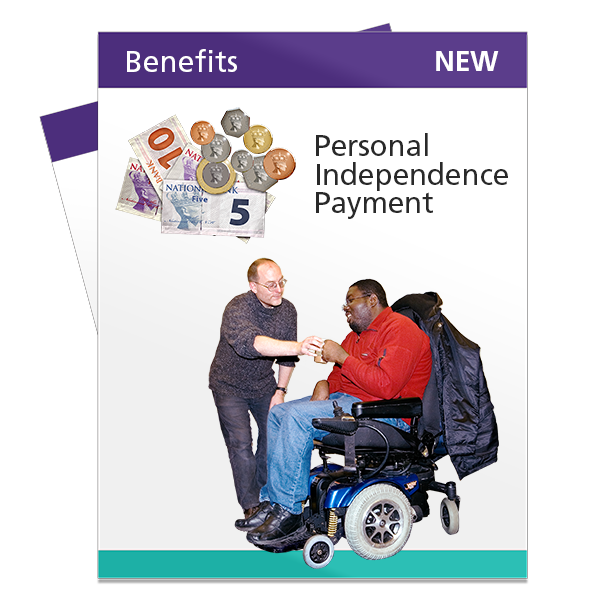 Personal Independence Payment (PIP) is the name of a benefit that some people with a disability or health condition get. The money is to pay for extra help you might need to look after yourself and to get around. Some people who used to get Disability Living Allowance (DLA) now get PIP instead.
However, you should be left with a personal
expenses
Expenses means the money you spend to buy things or pay for services.
allowance, which is an amount set out in
law
 Laws are the rules that everyone in the country has to follow. If you don't follow the rules you can get in trouble with the police.
, in order to buy personal items such as clothing. It is currently at least £28.25 per week (as of April 2023) – find out more here
Non-residential care
If you are receiving non-residential care the following should be disregarded from your income when the LA is deciding how much you should be charged:
Mobility component of Personal
Independence
 Independence means doing things on your own. Making your own choices.
Payment or
Disability Living Allowance
 Disability Living Allowance (DLA) is the name of a benefit that some people with a disability get. The money is to pay for extra help you might need to look after yourself and to get around. Disability Living Allowance is being replaced by a benefit called Personal Independence Payment (PIP).
and Disability Related Expenses:
Annex C of the
Guidance
Guidance means being given clear instructions to be able to do something well.
states the following in relation to what can be classed as a
disability related expense, although the list is not exhaustive:
a) Payment for any community alarm system
b) Costs of any privately arranged care services required, including
respite
 Respite is when a person goes somewhere for a few hours or days to have a break. People with a learning disability can have respite from their carers and family, and carers and family can have respite from the people they care for.
care
c) Costs of any specialist items needed to meet the person’s disability needs, for example:
1) Day or night care which is not being arranged by the local authority
2) Specialist washing powders or laundry
3) Additional costs of special dietary needs due to illness or disability (you may be asked for permission to approach your GP in cases of doubt)
4) Special clothing or footwear, for example, where this needs to be specially made; or additional wear and tear to clothing and footwear caused by disability
5) Additional costs of bedding, for example, because of incontinence
6) Any heating costs, or metered costs of water, above the average levels for the area and housing type
7) Occasioned by age, medical condition, or disability
8) Reasonable costs of basic garden maintenance, cleaning, or domestic help, if necessitated by your disability and not met by social services
9) Purchase, maintenance, and repair of disability-related equipment, including equipment or transport needed to enter or remain in work; this may include it costs, where necessitated by the disability; reasonable hire costs of equipment may be included, if due to waiting for supply of equipment from the local
council
 A council is also called a local authority. They are a group of people who make decisions about some of the things in the area where you live. These include: schools, social care (support for people), parks and dustbin collection.
10) Personal assistance costs, including any household or other necessary costs
arising for the person
11)Internet access for example for blind and partially sighted people
12) Other transport costs necessitated by illness or disability, including costs of transport to day centres, over and above the mobility component of DLA or PIP, if in payment and available for these costs.
In some cases, it may be reasonable for a council not to take account of claimed
transport costs – if, for example, a
(i) Suitable, cheaper form of transport, for example, council-provided transport
to day centres is available, but has not been used
13)In other cases, it may be reasonable for a council not to allow for items where;
(i) A reasonable alternative is available at lesser cost. For example, a council
might adopt
(ii) A policy not to allow for the private purchase cost of continence pads, where these are available from the NHS.
If you receive services during the day only, then the LA can only take the low-rate Attendance Allowance or middle rate care component of Daily Living Allowance into account. If you receive services at night, the LA may choose to take the whole Attendance Allowance or DLA award into account.
There is no distinction between day and night needs for personal independence payment so the standard and enhanced rate of daily living component can be taken into account as income regardless of whether you receive services in the day or the night.
In addition, a person must be left with a minimum income guarantee, (after disability related expenditure and the disregarded benefit has been taken into account) – there is a statutory minimum which will depend on your circumstances, but the LA may decide to set a higher minimum income guarantee, details of which should be set out in its financial charging policy (which you are entitled to see).
More info here
Capital and savings
Under the capital limits set out in the Act if your “assessable capital” exceeds £23,250, you must pay for all your care costs until your assessable capital falls below that amount (assessable capital
includes property and savings)
Things that count as capital include:
- Buildings
- Land
- Trusts
- Capital held in bank or building society accounts
- Premium bonds
- National savings certificates
- Stocks and shares
It also includes capital held abroad
Your main home will not count as capital if:
- You are not receiving care in a care home; or
- You are receiving care in a care home temporarily and you intend to return to your home or are making reasonable steps to dispose of it and acquire a more suitable home; or
- You no longer live there but a relative is occupying the home; or
- The LA uses its discretion to apply a property disregard.
More detail about capital is contained in Annex B of the Guidance.
The lower capital limit is currently £14,250. If you have capital between the lower and upper capital limit you will be assessed as having a tariff income of £1 per week for every £250 of capital.
Where you clearly have capital in excess of the upper limit the LA will not make any further assessment of your financial resources and you will be expected to pay all your care costs.
However, if you are near the upper limit you can request that the LA provides a plan for
when capital falls below the upper limit. The Guidance states that such planning ahead is the
responsibility
Responsibility is managing or being in charge of something.
of the LA.
Challenging a financial assessment decision
If you believe that the LA has not properly carried out your financial assessment or has made a mistake in its calculations, you can challenge the assessment. In particular if you are receiving non-residential care you should ensure that all disability related expenditure has been included in the calculation.
The LA should provide details of how to challenge an assessment in its financial charges policy. If this is not available, you should request a copy as soon as possible after receiving the charging decision. Often there is a time limit for challenging the charging decision so you should try to obtain a copy of the policy as soon as possible to ensure that you do not miss the deadline.
Recovery of debts by LA
The Act introduces a framework for the recovery of any debts that may have accrued as a result of a LA meeting a person’s eligible care and support needs.
The Guidance states that LAs will want to bear in mind the following principles when
approaching the recovery of debts:
- Possible debts must be discussed with you or your
representative
 A representative is also called a rep. A representative is someone who speaks up for everyone in their group or team.
- The local authority must act reasonably
- Arrangements for debt repayments should be agreed between the relevant parties
- Repayments must be affordable and should not lead to hardship for you or your family
- Court action should only be considered after all other reasonable avenues have been exhausted.
LAs should also bear in mind that they are bound by the public law principle of acting reasonably at all times and must act in accordance with
human rights
 Human rights are the rights that everyone has. These include the right to go to school and the right to start a family.
legislation, as well as the wellbeing principle set out in the Act.
The Guidance states that the LA should consider whether it is appropriate to recover the debt although it has the power to do so, and in many cases will wish to do, it does not have to or indeed it may wish to only recover part of the debt. Such circumstances may include:
- Where the amount of the debt is small, and the costs of recovery would be disproportionate
- You or your representative could not reasonably have been aware that the asset in question needed to be included in the financial assessment.
If you are in receipt of benefits, then the LA could deduct the overpayment from ongoing benefit payments.
Alternatively, the LA may issue an invoice for the full amount of what it has calculated to be the overpayment – if a debt has occurred because your capital was above the upper capital limit it may make the most financial sense to repay the full amount as soon as possible, if it would bring your assets below the upper capital limit.
The LA could also choose to issue county court proceedings against you.
Deprivation of assets
If assets (such as property) are moved into a third party’s name so that you do not have to pay care
costs the LA may either charge you as if you still had the asset or seek to recover the lost income
from the person to whom the asset has been transferred.
If the LA is recovering a debt, then deprivation of assets will be one of the factors taken into
consideration in deciding whether to recover the debt and how that debt will be recovered.
For more information about this resource, please contact the Learning Disability A learning disability is to do with the way someone's brain works. It makes it harder for someone to learn, understand or do things. Helpline.
Phone: 0808 808 1111
Email: [email protected]
This resource was first published: 06/09/2023
Last amended: 06/09/2023