
Complaining about a Social Services Department within your Local Authority

If you are unhappy with the care that you have received, you have the right to:
- Make a complaint
- Have that complaint investigated
- Be given a full and prompt reply
This applies to care provided by your
local authority
 A local authority is also called a council. They are a group of people who make decisions about some of the things in the area where you live like schools, social care (support for people), parks and dustbin collection.
, and to care arranged directly with a care provider (by someone paying with their own money, or with money provided by the
local authority
A local authority is another name for your local council. It is a group of people whose job is to look after the area where you live.
).
If you are unhappy with the care you have received from a
care home
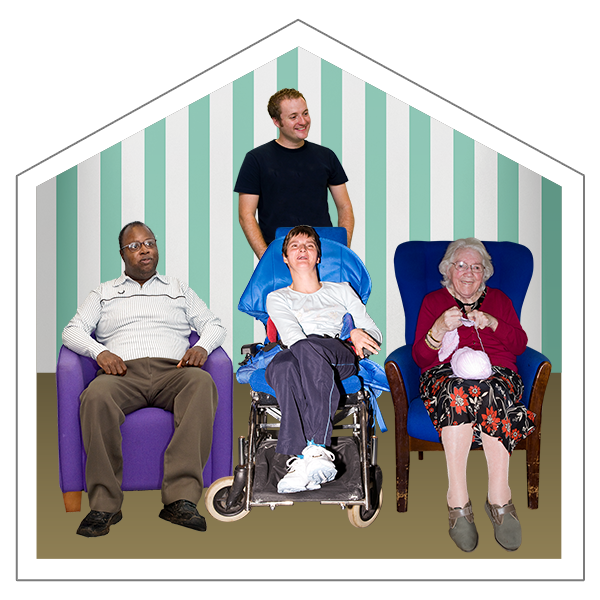 A care home is a place where people who need support live. There are staff there all the time.
, nursing home, home-care agency, or other
social care
 Social care means the services that give care and support to people who need it.
service
A service gives people what they need, like healthcare services that help people when they are ill, and support services that give people support.
, you should contact the service directly to make a complaint. This gives them the chance to try and put things right for you.
Or you could choose to complain to your local authority if they paid for the care. You can find the contact details of your local authority by visiting the GOV.UK
website
 A website is a page you can go to on the internet like Google or YouTube.
.
Making a complaint to the Local Authority (“LA”)
- You should contact your LA and ask for a copy of their complaint’s procedure. For instance, for the London Borough of Hackney, the following link is useful - https://hackney.gov.uk/adult-social-care-feedback
- We recommend making a written complaint. Most LAs will acknowledge receipt of your complaint and assess how long it will take to resolve (Hackney suggests an average of 15 days). They will then communicate the outcome of the investigation to you and take any action necessary.
- If you are not satisfied with the response, you can request an independent review, which will be carried out by an independent officer within the LA. Hackney, for instance, aims to respond within 20 days to such a request.
- If you are still unsatisfied, you can refer the matter to the Local Government & Social Care
Ombudsman
 An ombudsman is someone who can help you if you have complained about a service, like a hospital. If you think that the service has not looked at your complaint properly, you can take your complaint to the ombudsman. The ombudsman is an independent person who will look at your complaint.
(“LGSCO”).
Making a complaint to the LGSCO
- This is a free, independent complaints service for complaints regarding social care. All investigations are private, and people will not be identified in published information.
- You must have exhausted the LA’s internal complaints procedure before you are able to complain to the LGSCO
- In order to complain to the LGSCO, you must
a) Be making the complaint within 12 months of becoming aware of the problem; and
b) Have been directly affected by a local authority Local Authority or care provider’s actions (e.g., the person using the care service or their nominated representative A representative is also called a rep. A representative is someone who speaks up for everyone in their group or team.
, or anyone else affected by what has been done).
- Types of complaints include poor-quality care; fees and charges; poor complaint handling; unreasonable delay; poor safety and
safeguarding
Keeping people safe from being hurt, abused, or neglected is called Safeguarding.
; and unjust
assessment
 An assessment is a way of finding out what help a person needs. When you have an assessment, you might have to go to a meeting or fill in a form.
of needs.
a) If the complaint relates to a mixture of health and social care issues, the LGSCO may be able to help. If your complaint relates purely to health care, you should approach the Parliamentary and Health Service Ombudsman.
- The quickest method of complaint is to complete an online complaint form, found at https://complaints.lgo.org.uk/complaint-form/
You can also complain:
a) By phone at 0300 061 0614;
b) By texting ‘call back’, with your name and mobile number, to 0762 4803014, someone will then call you; or
c) In writing to:
Local Government Ombudsman,
PO Box 4771,
Coventry CV4 OEH
- Once you have made your complaint, the LGSCO will advise you on the next step(s),assess the merits of the complaint, investigate it accordingly, and make a decision. 3 months after the decision, it publishes it on the LGSCO website. There is no set time frame for the investigation itself; this will vary with the complexity of the complaint.
LGSCO Response
- The LGSCO’s response will depend upon the particular complaint – how serious the fault was and how greatly you have been affected by it.
- They will first decide whether an investigation is required. If so, they will likely contact you for further information and evidence. They will then either uphold or dismiss your complaint.
- Possible outcomes from complaining to the LGSCO:
a) The LGSCO may uphold all or part of the complaint and, where appropriate, make recommendations about how the organisation An organisation are a group of people who work together.
should right their wrong(s).
i. For instance, it could recommend that the organisation issues a formal apology, or makes certain Certain means you are sure about something. improvements to its service, or reconsider a decision, or make a payment.
ii. It cannot force the organisation to meet the recommendation, but organisations Organisations are groups like companies and businesses. do feel pressure to respond to LGSCO recommendations.
b. The LGSCO may investigate the complaint but find that no action is necessary; or
c. The LGSCO may decide that there is no need to investigate the complaint, as it has not had enough of an effect on the individual involved Involved is being included in something or taking part in something. .
Care Quality Commission
You can also complain to the Care Quality Commission (“CQC”), the independent regulator of health and adult social care. The CQC inspects, monitors, and regulates health and social care services to ensure they meet quality and safety standards.
They will not settle your individual complaint, but they will use the information you provide when they inspect the service, to ensure that it meets government- imposed standards. If you are unsure of which is the more appropriate route, you should approach the LGSCO, and they will redirect you to the CQC if necessary.
Practical advice for making complaints
- Make it clear that you are making a formal complaint, so that you will be directed to the complaint’s procedure.
- Provide as much helpful and relevant information as you can, including key dates and times, but do try to stick to the facts and be as concise as possible.
- State what you want to achieve by making the complaint (apology/payment etc).
- Give your contact details to ensure that the investigation can proceedswiftly.
- Provide evidence – send copies of any relevant documents. Do everything in writing where possible, but if there are telephone conversations, be sure to keep a written record of what was discussed and keep copies of all correspondence.
- For more guidance Guidance means being given clear instructions to be able to do something well. visit the Local Government and Social Care Ombudsmen's Top tips for making a Complaint
- The following organisations can provide help and support:
The Patients Association
Citizens Advice
The Relatives and Residents Association
For more information about this resource, please contact the Learning Disability A learning disability is to do with the way someone's brain works. It makes it harder for someone to learn, understand or do things. Helpline.
Phone: 0808 808 1111
Email: [email protected]
This resource was first published: 06/08/2023
Last amended: 06/08/2023