
Better Together information pack: 10. How does Mencap keep people safe? - Applicable to England only

The Better Together pack has been split into different documents, each covering a different area of information about Mencap and our services; including how we work with the people we support, and the importance of building and maintaining strong
relationships
 Relationships are about the people in your life. You might have different types of relationships like friendships, family relationships, or a boyfriend or girlfriend.
with their family and friends.
The information on this page is applicable to England only.
The following information follows the How can we work together to support my family member or friend? - section (applicable to England and Wales only) of the Better Together information pack.
How does Mencap keep people safe?
Keeping people safe as we support them to enjoy happy and healthy lives is a responsibility Responsibility is managing or being in charge of something. that we take seriously. We want you to feel you can entrust the safety of your family member or friend to those who support them. Our safeguarding Keeping people safe from being hurt, abused, or neglected is called Safeguarding. policy and practice support us to ensure that you can do so with confidence.
Safeguarding means protecting a person’s right to live in safety, free from abuse Abuse is when someone bullies you and does or says something to you that makes you feel hurt, upset or scared. and neglect Neglect is when you are not being cared for or supported. .
What is abuse?
Abuse means illegal, improper or harmful practice. The forms it takes can include:
- Physical abuse Physical abuse is when someone hurts you.This can be things like hitting you, biting you or kicking you.The person hurting you may use a weapon or an object to hurt you.
- Psychological or emotional abuse This is when someone makes fun of you or makes you feel bad.This can be saying things that hurt you, shouting at you or threatening you.It could be where someone is manipulating you to do things.
- Financial Financial means anything that is to do with money. It is used to describe how people, businesses, or governments get money and how they use it or material abuse
- Sexual abuse Sexual abuse is when someone touches your private parts or body in ways you don't want or like.It is also when someone makes you do sexual things that make you feel angry, scared or sad.
- Neglect or acts of omission
- Coercive and controlling behaviour.
When we talk about abuse, we usually think of something that happens in person, but sometimes people experience Experience is when you have learned or tried something before. abuse through technology, including online or on their mobile phones.
Abuse or neglect may be deliberate or the result of negligence or ignorance and can be carried out by anyone.
Mencap’s safeguarding responsibilities
Mencap works together with people, their families, friends and other organisations Organisations are groups like companies and businesses. to prevent the risk and experience of abuse or neglect, whilst at the same time promoting people’s wellbeing.
To do this:
- All colleagues throughout the organisation are required to be aware of safeguarding and their responsibilities to protect, prevent and support people where a safeguarding matter arises.
- We have policies and procedures in place, which help us to protect vulnerable Being vulnerable means being at risk of harm, or that you need special care because of your age or disability. adults and children from harm and abuse, and enable our colleagues and volunteers to know what to do if they have concerns.
- There are a range of legal and regulatory requirements around our safeguarding responsibilities. We are committed to acting promptly, responsibly and sensitively when safeguarding issues arise, working with relevant organisations and families throughout the process.
- Our national safeguarding group is made up of people from across the organisation and has an independent chairperson. This group oversees our responsibilities and reports into our board of trustees.
Here at Mencap, safeguarding is not just about systems and processes, we engage with individuals throughout to ensure that people’s voices are heard, that they are kept informed and are involved Involved is being included in something or taking part in something. in solutions and outcomes.
Local authority safeguarding responsibilities
We work closely with
Local Authorities
A local authority is another name for your local council. It is a group of people whose job is to look after the area where you live. Local authorities means more than one local authority.
to ensure we meet our safeguarding requirements.
Under the Care Act 2014, Local Authorities have a number of safeguarding responsibilities of their own including:
- Leading a range of organisations that work together to prevent abuse and neglect
- Establishing safeguarding adults boards made up of representatives from different agencies to implement the local safeguarding
strategy
 A strategy is a plan to show what an organisation, or a person, wants to do and how they are going to do it.
- Making enquiries when they think someone may be at risk and action plan to ensure their safety
- Carrying out Safeguarding Adults Reviews when someone dies as a result of neglect or abuse or when someone has experienced serious abuse of neglect
- Arranging
advocacy
 Advocacy is when you get support to have your say.
for individuals who are subject to safeguarding reviews where necessary.
For more information about the Care Act, please visit: http://www.legislation.gov.uk/ukpga/2014/23/contents/enacted
Reporting allegations of abuse
If you are concerned that a vulnerable person has been, or is being abused, or is at risk of harm, you should always tell someone. Share you concerns immediately with the service
manager
 A manager is a boss at work. They tell you what you need to do and give you support if you need it.
, or area operations manager if Mencap supports the person you are concerned about.
We will:
- Take your concerns seriously
- Investigate thoroughly
- Keep you involved and informed of progress
- Report the outcome to you and act appropriately where action needs to be taken
- Make appropriate referrals and notifications to local authorities and other agencies as and when these are required.
Mencap is committed to creating an environment in which everyone feels welcome and safe. We have a safeguarding culture that focuses on the outcomes that a person we support wants to see, and we will include them throughout the process.
Duty of Candour
As a
social care
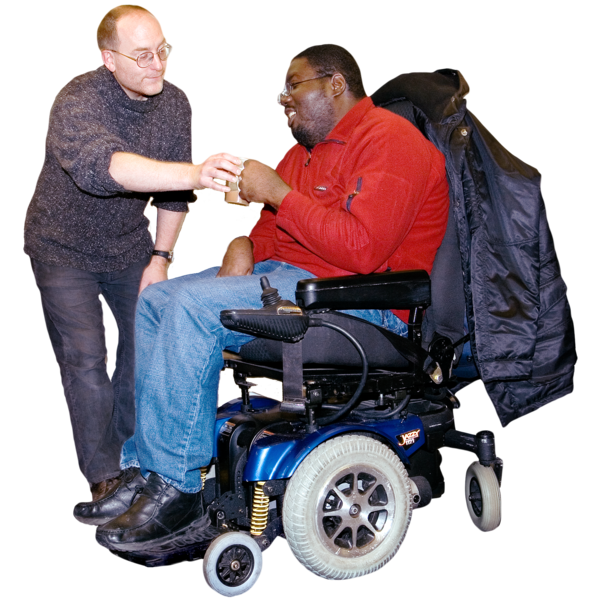 Social care means the services that give care and support to people who need it.
organisation, Mencap is required to be open and transparent with the people we support, families, and other relevant people, about the care and support that they receive. This is called our Duty of Candour.
The Duty of Candour legally applies to services that are regulated by the CQC, but we are committed to ensuring that we maintain this duty across all of our services regardless of type or location.
For more information about this duty, you can ask the managers that oversee the service, or visit: http://www.cqc.org.uk/guidance-providers/regulations-enforcement/regulation-20-duty-candour
For further information about safeguarding, see our safeguarding policy on our
website
 A website is a page you can go to on the internet like Google or YouTube.
: https://www.mencap.org.uk/help-and-advice/keeping-people-safe/safeguarding-adults
The next section of the Better Together information pack is What is the difference between ‘registered services’ and ‘supported living services’? - Applicable to England only.
The information on this page was first published as a PDF in September 2022.
Last updated 18.05.2026.