
The sixth annual Learning from Lives and Deaths – People with a learning disability and autistic people (LeDeR) report has been published by King’s College London today. The report utilises data from LeDeR reviews, focusing on the reviews of deaths of people with a learning disability A learning disability is to do with the way someone's brain works. It makes it harder for someone to learn, understand or do things. that occurred predominantly in 2021 and uses comparisons with the deaths occurring in 2018, 2019 and 2020. It also highlights the impact of the Covid-19 pandemic during 2020 and 2021.
Edel Harris OBE, Chief Executive of learning disability charity Mencap, said: “People with a learning disability are all too often forgotten and discriminated against and today’s LeDeR report sets out the devastating impact Covid has had - which is why it’s vital they are included in the forthcoming autumn booster campaign A campaign is when people work together to try to change something. .
“It also shows persistent shocking inequalities, with women with a learning disability dying 26 years younger than those in the general population, and men 22 years younger.
“The report emphasises that still not enough has been done to address the reasonable adjustments needed by people with a learning disability, the poor understanding of the Mental Capacity
Mental capacity means being able to make a decision when it needs to be made. Act by healthcare professionals and the ongoing inappropriate use of Do Not Attempt Cardio-Pulmonary Resuscitation Orders ( DNACPR DNACPR stands for "Do not attempt cardiopulmonary resuscitation." This means a doctor will not try to start your heart if it stops beating, or give you oxygen through a mask if you stop breathing. ).
“It is essential now that the government The Government are the people who run the country. They decide how much tax people should pay for things and how things like the National Health Service should work. , the NHS The NHS is the National Health Service. The NHS gives free healthcare to everyone in the UK and includes things like your GP (doctors) surgery and hospitals. and the wider care sector take urgent action on the recommendations set out in today’s report. People with a learning disability have a right to access good quality and timely care that meets their needs and help support them to live happy and healthy lives.”
The LeDeR report can be found here: https://www.kcl.ac.uk/research/leder
-ENDS-
For further information or to arrange an
interview
 An interview is a meeting where you talk to someone or a group of people about something. When you have an interview for a job, you have to answer questions and say why you would be good at the job. The person who gives the best answers is offered the job.
with a Mencap
spokesperson
 A spokesperson is someone who speaks up about something. They usually speak up on behalf of a group or organisation.
or
case study
 A case study is a piece of writing that tells people more information about someone's experience.
, please contact Mencap’s media team on: [email protected] or 020 7696 5414 (including out of hours).
Notes to editors:
About Mencap
There are approximately 1.5 million people with a learning disability in the UK. Mencap works to support people with a learning disability, their families and carers by fighting to change laws, improve services and access to
education
Education is when you learn things. When you fill in a form to get a job, education means you write where you went to school, college or university.
,
employment
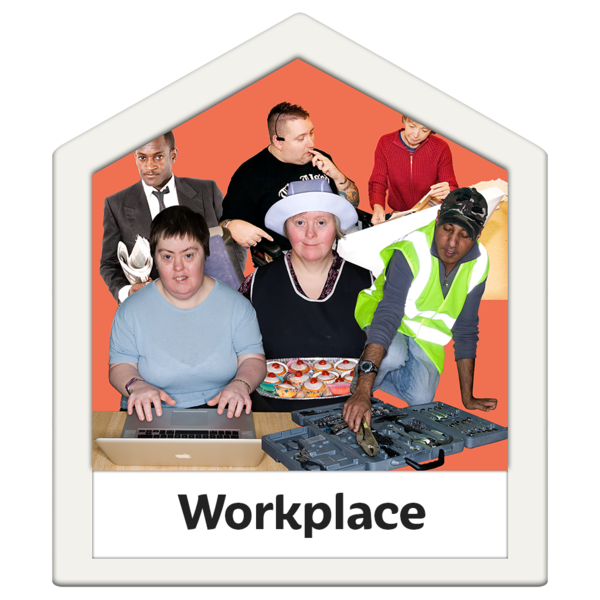 Employment means having a job.
and
leisure
 Leisure is when you have time to do things you enjoy like playing sports or going to the pub.
facilities. Mencap supports thousands of people with a learning disability to live their lives the way they want: www.mencap.org.uk
For advice and information about learning disability and Mencap services in your area, contact Mencap’s Freephone Learning Disability Helpline on 0808 808 1111 (10am-3pm, Monday-Friday) or email [email protected].
What is a learning disability?
- A learning disability is a reduced intellectual ability which means that people might need support with everyday tasks – for example shopping and cooking, or travelling to new places – which affects someone for their whole life;
- Learning disability is NOT a mental illness or a learning difficulty, such as
dyslexia
 Dyslexia is a learning difficulty. People who have dyslexia can find it hard to read, write and spell.
. Very often the term ‘learning difficulty’ is wrongly used interchangeably with ‘learning disability’;
- People with a learning disability can take longer to learn new things and may need support to develop new skills, understand difficult information and engage with other people. The level of support someone needs is different with every individual. For example, someone with a severe learning disability might need much more support with daily tasks than someone with a mild learning disability